
Cousins

In Cousins, Kristen Joy Emack explores the innocence and intimacy of girlhood. Photographing for over a decade, the artist pictured her daughter and three nieces as they grew into themselves, chronicling their developing relationships, maturing confidence, and expanding worlds. Over the course of the project it became collaborative, as the girls began posing and presenting themselves to the camera, aware of their role within the frame.

A sense of communion permeates the series as dangling arms, small hands, and braided heads fit perfectly together. Beyond each other, through their poses and presence the girls integrate into the landscape, harmonious with the patterned shadows, rippling water, and curved branches that surround them. An intuitive bodily connection and shared emotional and spiritual knowledge bonds the girls together. Cousins offers a glimpse into the under-examined world of young girls of color, powerful in their relationships and secured in each other’s connecting presence.

About the artist: Kristen Joy Emack is a 2022 Guggenheim Fellow, a MacDowell Fellow, a Saint Botolph Fellow and a Massachusetts Cultural Arts Fellow. Her work has been shown nationally and internationally, in both galleries and photo festivals, and has been published in magazines including Vogue Italia, National Geographic, OATH, The Horn Book and The Sun. She has lectured at multiple universities including Harvard, Hofstra and Boston University, and her work is in multiple private collections and institutions in the US and Europe. Emack has recently released her first monograph, Cousins, published by L’ARTIERE in Italy. Kristen is a public school educator who lives and works in Cambridge, Massachusetts.

March – August 22, 2024

Albums could be found in almost every household in the United States by the late nineteenth century. The rise of commercial photography and color printing at this time created an abundance of pictures, and albums provided a way to organize, preserve, and share them. Some albums feature family photos, colorful advertisements, or portraits of celebrities; others document travel, war, or historical events. Though most albums contain images that were mass produced, each is a unique assemblage. This exhibition highlights a small sample of the many different types of nineteenth-century albums in the collection of the Boston Athenaeum.

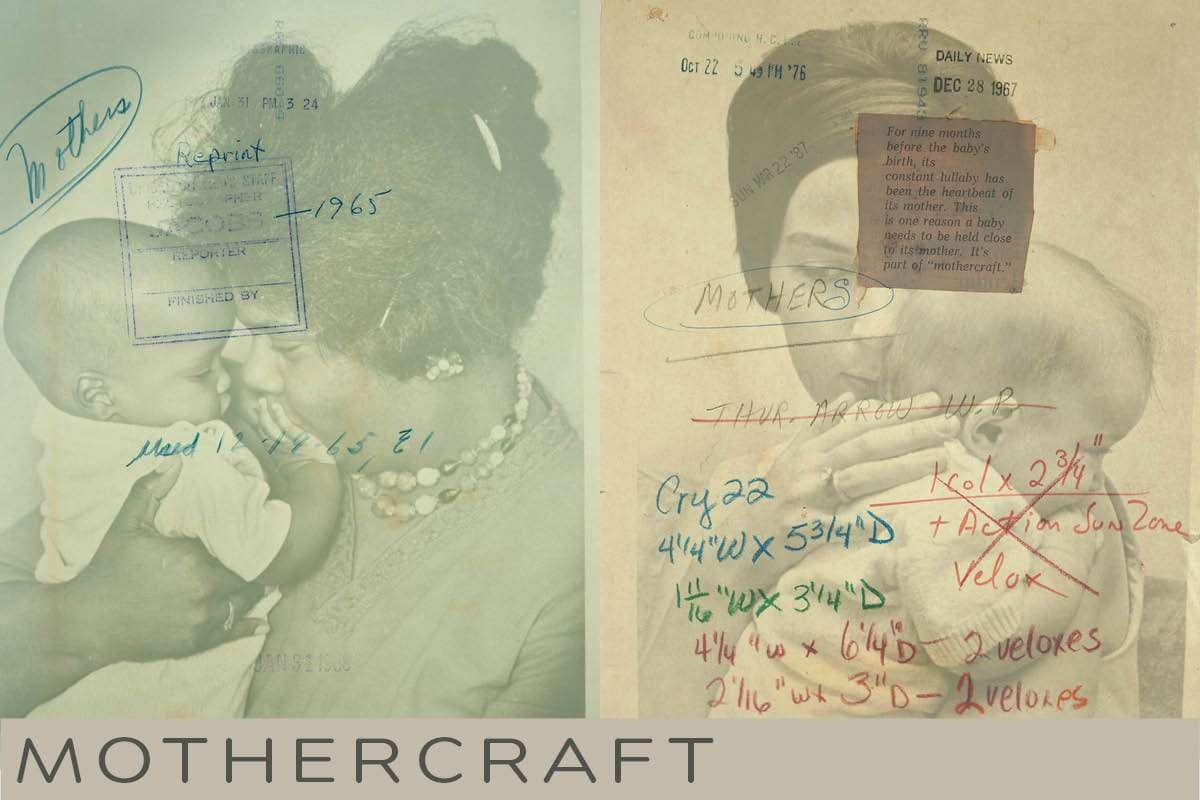
MOTHERCRAFT

January 22 – May 6, 2024

MOTHERCRAFT, an ongoing series by artist Toni Pepe, uses press photographs found in flea markets, eBay, photo morgues, and other archives, to reconsider portrayals of motherhood.

The back of each original image includes handwritten notes, press stamps, dates, clippings, and cataloging information. These marks, along with creases, stains, and fingerprints, add layers to the photographs, challenging the static quality of the image.

In making the series, Pepe backlights each photograph, then rephotographs it, compressing the front and back into a single plane. Pepe’s approach destabilizes the relationship between text and image, and reconfigures the ephemerality of the original photographs.

The photographs Pepe collects represent shifting perspectives on motherhood, socially and politically. Her reuse of them interrogates how motherhood and caretaking have been seen as taboo, marginal, or unworthy of scholarly attention, while also exploring photography’s role in record-keeping, memory, and myth-making.

About the artist

Toni Pepe (b.1981 Boston, lives in Boston) is a visual artist whose creative practice is grounded in photographic processes, memory, storytelling, and identity as seen through a feminist lens. Found photographs from private and public collections play a crucial role in her practice. Pepe often uses vernacular or press imagery to explore different modes of collecting and preserving knowledge.

Pepe is chair and assistant professor of photography at Boston University where she helped launch a new MFA program in Print Media and Photography.

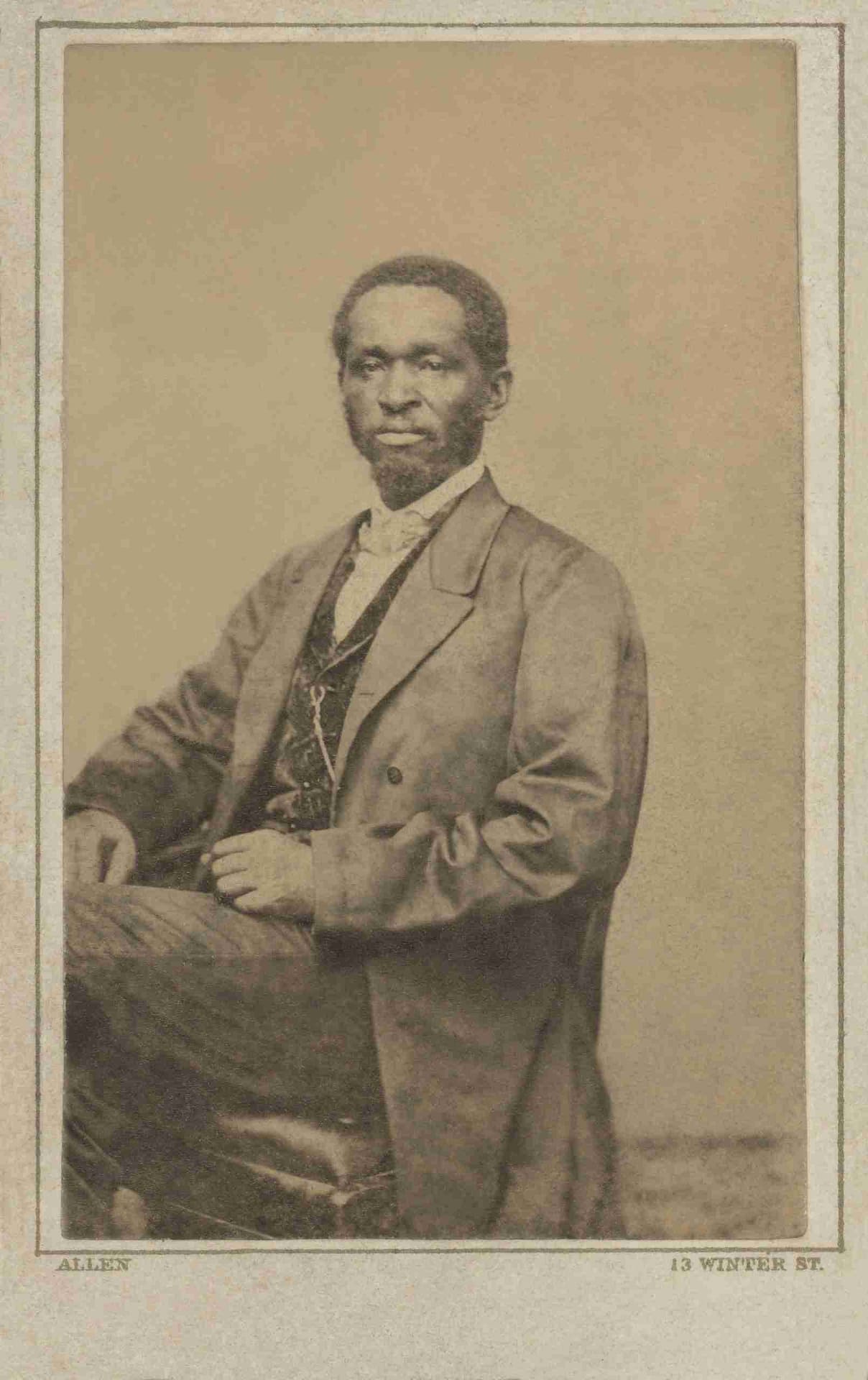
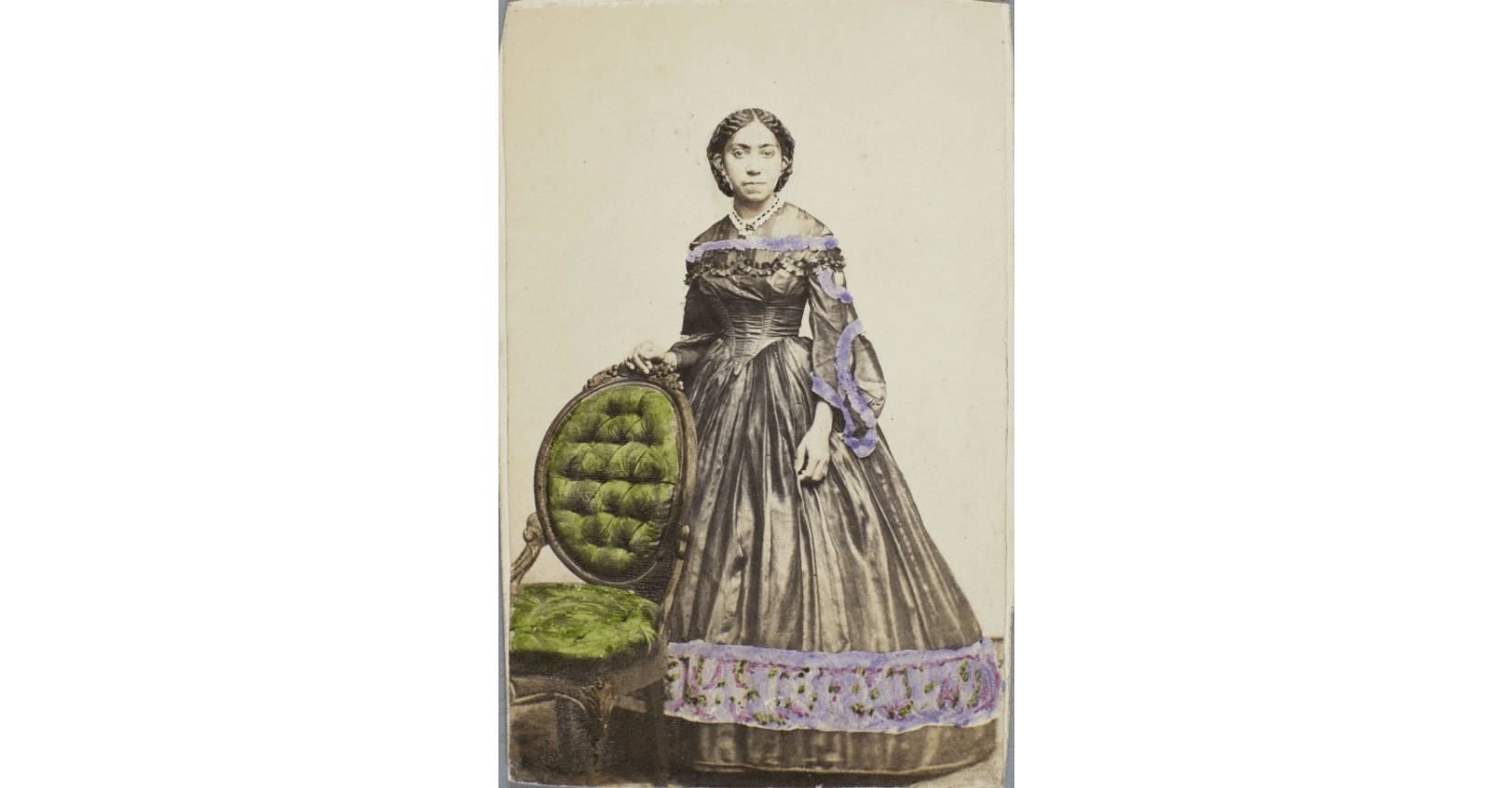
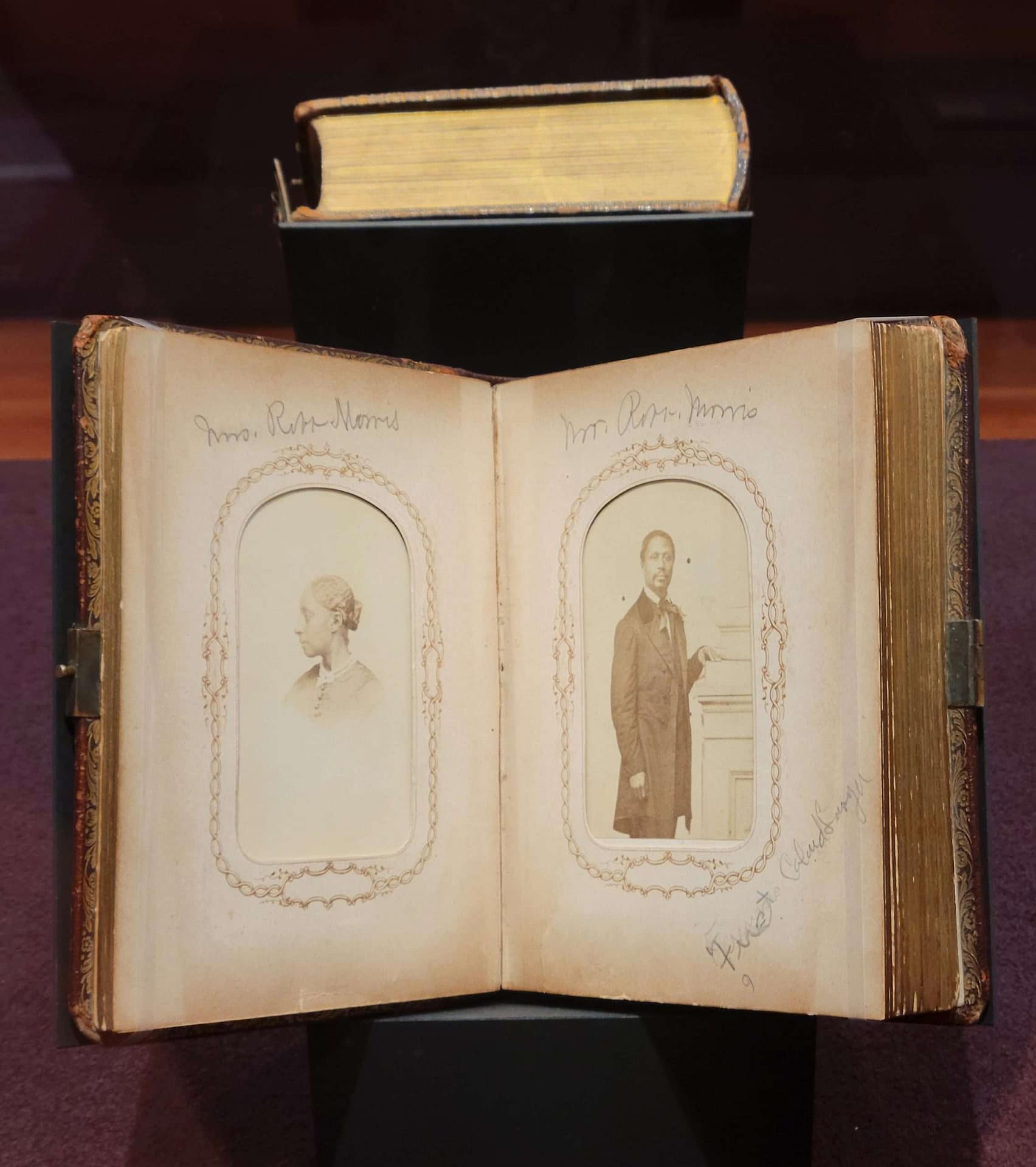
Framing Freedom: The Harriet Hayden Albums

Lewis Hayden

Charles Lewis Mitchell

Virginia L. Molyneaux Hewlett Douglass

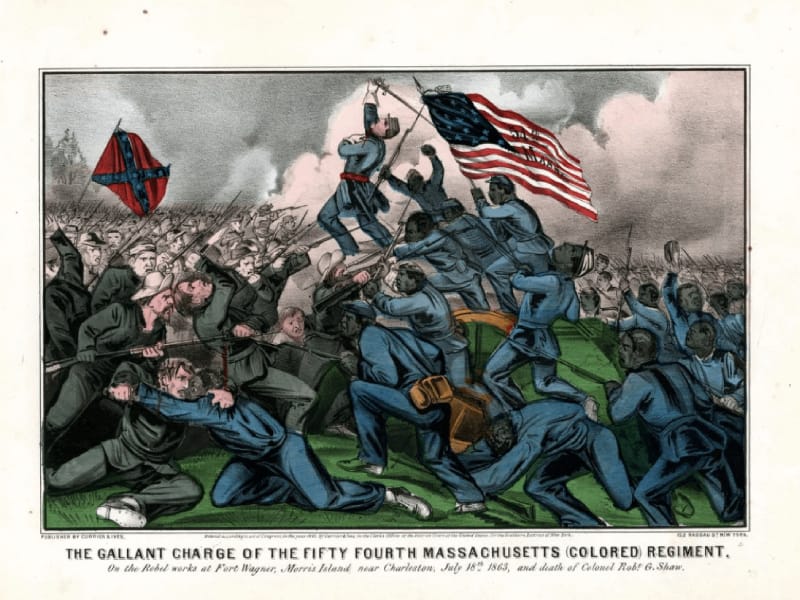
Currier & Ives hand-colored lithograph of The Gallant Charge of the Fifty-Fourth Massachusetts Regiment.

March 18 – June 22, 2024

Framing Freedom: The Harriet Hayden Albums retells the story of Harriet Hayden, a remarkable woman who played a crucial role in the city’s — and the nation’s — fight against slavery.

Harriet Hayden was a courageous anti-slavery activist who ran a vital stop on the Underground Railroad, located on Beacon Hill. She and her husband, Lewis Hayden, were well-known leaders in Boston’s fight against slavery.

This exhibition centers on Harriet Hayden’s carte-de-visite portrait photograph albums. These albums reveal the social networks of Boston’s thriving community of Black activists and encourage us to examine home-based activism and women’s contributions more closely.arriet and her community used then-new technology to have their portraits taken. These photographs were more than keepsakes—they were a form of activism for the Black community. Using refined clothing and poses, they took control of their image and challenged stereotypes.

Alongside the photographs are rare artifacts of abolitionist activity in Boston, including responses to the Fugitive Slave Act.

Portrait photographs of

  • Dr. John V. DeGrasse. An accomplished surgeon, Dr. John V. DeGrasse was the second African American to receive a medical degree in the United States.
  • Louise DeMortie. Had a successful career reading classic novels and poetry to audiences and later fundraised for and opened an orphanage in New Orleans.
  • Virginia L. Molyneaux Hewlett Douglass. Active in the anti-slavery and women’s suffrage movements and spoke out against school segregation and prejudice. Was married to Frederick Douglass, Jr., son of leading activist Frederick Douglass.
  • Leonard A. and Octavia J. Grimes. Leonard served as minister of Twelfth Baptist Church, whose congregation included Anthony Burns. Grimes played a key role in mobilizing the Black community in response to the Fugitive Slave Act.
  • Frances Ellen Watkins Harper, poet, groundbreaking author, lecturer, abolitionist, suffragist, and reformer.
  • Robert Morris. One of the first Black lawyers in the United States and second African American to practice law in Massachusetts.
  • Harriet Beecher Stowe. Lewis Hayden’s personal experience played a direct role in her documentary text, A Key to Uncle Tom’s Cabin.
  • Sara Wilkins. Active in Philadelphia, Wilkins’s portrait provides an indication of the Haydens’ national network of friends and acquaintances.

Important abolition artifacts

  • The only two known photographs of Harriet Hayden, on display together for the first time.
  • Currier & Ives hand-colored lithograph of The Gallant Charge of the Fifty-Fourth Massachusetts Regiment.
  • The Hayden’s commemorative copy of President Lincoln’s Emancipation Proclamation that hung in their parlor.
  • Items from the trial of Anthony Burns.
  • Declaration of Sentiments of the Colored Citizens of Boston, on the Fugitive Slave Bill!!!, a broadside written by Lewis Hayden, William C. Nell, and others, part of a coordinated response to the Fugitive Slave Act by Black anti-slavery activists and other abolitionists who organized resistance to the law immediately after its passage.
  • A rare book, The Anti-Slavery Alphabet, introduced and promoted anti-slavery values to young audiences.

Co-Curators

  • Makeda Best, PhD, Deputy Director of Curatorial Affairs at the Oakland Museum of California, a specialist in nineteenth-century photography, race, and gender.
  • Virginia Reynolds Badgett, PhD, former Assistant Curator at the Boston Athenaeum and scholar of American art and material culture.

This exhibition is generously supported by the Terra Foundation for American Art, Cabot Family Charitable Trust, Gladys Krieble Delmas Foundation, Mass Humanities, Mass Cultural Council, and Fiduciary Trust. In-kind media sponsor is WBUR.

18th Century Miscellany

When the Boston Athenaeum was founded in 1807, the eighteenth century had only just ended. The Revolutionary War was still within living memory. From its very beginning, the Athenaeum has played a role in preserving history as it was happening, and bringing cultural insight to Boston from around the world. Here are some highlights from the Athenaeum’s rich holdings of eighteenth-century materials, including items that entered the collection in the institution’s earliest years.

The Caponigro Collection: Boston in 1959

The Caponigro Collection: Boston in 1959

August 28-December 30, 2023

A Boston native, Paul Caponigro photographed the West End and Back Bay in 1959. Tantalized by the neighborhoods’ ruined state, Caponigro found beauty in the city’s decomposing forms. In this small series, the photographer focuses primarily on details within the demolition. Caponigro aestheticizes the ruins by turning wrecked homes, churches, and schools into abstracted
and sublime patterns.

Decontextualizing the neighborhoods, Caponigro photographs the West End and Back Bay as personal, intimate spaces worthy of contemplation. Caponigro centers on the neighborhoods’ liminal spaces— doorways, stoops, windows—spaces in-between. Fittingly, Caponigro photographs each site at a liminal moment, in the midst of destruction.

OCEANIC NEW ENGLAND

Oceanic New England explores what Herman Melville called the “watery part of the world.” This collaboratively curated exhibition challenges surface-level understandings of the sea in order to pursue a deeper engagement with its multiple histories. Spanning the long nineteenth century, the exhibition reveals the Atlantic Ocean to be a realm of travel and commerce, violence and exploitation, aesthetic inspiration and scientific inquiry. The diverse array of objects, ranging from seaweed albums to slave narratives, displays the complexity of human encounters with the Atlantic Ocean and foregrounds perspectives and practices often submerged by the dominant historical record. As we confront rising sea levels and an increasingly acidic ocean, these objects invite us to revisit the stories we tell about the ocean and to contemplate our relationship to the region’s most vital natural resource.

This exhibition is a collaboration between the Boston Athenaeum and the University of Massachusetts-Boston’s English Department. Professor Sari Edelstein, PhD and graduate students from her seminar Critical Ocean Studies worked with Athenaeum curator Christina Michelon, PhD to co-curate this exhibition.

Developing Boston: Berenice Abbott & Irene Shwachman Photograph a Changing City

Developing Boston: Berenice Abbott & Irene Shwachman Photograph a Changing City

August 28 – December 30, 2023 in the Calderwood Gallery

During the mid-twentieth-century, two photographers captured Boston’s developing landscape: Berenice Abbott and Irene Shwachman. Abbott, an acclaimed photographer, produced a 1934 photographic survey of Boston’s nineteenth-century buildings. Twenty-five years later, Shwachman, a lesser-known yet crucial city chronicler, began “The Boston Document” (1959–1968). This self-directed photographic series pictured Boston’s redevelopment.

The twentieth century witnessed great change in Boston’s topography. The city’s crooked, narrow streets were widened to make way for increased automobile traffic. Human-scaled buildings and small open spaces were usurped by skyscrapers and monumental plazas. The city’s skyline of spires and domes became punctuated with tall, boxlike office buildings.

Photographing at different times in Boston’s history, Abbott and Shwachman’s series each explore ways of viewing, dissecting, and preserving Boston. Abbott approaches Boston from a distance, offering stoic views, oscillating between straightforward and oblique angles. Shwachman, a student of Abbott’s, amended her teacher’s approach by photographing Boston through a personal, subjective lens to highlight the city’s dynamism.

Examining how the photographers consider presence, tempo, materiality, and change within the city, Developing Boston invites visitors to explore Boston’s past, present, and future, and find their place within the city.

As a coda to the exhibition, the Athenaeum collaborated with teen artists from Artists For Humanity to create photographs that explore Boston’s continued redevelopment in the twenty-first century. These images illustrate photography’s critical role in understanding, remembering, and preserving Boston and its many iterations.

The collaboration with Artists For Humanity is supported by the Mass Cultural Council.

This exhibition is generously funded by the Polly Thayer Starr Charitable Trust.


Mapping Berenice Abbott’s Boston

Our friends at the Leventhal Map Center at the Boston Public Library published Mapping Berenice Abbott’s Boston, a companion to this exhibition. Using the Map Center’s Atlascope technology, Lauren Graves, exhibition curator, mapped the buildings in Abbott’s work as a way to explore different ways of viewing Boston’s history.

Related Programming

See the full list of related programming, including curator-led gallery talks.


Reading the Room: Reconstructing the Boston Athenæum

Reading the Room: Reconstructing the Boston Athenaeum

March 1, 2023 – May 2023

In 2022, Newton-based photographer Tira Khan served as the Artist in Residence at the Boston Athenaeum. During this time, she documented the evolution of the library during its historic revitalization and building expansion.

Reading the Room presents spaces in the midst of change and as sites of transition between the old and new. This project looks ahead to the future with an eye on the past. From chaotic construction sites to the quietude of artwork in storage, the photographs explore space as a receptacle for personal and institutional memory. Please find the artist’s statement here.

A Place I Never Knew

A Place I Never Knew, Photographs by Tira Khan

November 14, 2022 – February 20, 2023

A Place I Never Knew (2019) explores Rampur, India, a Muslim-majority city and artist Tira Khan’s ancestral home. Formerly a Princely State of British India, Rampur gained independence in 1949. Today, the city struggles with increasing poverty and illiteracy. Ranging from sensitive portraits of residents to photographs of urban structures and homes, Khan’s images are intensely colorful and crisp. The artist’s eye for juxtaposition, texture, and color effectively bridge the past and present to capture the complexities of this little-known city. Throughout the series, Khan grapples with her relationship to Rampur, a place she never knew despite her family ties.