12.09.2021

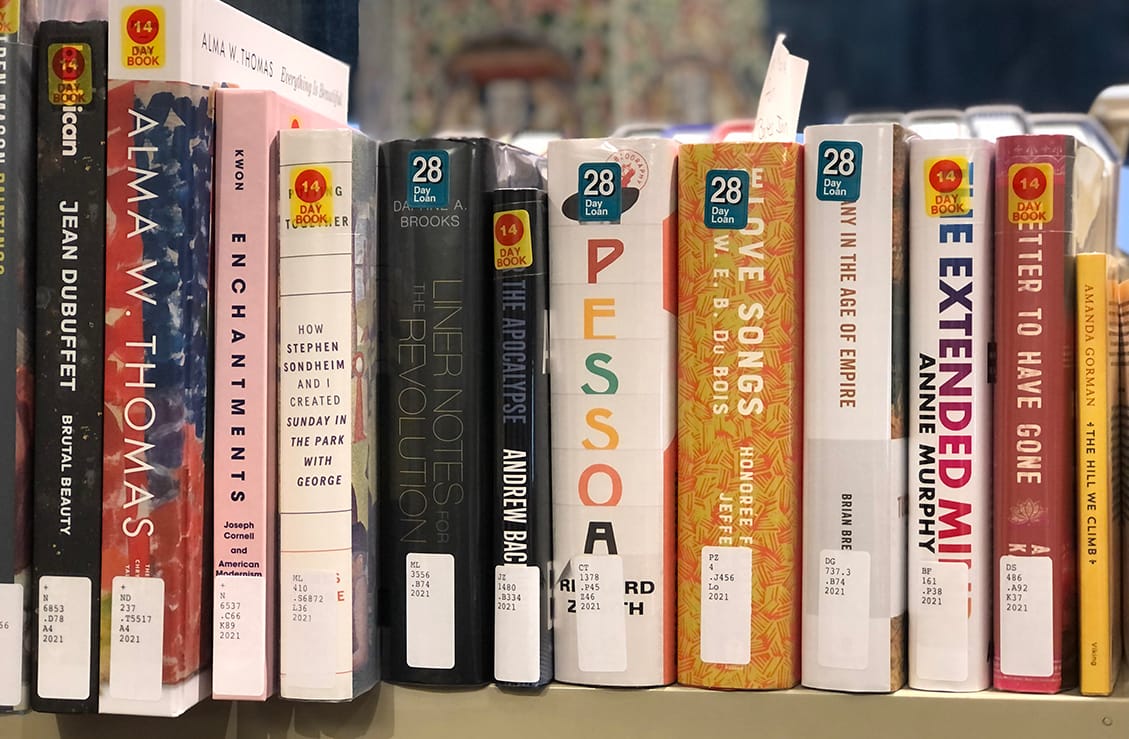
Staff Book Suggestions Winter 2022

John Mathy

Humane: How the United States Abandoned Peace and Reinvented War by Samuel Moyn

(Library of Congress KZ6385 .M835 2021)

A fascinating exploration of the Peace movement that asks the question: what if attempts to make war more ethical have actually just made it easier to accept, leading to the creation of wars that never end?

The Buried Giant by Kazuo Ishiguro

(Library of Congress PZ4.I78 Bu 2015)

An exciting and heartwarming stroll through the world of Arthurian legend that explores the importance of human memory and purpose.

Carolle Morini

Painting Time by Maylis de Kerangal; translated from French by Jessica Moore

(Library of Congress PZ4.K41 Pa 2021)

A lovely book about growing up, creating art, and looking closely at one’s surroundings—the natural and manmade environments.

Elizabeth O’Meara

Following are a few books I’ve read recently that I’ve rated five stars on Goodreads.

Second Place by Rachel Cusk

(Library of Congress PZ4 .C987 Se 2021)

I enjoyed the conceit of the book: the protagonist is writing a letter to a close friend of her experience inviting an artist to live in a cottage on their property that she and her husband refer to as ‘the second place’. Through this letter she recounts the events of how this additional presence impacts her family and herself.

Empire of Pain: The Secret History of the Sackler Dynasty by Patrick Radden Keefe

(Library of Congress CT275.S135 K44 2021)

I listened to this book on cloudLibrary, which was read by the author. As can be imagined, it’s a fairly aggravating topic since this family has been able to use its wealth and connections to evade the consequences of what they did with their product Oxycontin. What I found most interesting is the reporting done on the first generation Sacklers and where it all started.

Bright Center of Heaven by William Maxwell

(Library of Congress PZ3.M4518 Ear 2008)

This was the first piece I’ve read of Maxwell’s and I was enthralled with his writing. This short novel written in 1934 encompasses mostly one day in the lives of a boarding house and its occupants.

Leah Rosovsky

Many of my best reads are a result of recommendations from the Athenæum staff and members. All three of my books fall into this category.

The Vanderbeekers of 141st Street by Karina Yan Glaser

(Library of Congress PZ7 .G48 Van 2017)

Mary Warnament recommended The Vanderbeekers of 141st Street in her holiday list. It is so good I had to mention it again. It’s a charming story of five siblings living in New York City. The book reminds me of some of my favorite childhood authors (Elizabeth Enright, E. Nesbit) yet it is completely contemporary in feel.

Excellent Women by Barbara Pym

(Library of Congress PZ3.P9936 Ex)

I know I’m late to the party when it comes to Barbara Pym. Will Evans suggested Excellent Women to me this fall. I couldn’t believe that I had missed it. It’s a savagely funny read filled with hilarious characters.

Hamnet by Maggie O’Farrell

(Library of Congress PZ4 .O313 Ha 2020)

Tim Diggins, the President of the Athenæum, urged me to read Hamnet. The writing is just beautiful even as the story is heartbreaking. I gulped the book down in two afternoons over the holidays.

Carly Stevens

Chickenology: The Ultimate Encyclopedia by Barbara Sandri and Francesco Giubbilini; illustrated by Camilla Pintonato

(Library of Congress + SF487.5 .S36 2021)

I am nearing the end of the semester which means my time for fun reading is extremely limited. Chickenology is a quick and informative read with beautiful illustrations. Caution: There is a strong possibility you’ll want to adopt a therapy hen after reading! Consider yourself warned.

Mary Warnement

A Street in Suffolk by Adrian Bell; with drawings by Richard Shirley Smith

(Cutter Classification N9Y .B414 .st)

In 1964 Faber and Faber published this collection of essays by Adrian Bell, who was a farmer, author, and also first compiler of the crossword in the London Times (eventually contributing almost 5,000). I’m currently savoring a new edition of selections from his weekly column in The Eastern Daily Press, which he wrote from 1950 to 1980 and recently published by Slightly Foxed with a focus on his winter writings. The BA’s 1964 selection is charmingly illustrated as is the 2021 selection, though by different artists. Bell’s well-written reflections on his simple surroundings make for a contemplative treat. Not all of these focus on winter but this season is an excellent time to stop, look closely, and notice the beauty of a season when so much seems dormant. I add an interesting fact I learned while preparing this recommendation: his daughter was Anthea Bell, an award-winning translator whose work I also admire and recommend.

Death of an Englishman by Magdalena Nabb

(Library of Congress PZ4.N114 De)

This book is by no means new, published in 1981, but if you like mysteries set in Italy and don’t know about this author, you will want to add her to your list. This is the first in her series set in Florence featuring Marshal Guarnaccia. We meet him first suffering from a cold, not at his best, and struggling to solve the murder of a foreigner in his city, which as presented here is not the tourist mecca of steamy sunshine but ratyher as the city of locals during the rainy off-season. I found that even more interesting. Our detective prescribes the cocktail Negroni to treat his ailment, and as we enter flu season during a pandemic I find myself wishing that were truly a panacea. If you enjoy this, your reading list is enriched; she wrote 13 more in this series.

11.22.2021

Staff recommendations from 2021 Holiday Pop-up Bookshop

Carolle Morini

Books and Libraries, Everyman’s Pocket Poets  edited by Andrew Scrimgeour
Stories of Trees, Woods, and the Forest Fiona Stafford
Literary Places Sarah Baxter
Look Both Ways: A Tale Told in Ten Blocks (age: 10-14) by Jason Reynolds,
Lore Alexandra Bracken  (YA)

Elizabeth O’Meara

The Friend Sigrid Nunez
The Source of Self-Regard: Selected Essays, Speeches, and Meditations Toni Morrison
The Lost Words  (Picture Book for old and young) Robert Macfarlane
The Old Truck  (Picture Book) Jerome Pumphrey

Anthea Reilly

Paris in the Present Tense Mark Helprin
Collected Stories Shirley Hazzard
Death in the Vines M.L. Longworth
Charlotte’s Web (Youth) E.B. White

Mary Warnement

Murder in Chianti Camilla Trinchieri
Cheese, Wine, and Bread Katie Quinn
The Inheritance Game  (Young Adult novel)Jennifer Lynn Barnes
Outside In  (Picture Book)    Deborah Underwood
The Vanderbeekers of 141st Street  (Youth) Karina Yan Glaser

11.20.2021

Indigenous Peoples Month

November is Indigonous Peoples month. Here are some books in our collection that cellebrate both modern and traditoinal Native culture.

Picture Books

Fry Bread : a Native American Family Story written by Kevin Noble Maillard and illustrated by Juana Martinez-Neal.
(New Books Basket Children Picture Book + MAILL)
A vibrantly illustrated look at a modern Native American family and the roll fry bread plays: connecting the family, the community, and the nation.

We are Water Protectors written by Carole Lindstrom and illustrated by Michaela Goade.
(New Books Basket Children Picture Book + LINDS)
Urging readers to do what they can, this book explores the many Native protests against oil pipelines in a poetic and accessible way. Showing that water is not only essential for life, it is also sacred to many Indigonous people.

Rabbit’s Snow Dance : a traditional Iroquois story as told by James & Joseph Bruchac ; illustrated by Jeff Newman.
(Classics Bin Children Picture Book + BRUCH)
A traditional Iroquois story about a rabbit who wants to eat the tallest leaves. To help him reach, he uses his snow song in the summer! The other animals are not pleased.

Classified : the secret career of Mary Golda Ross, Cherokee aerospace engineer by Traci Sorell ; illustrated by Natasha Donovan
(New Books Basket Children Picture Book + SOREL)
Mary Golda Ross worked as an engineer in the classified department of Lockheed Air Corporation. This inspirational biography follows her journey as a female Cherokee engineer and mentor.

Youth Fiction and Graphic Novels

Trickster : Native American Tales : a graphic collection edited by Matt Dembicki
(PZ7.D396 Tr 2010)
Twenty-one Native Authors have worked to create this collection of trickster tales from a large variety of Native American Nations. Each tale features the work of a different illustrator creating a dynamic and engaging reading experience.

In the Footsteps of Crazy Horse by Joseph Marshall III ; illustrations by Jim Yellowhawk.
(PZ7.M356723 In 2015)
Fiction and nonfiction are eloquently intertwined in this story of a Lokota boy learning about his heritage, identity, and family through the stories of Crazy Horse his grandfather shares with him. A thoughtful tale of tradition, family history, and identity.

Indian No More by Charlene Willing McManis with Traci Sorell.
(Children’s New PZ7.M2312 In 2019)
Semi-autobiographical historical novel follows Regina Petit, a ten year old Umpqua girl. She has lived all her life surrounded by her tribe on the Grand Ronde reservation, but in 1957 the federal government signed a bill that states Regina’s tribe no longer exists. Regina is “Indian no more” in the eyes of the government. Her family then moves to Los Angeles in search of better jobs for her father. There, she makes friends with children of other races who have never met a Native American. It is also in this new neighborhood that Regina faces the vicious racism of the era for the first time.

Young Adult Books

Hearts Unbroken by Cynthia Leitich Smith
PZ7 .S64465 He 2018
Native Louise loves working on the school paper. During her senior year the paper has a big story to cover: the school’s music director has taken an inclusive approach to casting the production of Wizard of Oz, and the primarily white Kansas town is outraged. The group Parents Against Revisionist Theater has formed and anonymous threats are made. As they continue to uncover the story, Louise begins to fall for the white photographer she is working with. But she has learned that “dating while native” is difficult. Will protecting her heart break his?

The Marrow Thieves by Cherie Dimaline
(Young Adult PZ7 .D59 Ma 2017)
In this chilling near future dystopia, the world has nearly been destroyed by global warming. In the wake of that disaster an even darker situation is revealed. No one but the Indigenous people of North America are able to dream. The Indigenous people are in turn being hunted and harvested for their bone marrow, which carries the key to dreaming. Frenchie and his friend must stay hidden to survive, but one of them unknowingly holds the secret to defeating the Marrow Thieves.

Borders by Thomas King ; illustrations by Natasha Donovan.
(New Young Adult PZ7.K587 Bo 2021)
This graphic novel of King’s short story vividly tells the story of a Blackfoot teen and his mother as they try to cross the American/Canadian border. When asked her nationality, his mother says Blackfoot, refusing to compromise her identity to please the border officers. The two are then stuck between the USA and Canada and must stay in their car until the matter is resolved. Highlighting the many microaggressions that still exist against Indigonous people, this boldly illustrated graphic novel brings the already moving short story of identity to life.

Nonfiction

A Queer History of the United States for Young People by Michael Bronski ; adapted by Richie Chevat
(Young Adult HQ76.3.U5 B69 2019)
While this book goes though many different cultures and eras with in American queer history, the first chapter focuses on different Native American Nations views on gender and sexuality. Many nationtions do not view gender as a binary as European societies long have.

The Sea-Ringed World : Sacred Stories of the Americas edited by María García Esperón ; illustrated by Amanda Mijangos ; translated by David Bowles.
(New Young Adult + PZ7.G161 Se 2021)
This anthology brings together stories from Indigonous peoples across the Americas, highlighting the diversity and similarities within their cultures.

11.05.2021

David Tory

November 2021

Interview by Rebecca Johnston

Retired from his careers in the computer industry and philanthropy, David Tory has spent the last few years researching the arrival of English colonists in New England. Exploration: The Stanfield Chronicles is the result of those years of research, following the fictional Isaac Stanfield through a life of adventure in the early seventeenth century. Originally from England, for 30 years David Tory has called Essex County, Massachusetts, his home with his wife, Helen. For more information, visit his website at www.davidtoryauthor.com.

Tell me about yourself.

DAVID TORY: I was born in England, in Sheffield, Yorkshire. I was educated in England, and I entered the computer business in 1962, as a programmer. I started a software company in 1971 which I sold to a Swiss company, and we moved to Geneva in 1979. Then that Swiss company merged with an American company, which meant I moved the family to Long Island in 1980. In 1988, I was asked to run a software company in Boston, so I moved the family up to the North Shore. I ran that company for seven years before retiring in 1995.

Q: How did you get involved in philanthropy?

DT: When our two girls went off to college, my wife decided to go to college too as a mature student. She went to Bradford College in North Essex County and met two friends there who were just graduating and wanted to start a nonprofit to bring art to young kids in Lawrence. My wife joined them. I got involved a year or so later in 1995 when I retired. I was also persuaded to start helping other small nonprofits, helping them organize their boards, teaching them the business practices they didn’t understand (like business plan, projections, budgets, etc.). That resulted in me starting a community foundation, the Essex County Community Foundation, in 1998, which I left in 2011.

Q: How did your work develop into a research project?

DT: I started writing a thesis about philanthropy in New England. I had the impression from talking to lots of friends and colleagues from different parts of the country in the philanthropic industry that New England has something of a reputation for being a challenging place in which to raise money. I thought that the Puritans might have had something to do with this. “I give of myself, not of my wealth.” So I started doing research, and in the course of it, I found that there was a great deal more to the Puritan story and their arrival in New England than I had been taught or was aware of. It was actually a much more complicated and enthralling story. In fact, there were some things I found that didn’t even match the common understanding of what and how it all happened. Based on the events and people I uncovered I thought, “there’s a great story here,” but I was torn between writing a history and telling a story that incorporated the history. 

Q: And how did you make the choice between nonfiction and historical fiction?

DT: As a young boy I was introduced to the author G.A. Henty. Mr. Henty wrote at the latter part of the nineteenth century stories for boys about history, and each book of the fifty-odd he wrote was about a particular event or situation in history. In each case, the book was written from the perspective of a boy who was involved in that event. So for example, in a book about the American Civil War, he wrote about a 16 year old who joins the confederacy. I read all those books and they stuck with me. From that came my love of history. I first thought I would write a synopsis for a history course, but with Henty in mind and in talking to various people, family, obviously my wife Helen, and other friends, they said that it was really a story that needed to be told.

Q: So, given your research, what led you to The Stanfield Chronicles?

DT: Writing a work of historical fiction, in which the narrator can be an observer and participant, allowed me the freedom to imagine as well as to describe historical events and people from a particular perspective as it was happening. I also didn’t want truth to necessarily get in the way of a good story! So I had all the pieces, now how do I put them together? I created a character called Isaac Stanfield who has a friend in Dorchester, Will Whiteway, a real person born in 1597, who became an important man in Dorchester, England. More importantly, he also kept a diary. Isaac and Will were the same age, they went to school together and were lifelong friends. When Isaac Stanfield starts his adventures he writes a journal and sends the entries on a regular basis to Will for his safe-keeping and edification. The story starts in 1613, when Isaac is 16, with a fire that really happened in Dorchester. I have Isaac believing he is in some way responsible for starting it. The whole book starts at that moment. He leaves Dorchester hotfoot and goes down to Weymouth, where he gets put onto a boat, the Sweet Rose, as a cabin boy. The historical events and people reveal themselves. The political, commercial, and religious intrigue that led to the Mayflower leaving Plymouth England in 1620 is described by Isaac as it happens. Isaac has a love interest named Aby and finds himself being seduced by one or two other people along the way. It’s a coming of age story for Isaac as well.

Q: What was the most difficult part of that writing process? 

DT: Stopping the research! The research was a wonderful journey. I had never gone to university, so the idea of doing academic research was foreign to me. In the computer industry, you didn’t have time to do research because new things were happening constantly. You didn’t have time to go back, and there wasn’t much to go back to. In doing some initial research, I started at a Manchester-by-the-Sea bookstore, Manchester By the Book. It’s a secondhand bookstore, and they have a section full of books—some very old—written about the early period of exploration in New England. I started buying these books and reading them and then using the bibliography of those books to find other authors, and so on. And then going on the internet and doing some really deep research, finding all of it so fascinating. It was a major problem for me to stop the research, despite the innumerable exciting rabbit holes I went down.  The historical context was there, and I produced a calendar and filled in everything I knew happened based on the historical record. Now what I needed to do is find out how Isaac fit into all this. Writing the historical bit was pretty straightforward. But when Isaac came into it, very quickly it reached a point where I would sit down at my computer, and I would say, “Okay, Isaac, here’s the situation, tell me what happened.” And we would just spontaneously respond to the situation. However, the other problem was how to get the book published. I was a total unknown as a writer so I couldn’t get a literary agent. And you can’t get it published by a traditional publisher unless you have a literary agent. So I had to go an alternative route in order to get the book printed.

Q: What did you enjoy most about the process?

DT: The process was really trying to curtail the research, which I found absolutely fascinating. I’m 79 years old, and I thought, “this is not the time to start a career in writing.” I was doing this because I wanted to tell the story, not necessarily to become a successful author. So I wasn’t constrained in my writing by worrying about whether the subject matter and genre were commercially viable. I wanted to make sure the book had literary merit, and I had lots of people assuring me that it had. People would ask who my reader was, “who are you selling this to?” I’m not selling it to anyone. I’m writing a story that pleases me. And if it pleases other people as well, great! What I found most exciting was not knowing the human interest side of Isaac and where he was going. I had no idea at the beginning of the book how he would end up, other than he had to end up at the end somehow or other involved with the Mayflower leaving for New England in 1620. The joy was people I knew reading the book and saying “I love it.” When I do presentations, I read from the book, and I find I’m so involved in it. I love the book, and get emotional reading certain parts, even though I’ve read it I don’t know how many times. So the joy is also in the fact that it’s alive. It’s part of me, I’m a part of it. And I look forward to the next one.

Q: How did you find the Athenæum?

DT: I have a granddaughter, Rue, and she is a very interesting lady. She is very erudite, and she is a writer, an explorer of minds, and a philosopher. A quite extraordinary young lady. She became a member of the Athenæum several years ago. She’d come in on a regular basis and study and do her homework here or whatever else she was doing, and she loved it. So when I needed another source for information on specifics from the period in Boston, I asked her to introduce me to the Boston Athenæum. A few weeks ago, I came in with Rue. She introduced me and showed me around. I love it.

Q: What have you enjoyed the most during your time at the BA?

DT: I think it’s a wonderful area for contemplative research. There’s such a wealth of information here. But even if you’re not actually using the books, coming in and finding a corner somewhere and doing the research in this wonderful academic environment is absolutely a delight.

Q: In the future, what can we look forward to from you?

DT: Yes, Exploration is published, the first book in The Stanfield Chronicles trilogy, and the second book, Retribution, will not be published until next spring. Then I have the third book in the trilogy to write. The great thing now will be getting the audio version of Exploration out, which I will be narrating myself. 

10.15.2021

Hayden Sousa

October 2021

By Hannah Weisman

I recently had the pleasure of catching up with Hingham High School senior Hayden Sousa, the winner of the Athenæum’s 2021 National History Day in Massachusetts prize for excellent use of primary sources. Sousa’s paper, “Communications in History: The Impact of Ted Sorensen’s Speechwriting During JFK’s Presidency,” earned him the award during the spring of his junior year. 

Sousa found himself interested in the Kennedy family after reading Bobby Kennedy by Larry Tye, which spurred him to learn more. In his reading, he encountered Ted Sorensen’s name. So, when Sousa learned the 2021 History Day theme was “Communication in History,” he decided to create a project about John Kennedy’s speeches, and specifically those that Sorensen wrote for him. 

At the encouragement of his history teacher, Ms. Petrie, Sousa sought out primary sources focused not only on Kennedy and Sorensen, but also on the people who worked with and around them. Sousa found transcripts of forums that had been held at the John F. Kennedy Presidential Library and Museum. From them, he was able to ascertain that Robert McNamara and other members of the Kennedy administration recognized that the relationship between Sorensen and the president transcended that of a typical speechwriter and politician; together “they were creating something huge.” 

In addition to mining primary sources, Sousa consulted secondary sources. When I asked Sousa if he could recommend a title to people interested in learning about the Kennedys, he was hard pressed to pick just one, but did name Grace and Power by Sally Bedell Smith and Unfinished Life by Robert Dallek. 

Ultimately, Sousa’s research led him to his argument that, “the unique relationship between JFK and Sorensen allowed them to produce speeches that compelled a younger generation and the African American population to believe in the United States and to push for progressive change.”

To present his argument, Sousa chose to write a paper. National History Day competitors create a project in one of five formats: documentary film, exhibition, paper, performance, or website. For Sousa, the choice was strategic. He had considered making a documentary film, thinking it would be helpful for the viewer to hear John Kennedy speaking. But the main focus of his project was not the way Kennedy delivered his speeches, but rather the words Sorensen wrote. He decided that writing a paper featuring quotations from speeches would help his reader focus on the text rather than the oration. 

With his project now a few months behind him, Sousa has had time to reflect on his approach to the topic and his treatment of the Kennedys in his paper: “What I’ve noticed is that I make the Kennedys, specifically JFK, seem perfect, and they really weren’t. Like everyone, they had their faults. If there was one thing I could change in the paper, I would go back and point out some of those flaws. It’s important to point out faults because history is about learning…we should be not only learners of history but also critics of history.”

Given the careful attention Sousa put into his project, from topic to research methodology to format, it is not surprising he imagines history and writing as part of his future career plans. Although he does not aspire to be a politician himself, Sousa can see himself writing for one: “Writing and reading are the best ways to get points across, get inside the human mind, communicate…To have the chance to write a speech for someone who can say something important would be really cool…I love history, politics are interesting, [and so are] government and civics…I might not want the spotlight, but [would like] to help someone else.”

As our conversation came to a close, Sousa offered a final recommendation: “Anyone who’s interested in JFK should definitely study RFK…He stuck up for what he believed in. He was willing to change his mind. Not everyone is open to that today.”

If this wise young historian is any indication, the future of our country is bright.

09.07.2021

Staff Book Suggestions Autumn 2021

Lauren Graves

Real Life by Brandon Taylor

(Library of Congress Classification PZ4 .T2385 Re 2020)

Brandon Taylor’s debut novel tells the story of Wallace, a gay black doctoral student attending a predominately white midwestern university. Described as a “coming of age” and “campus” novel, this book follows Wallace’s search for life, real life, beyond the academy. 

Carolle Morini

Bird Cottage by Eva Meijer; translated by Antoinette Fawcett

(Library of Congress Classification PZ4.M495 Bi 2018)

Based on the life of Len Howard, a British naturalist and musician, this story traces her life from the stage to seclusion. It is a lovely book about her immersion into the natural world around her. 

Derek Murphy

The Ministry for the Future by Kim Stanley Robinson

(Library of Congress PZ4 .R66263 Mi 2020)

Kim Stanley Robinson’s latest reads more like a pop-history narrative from the near future than a traditional science fiction novel. It combines fictional narrative, scientific and historical essays, and poetry to portray a best case scenario where human civilization not only survives climate change, but actively mitigates it, building a better world in the process. This book is vivid and unsparing in its portrayal of climate catastrophe, but in the end it left me a little more optimistic than I was before.

Leah Rosovsky

The Transit of Venus by Shirley Hazzard

(Library of Congress PZ4.H4316 Tr 1980)

Warlight by Michael Ondaatje

(Library of Congress PZ4 .O5398 Wa 2018)

Norwegian By Night by Derek B. Miller

(Library of Congress PZ4.M645 Nor 2013)

I just finished reading The Transit of Venus by Shirley Hazzard and Warlight by Michael Ondaatje. Of course, I’m always reading a mystery story too. I loved Norwegian By Night by Derek B. Miller. I would love to hear about your favorites.

Carly Stevens

Klara and the Sun by Kazuo Ishiguro

(Library of Congress PZ4 .I78 Kl 2021)

I listened to the audiobook of Klara and the Sun via cloudLibrary. Ishiguro’s latest is the perfect Fall read for those colder days when you miss the warmth of the summer sun.

Mary Warnement

Autumntide of the Middle Ages: A Study of Forms of Life and Thought of the Fourteenth and Fifteenth Centuries in France and the Low Countries by Johan Huizinga

(Library of Congress + DC33.2 .H83 2020)

Huizinga was a huge figure in twentieth-century academic circles and inspired many interdisciplinary studies, and I’d be surprised if most hadn’t encountered his works in college. His most well-known book had five editions in his lifetime and was translated into many languages. It appeared first in English in 1924 as The Waning of the Middle Ages, and Huizinga collaborated with Frits Hopman on what he knew was an adaptation rather than a full translation. In 1996, a new English translation appeared. In 2020, Leiden University sponsored a new translation with a history of the work’s publication as well as an explanation of Huizinga’s other works and his influence on scholarship over the last century. It also has excellent reproductions of many paintings, manuscripts, and prints discussed. It includes the bibliography omitted from the first English translations and even lists the specific books Huizinga checked out from his university’s library. If you like medieval and book history, this is for you. One caveat: it is in the format of a huge art book and is meant to be read on a table rather than in one’s lap or hands.

The Day of the Dead: The Autumn of Commissario Ricciardi by Maurizio de Giovanni

(Library of Congress PZ4.D31 Da 2014)

We’ll be reading this together; it’s on my list for the fall. This series set in Naples in the 1930s was recommended to me years ago, and I’ve been slowly savoring it. I know someone who gobbles ‘em down and then waits impatiently for the book to be written and then translated from Italian. At first, I scoffed at the premise, a detective who is cursed to see the dead in their final moments, but the author writes sensitively and beautifully and realistically. If you like mysteries, I highly recommend this and suggest you actually start with the first I Will Have Vengeance: The Winter of Commissario Ricciardi. If I change my mind after reading this fourth in the series, I’ll own up to it for our winter recommendations.

09.04.2021

Back to School: September 2021

It’s that time of year again! Here are books to enjoy all about school, even some for those who don’t go to school just yet.

Picture Books

Your Name is a Song by Jamilah Thompkins-Bigelow, illustrated by Luisa Uribe
(Children Picture Book + THOMP)
A young girl meets her mother after the first day of school and is distraught after so many teachers and students mispronounced her name. On their walk home, the mother explains the musicality of the child’s name and other names from various cultures. The next day the girl feels empowered to share this knowledge with her class and teach them all to sing her name.

All Are Welcome by Alexandra Penfold and Suzanne Kaufman
(Children Picture Book + PENFO)
In this book you will meet a class of children from all different backgrounds. Every child and adult are welcomed and appreciated for their differences.

Don’t Let the Pigeon Drive the Bus by Mo Willems
(Children Picture Book WILLE)
This hilarious classic focuses on a pigeon as he pleads with the reader to let him drive the bus when the usual driver steps away.

Lilly’s Purple Plastic Purse by Kevin Henkes
(Children’s Picture Book HENKE)
Lilly loves school! She is especially excited for today because she gets to share her purple purse at show-and-tell time. Her excitement leads to impatience, however, and her teacher has to take her purse away because she can’t wait her turn. In anger, Lilly does something she will later regret. Will she be able to apologize?

Board Books

Gaspard and Lisa’s Ready for School Words by Anne Gutman and Georg Hallensleben
(Children Picture Book GUTMA)
Two puppies go off to nursery school and learn school vocabulary along the way. The perfect book to help little ones adjust to daycare or preschool.

Olivia Counts by Ian Falconer
(Children Picture Book FALCO)
Piglet Olivia takes to the chalkboard to help the reader learn to count.

Chapter Books

George by Alex Gino
(PZ7.G379 Ge 2015)
Everyone thinks George is a boy. It is what she looks like from the outside. But she knows she is truly a girl. When her teacher announces they will be performing a play of Charlotte’s Web, George really wants to play Charlotte. The teacher won’t allow her because she is biologically a boy. With the help of her best friend, George comes up with a plan not only to get the part but also to live as her true self. This humorous and heartwarming tale of a young trans girl won the Stonewall Children’s award in 2016.

Amina’s Voice by Hena Khan
(PZ7.K496 Am 2017)
The start of middle school has shaken up Amina’s life. Her best friend Soojin has started hanging out with the “cool” girls at school and is thinking of changing her name to something more American sounding. Does Amina need to change too? She loves her Pakistani culture, but also wants to fit in. This stress about her identity is magnified when her local mosque is vandalized. Amina will need to raise her voice and bring the community together.

Merci Suárez Changes Gears by Meg Medina
(PZ7.M5128 Me 2018)
As a scholarship student, Merci has never felt at home at her private school among all her wealthy peers. The start of sixth grade brings drama at school when mean girl Edna focuses her jealousy on Merci. At home, her grandfather has begun acting strangely. He is forgetting things, falling off his bike, and has a short temper. No one in her family will tell her what is wrong. Join Merci as she navigates all of these changes with humor and heart.

The School Story by Andrew Clements, illustrated by Brian Selznick
(PZ7.C59118 Sc 2001)
Twelve year old Natalie has written a book. She and her best friend, Zoe, believe it will be the next best seller. But how can a middle schooler get a book published? Good thing Zoe has a plan! Natalie can submit the book under a pen name and Zoe can pretend to be her agent. Will the girls be able to fool the publishers into thinking that they are grown ups?

The School for Good and Evil by Soman Chinani, illustrated by Iacopo Bruno
(PZ7.C34874 Sc 2013)
Sophia knows she will fit in with the other princesses at the School for Good. She has the glass slippers and everything. Agatha, dressed in all black with her black cat always close by, seems like she is destined to join the villains at the School For Evil. Despite how the two girls appear, they are placed in the opposite schools: Sophia with the villains and Agatha with the fair maidens. Was it a mistake or the first step to the girls finding out who they really are?

Graphic Novels

Smile by Raina Telgemeier
(PZ7.T245 Sm 2010)
Raina is looking forward to a nice normal year in sixth grade. That is, until she falls after girl scouts and injures her two front teeth! She then has to deal with braces, headgear, and retainers on top of all the typical drama at school. This graphic novel hilariously follows her failures and triumphs of sixth grade.

New Kid by Jerry Craft, with color by Jim Callahan
(PZ7.C8844 Ne 2019)
Jordan loves to draw cartoons and was hoping his parents would send him to the art school of his dreams. Instead, they enroll him at a prestigious private school where he is one of the only kids of color. He finds he doesn’t fit in at this new school and starts to feel like he doesn’t fit in in his neighborhood either. Will he be able to navigate this new school culture and stay true to himself?

Young Adult Books

The Absolutely True Diary of a Part-Time Indian by Sherman Alexie, illustrated by Ellen Forney.
(PZ7.A382 Ab 2007)
Junior leaves his troubled school on the Spokane reservation for an all white farm town high school. When he arrives, he finds the only other Native American there is the mascot. He will have to learn to navigate this new school and very different culture. This laugh out loud funny story is partly based on the author’s own experience growing up on a reservation, but attending a predominantly white school.

The Raven Boys by Maggie Stiefvater
(PZ7 .B738 Hi 2020)

Blue Sargent has been warned her entire life that if she kisses her true love, he’ll die. Being the only non-psychic in a family of mediums, Blue is used to this sort of warning. Regardless, she lives by two rules: never kiss anyone, and stay away from the Raven Boys, aka the students of prestigious Aglionby Academy. While joining her aunt for a reading, Blue is forced to confront both of her rules. She sees the ghost of a boy wearing an Aglionby sweater, which can only mean one thing: He’s her true love, and she killed him. This richly written book will keep you enthralled. Luckily, the rest of the series is available.

Etiquette & Espionage by Gail Carriger
(PZ7.C23455 Eti 2013)
Sophronia’s family is desperate for her to learn manners and start acting like a lady, so they enroll her in Mademoiselle Geraldine’s Finishing Academy for Young Ladies of Quality. When she arrives, Sophronia discovers that the school is not quite what her mother thought it would be. In addition to learning the arts of dance, dress, and etiquette, the young women also learn how to hide behind politeness to become master spies.

This Promise of Change : one girl’s story in the fight for school equality by Jo Ann Allen Boyce and Debbie Levy
(F444.C68 B69 2019)
This autobiography tells the story of Jo Ann Allen, one of the “Clinton 12,” the first group of Black students to integrate into an all white public high school in the American South. The eastern Tennessee town’s bigotry was masked with false southern courtesies. That is, until the school integrated and a much darker side of the town’s white population came to the surface. The Clinton 12 faced extreme bigotry and violence as they tried to attend the high school. This heartbreaking personal account brings a new light to this historic moment, highlighting that among this national attention and historic pressure, Jo Ann also wanted to live life as a normal teenager. She wanted to play music, hang out with friends, and learn as white students were able to do without combating bigotry.

Emergency Contact by Mary H.K. Choi
(PZ7.C44623 Em 2018)
Penny is happy to leave her self proclaimed mediocre life behind when she heads to college. Sam is stuck at a job in a coffee shop with just seventeen dollars in his bank account. When the two meet, it is far from a “meet cute.” Despite the awkward introduction, the two share numbers and quickly begin sharing everything with each other over text. Where will this digital relationship take them?

Fangirl by Rainbow Rowell
(PZ7.R79613 Fan 2013)
Cath is hoping college won’t change a thing between her and her twin sister, Wren. They are enrolled at the same school after all. Wren has other plans. Hoping to flourish on her own, she has requested that they not be roommates. Cath is left overwhelmed on her own. Her surly roommate with an ever present, overly friendly boyfriend doesn’t help her feel any more at home. She finds solace in writing fanfiction about her favorite fantasy world. But will she be able to find that same confidence in real life?

08.30.2021

Julie Carrick Dalton

September 2021

Interview by Carly Stevens

Julie Carrick Dalton and I chatted on a Zoom call early last month. She is a journalist and more recently a farmer and a novelist. Her new novel, Waiting for the Night Song, was published earlier this year and she is already working on her second. Our lively discussion focused on life on her farm, her family, and, of course, her writing. You can visit her website here

Q: Can you tell me a little bit about your background, both personal and academic?

JULIE CARRICK DALTON: I grew up in Maryland and partly on a military base in Germany. I’ve moved all over the country. I’ve lived in Washington, Texas, Virginia, Delaware. We landed here in Massachusetts about 20 years ago. Now, I divide my time between Massachusetts and New Hampshire where I own a small organic farm. 

I’m a journalist. I’m not working for any publications right now, but I do still write articles. I’ve written for the Boston GlobeBusiness Week, parenting magazines, and all sorts of different publications. Now I mostly write about writing. I write for the Chicago Review of Books and Orion Magazine doing book reviews or interviews with authors. I’m new to farming. I started about ten years ago which was about the same time I started writing my first book. I built my farm from the ground up in the same year I was writing the book. They’re kind of one story to me. There were a lot of days that I was writing at night after having been working on the farm all day. A lot of the imagery and the backdrop for my story comes from the farm where I work. 

Also, I am a mom of four kids and I have two dogs. Life is pretty busy.

Q: What are you working on right now?

JCD: I’m working on another book called The Last Beekeeper. It’s coming out in early 2023 by the same publisher. It also has environmental themes.

Q: Is there anything else you would like to share about it?

JCD: The story is set in the near future, not a distant future. It looks very much like our world, but there is an event that hastens the collapse of our pollinators at a more rapid pace than what we’re expecting right now. The story is about the relationship between a beekeeper and his daughter, how it declines, and how they find their way back to each other as the bees are dying. It is actually a hopeful story, though—it sounds really dark when I say “the bees are dying and their relationship is breaking down!” There is a lot of hope in it in the end. It’s really about a relationship and the environmental elements are in the background of the story.

Q: Can you elaborate on how your personal life impacts your writing?

JCD: It goes back to the farm. I bought the farm kind of by accident. One hundred acres of land near our family home in New Hampshire went to market for timber development so they started clear cutting the woods. It was near the home I live in and we have bears, moose, and deer that walk into our yard all the time and they were clear cutting the forest where they live! I had this panic attack moment where I said to myself, “they’re going to tear down this forest! The moose are going to be homeless! What should I do?” A lot of people go panic shopping for shoes. I panic shopped a forest. It was in the pit of the recession and real estate was reasonably priced at the time, so we bought the land. 

Then I needed a reason to own it because I’m a writer, I’m not a farmer. I partnered up with a friend who runs an equestrian business and built a farm on the land that had already been cleared. She keeps her horses there and runs a riding program and I grow vegetables. While I was doing that, I was also writing my book. The context of the farm—like the scenery, the agricultural research and environmental research I was doing—shows up in my book. Elements of climate change show up in my story. They were all influenced by things I witnessed on my own land that I didn’t know about. I wanted to put all these ideas I was learning about in my story. 

I’m also a mom. A lot of my mom life shows up in the book. Interactions with the kids in my book and the literature the kids read were all elements of my kids. They show up in sneaky little ways in the book. There is a whole lot of me and my family life that shows up in this book. 

Q: What are the joys and challenges of putting so much of yourself into your writing?

JCD: It is funny because talking about it now I see how much of myself is in the book. When I was writing I didn’t do it intentionally. I would always take my kids out picking blueberries, so this idea of the little kids out in a rowboat picking blueberries was like the central image that started the book. But other than that little central image, the story is fiction. It’s a murder mystery so it is not based on anything that happened in real life. I promise there’s no bodies buried in my woods! I was doing things and incorporating my own childhood very subconsciously. When my mother read the book, anytime Katie, the main character, was getting into trouble or something bad was about to happen, she said to herself “no, Julie, don’t do it.” She equated Katie with me because I was writing myself. I didn’t do it on purpose. I wasn’t trying to recreate my own childhood, but I kind of did. 

There’s a young teenage girl in the story named Sal. She is my main character’s best friend’s daughter. When I was writing her character, I was writing the teenager that I wish I’d been. She is brave and outspoken. She stands up for things. She’s not afraid to speak her mind, and she doesn’t care what other people think. She is all the things I wish I’d been when I was 13. There are parts of me that show up in all of the characters in different ways. I wasn’t doing it on purpose. That is probably common with the first novel in particular because the character traits most accessible to me are my own. 

Q: Are you continuing this process with your second book, are you trying to avoid it, or how are you bringing yourself into it? 

JCD: The Last Beekeeper has a lot of me, too. The main character in my second novel is not as closely me as Katie was in the first book. There are definitely some similarities. She has a fondness for growing food, which I do. She’s very attentive to the vegetables she’s growing and the land. She is very in tune with nature. That is very much a part of me. But then, Katie is also mechanically minded. She’s a tinkerer and fixer of things. I couldn’t build myself out of a box. So there’s a lot of her that’s very different from me. I don’t feel like this character is as closely linked to me. The relationships in the story aren’t based on real relationships. There’s much more imagination on my part in this book, rather than relying on my own life. There are definitely still little flickers of me.  

Q: Can you walk me through your writing process? Did the pandemic impact your writing in any way?

JCD: I did not know what I was doing with my first novel, Waiting for the Night Song. It was the first time I tried to write a novel. It was kind of a mess. I wrote by the seat of my pants. I just sat down and wrote whatever came into my head. I could only see one page ahead of me. I didn’t know where the story was going and the result was a really messy draft. There was a lot of revision and cutting tons of work that I just threw away because I hadn’t put a lot of planning into what was going to happen. The revision process was really tough. When I was actually writing the novel, I had four young kids. So I spent a lot of time writing in stolen moments in the car waiting to pick kids up for school, the ballet waiting room, or a doctor’s office waiting room. I did not have a schedule. A lot of writers are great about structure. I’ve never had a schedule. I pieced together moments. 

The second book, The Last Beekeeper, is a different story. My kids are much older now. They’re all self-sufficient. I also understand how to plot a novel now. I outlined this book in pretty good detail. I am allowing myself room to change as I need to. If I get to a point in the outline that isn’t working anymore I will change it. But, I still know where I’m going. I know how the book is ending. I know the arcs for my characters. It’s a much more controlled way to write. I think this is how I will write in the future. It feels better to me than when I was writing Waiting for the Night Song. I kind of know what I’m doing. 

As for the pandemic, I had a very hard time writing for the first half of it. I didn’t write much at all. I finished up copy edits and some last minute details for Waiting for the Night Song last summer. In the fall I had a very, very hard time writing. I just couldn’t focus at all. I had all the time in the world and I could not write. I know that happened to a lot of writers. I don’t think that’s rare. I’m back in a really great writing groove right now, so I hope that lasts for a while. This book is due soon, so I would like it to last.

Q: What differences do you see between writing fiction and nonfiction?

JCD: Nonfiction is a really different muscle for me. When I was a journalist, I really thrived on deadlines. I got a rush out of deadlines. I could always do it. I could just find it in me to do that thing really quickly. However much time you give me is how long it’s going to take. I will take up the entire amount of time. 

Book projects are long and big projects. I have a harder time with deadlines. It’s not that I don’t meet them. It’s just that I have a harder time breaking a big project down into small tasks. With an article, I could do the research and get the notes. It’s a defined small piece of writing and it felt very controlled, whereas a novel is a really unwieldy beast. Some authors write very chronologically. They start at chapter one and they write through to the end. Both of my books have alternating timelines so I tend to be all over the place. I’ll write a chapter from the childhood timeline and then I’ll write a chapter in the middle of the book from the adult timeline based on what part of the story I need to tell. That makes for a really complicated mess in my head when I’m trying to think about it as a whole project. I’m working on getting better at that. I’m still developing the skills at managing my time as a novelist whereas I totally had it down as a journalist. I’m still working on the novelist part.

Q: Are you a big reader?

JCD: Yes, yes. 

Q: Have you always been a big reader?

JCD: Yes, I was that kid that would go to the library and check out 20 books and couldn’t see over the top of the stack. I’ve always been a reader. There’s a subplot in Waiting for the Night Song about these two young girls in a boat who see a boy appear on a pier. They make up the story about this mysterious boy in their head. They start delivering books to him in secret. It’s the only communication they have with this boy. The list of books I chose were my favorite books from when I was a kid. They’re all the books that formed me as a reader and made me love literature. It was actually really hard to narrow down which books to include. 

Q: What were the titles you included?

JCD: Swiss Family RobinsonRobinson CrusoeThe OutsidersAre You There God? It’s Me Margaret, and Pippi Longstocking. Oh, and The Dark is Rising was one of my favorite books as a kid. These were the books that got me really excited as a reader. It becomes like a form of communication between the kids. That all came out of my passion for reading as a child.

Q: What do you hope readers will get from your book? 

JCD: Primarily, I hope readers enjoy it as a story. That it’s a good story. That it’s compelling and it makes you want to keep reading. I hope they empathize with the characters and want to keep turning pages to see what happens. Beyond that, there are environmental themes in my story and I didn’t write them in there intentionally necessarily. They are things that matter to me. 

It’s not a book about climate change. It’s a book about the relationship between two friends whose relationship is torn apart because of a traumatic childhood incident. Waiting for the Night Song is about them finding their way back to each other. It’s really a story about a fierce friendship, secrets, and redemption. However, there are things in the book that might change somebody’s mind about some small things, if they open their mind to it. Primarily, I want people to enjoy it for being a really good story. 

Q: Can you tell me about some of your favorite books? I know it’s a tough question so you can list as many as you want. 

JCD: How much time do you have? Haha. I would say right now my current obsession is the author Charlotte McConaghy. She’s an Australian author. In 2020, her first novel, Migrations, came out. It was a huge international bestseller. Benedict Cumberbatch is making a movie out of it soon! It’s brilliant and so beautifully written. The language in the story is so tender and lovely. It’s also a story that deals with climate. She has another book that came out more recently called Once There Were Wolves. It’s about the rewilding of wolves in the Scottish Highlands after they’ve been eradicated and hunted out of existence. They’re both really about our relationship with this planet that we share with other creatures and what our responsibilities are. I love The Parable of the Sower by Octavia Butler. That is a classic. I also loved Richard Powers’s The Overstory which came out a few years ago. The Kindest Lie which came out this year. It is a debut novel by Nancy Johnson who happens to be one of my best friends. I’m a little bit biased, but it’s a really fantastic story about race and class right at the dawn of the Obama administration. She was writing this book for years and it came out right as our country was having a racial reckoning. It’s the perfect book to read right now. My final recommendation is The Lost Apothecary by Sarah Penner. It’s set in eighteenth-century London and focuses on a female apothecary who brews up concoctions to kill off men who are harming women. It’s so good! Lots of good books!

Q: What are you reading right now?

JCD: I just started a book called Appleseed by Matt Bell. Another book I just finished a few days ago that I loved is What Strange Paradise by Omar El-Akkad. I loved it. It is a story about a boat of Syrian immigrants that capsized and a young boy who washes up on the shores of this island and he doesn’t speak the language. It is really a story about the moment we live in. Everyone should read it.

Waiting for the Night Song is currently on sale for $2.99 on all major platforms this week. It’s usually $13.99 for the ebook and $26.99 for hardcover. The sale ends Sept 5.
07.29.2021

Joel Farrell

August 2021

Interview by Carly Stevens

Author Joel Farrell and I sat down to talk about some of his recent and upcoming projects. Mr. Farrell had a career in computer science before retiring and shifting his focus to historical research and writing. He’s published Venice’s Finest Hour and The Radical Greek Idea. His next project, still in the beginning stages, focuses on the antebellum migration of New Englanders to Kansas. Our conversation has been edited for brevity and clarity. 

Q: Can you tell me about your background, both personal and academic?

JOEL FARRELL: I grew up in Kansas where I went to Kansas State University. I got my bachelors in computer science, but I started as a history major. I was torn between science and history. I decided to go the scientific route and have history be my avocation. Now that I’m retired I’ve switched it around. After graduating, I moved to upstate New York to work and then I transferred to Cambridge. In between there I got a masters in computer science. I’ve been living here in the Boston area since ‘96. This is a home base for us.

Q: How did you find the Athenæum?

JF: Some people told me about it. When I first looked into membership, the way to join was rather involved. You had to know somebody to write a recommendation. I thought about it for a while, then I went to the Boston Book Festival where the Athenæum had a table with materials. Then, I went to one of their exhibits and I just decided to join. I have not regretted it.

Q: What books have you written and what are you currently working on?

JF: My first book was called Venice’s Finest Hour. The book grew out of my interest in Venice. I wondered how you could have this small city that was a world power for hundreds of years. I was fascinated. My book is about a pivotal episode in its history in the fourteenth century when Venice almost lost its power and would have never been heard of again. From there, it became the great empire and cultural center we think of today. There were a lot of materials here in the Athenæum that I used. 

The second book I wrote came from a long time interest of mine: ancient Greece. The Radical Greek Idea is a story of the birth of democracy but with a focus on how it developed, how it worked, and how it worked under pressure. I looked at how the first experiment in direct democracy could actually succeed in a place that had to fight big wars and manage an empire. It’s hard to imagine. 

I’m currently working on a third book which is about a completely different topic. It turns out that before the Civil War the admission of the territory of Kansas as either a free or slave state was an enormous issue. It dominated the national press and congressional debates. A group here in Boston organized an immigration system to bring New Englanders to settle in Kansas so they could vote on a constitution and legislature to make Kansas a free state. Many people in Kansas can trace their roots to New England and Boston in particular. There is this great connection between that story and how Kansas was founded and the principals it was founded upon. It’s interesting that the Athenæum has books by principal characters in the story and some donated by those same people.

Q: How did you transition from writing a book about Venice in the Middle Ages to one on democracy in Ancient Athens? How do you transition to these new ideas? How do you come up with ideas? 

JF: When I first started thinking seriously about doing historical writing I was very interested in the research and writing aspect. I looked at a lot of different possibilities and for the first book I wanted a fairly narrow topic. I knew about this episode in Venetian history, the Chioggia War, from other reading that I’d done, which was a really good way for me to dive in. I knew that primary sources I could read would be a big problem. I did find things and I got some translations and I relied on some other people’s translations but it was very difficult. 

Like I said, I have a great interest in ancient Greece and ancient history in general, so I started to look around for what sources were out there. I found that there are so many resources that could really help me. The idea of democracy in Greece came to my mind because of a reading I’d done about the time there was a big problem. My idea was originally a little different for the book, but you have to keep an open mind when you’re doing research. I changed my course part way through. 

Q: What do you hope readers will get from your book?

JF: I’ve always agreed with “history is philosophy teaching by example.” I wouldn’t call what I’m doing philosophical history, but I hope people gain a greater perspective. With Venice’s Finest Hour, I’d like people to discover what Venice really was and maybe ask some questions about how all of Venice could come to be. Most people see Venice as this tourist’s vacation playground. 

With The Radical Greek Idea, it’s easier to get a perspective on what is happening now and our political processes and our democracy if you can step away and look at it through a different lens. Everyone was involved. There were no representatives. There was no president. It was just “we all decide everything.” Being separated from all our current issues and ideologies I think could really help people to see things a little more clearly and see what is really important. 

Q: What aspects of our collection did you use in your research?

JF: The collection of historical works on Venice here is very deep. There is also a collection of state papers between the Republic of Venice and England and that throws a lot of light on what was going on at the time. It was a really excellent primary source. Other than that, the Athenæum doesn’t have a lot of primary sources on Venice but there are a few. 

For Greek history, I think the Athenæum’s collection reflects the interests and standards of an educated and cultured person at the time of the early days of the Athenæum. There is an enormous classics collection. I was able to find everything I wanted as far as primary sources in both English and Greek. That was an excellent resource and a big help to me. For all of my research, the access to JSTOR I get through the membership has been invaluable.

Q: Can you talk about your writing process? Does it vary from book to book or topic to topic? Has the pandemic affected the process? 

JF: My first book was before the pandemic, but I generally try to get an idea of what I want to work on and then I do a lot of general reading. Once I’ve gotten to a certain point then I start narrowing in. I do deep research and I keep a lot of notes. I go through and organize those notes a lot so when I’ve completed the main research phase, of course you always have to go back and do more later, I‘ve got it to where it almost writes itself. My writing doesn’t take long at all. Since I don’t work in computer science anymore I’ve got time. The pandemic came right as I published my second book last spring/summer. I started doing my early reading for my next project. I didn’t have much else to do. I had less distraction. It didn’t affect me as much as other people. 

Q: What parts of the writing and research process do you like? And what parts do you dislike?

JF: The research phase, in some ways, is my favorite part. I get to do things I enjoy like learning. The initial writing is probably the thing I enjoy the second most. It tends to flow pretty fast because of the amount of preparation I’ve done. Then comes revisions and the editorial process, which is not as fun. I push to get it done. I mean it’s important. I want a high quality deliverable, but it’s not quite as stimulating. 

Q: Do you have a favorite study spot in the Athenæum?

JF: If there is nobody there, I like the third floor. If there is, I’m usually on the second floor. I find there is too much competition for the fifth floor and it is too far away from the places that I have to go, like the drum. When I come for relaxation or just to find books for my own pleasure I’ll often sit down in the art reading room. In some of the newsletters and such, people talk about how this is an undiscovered place, and I say “well, stop talking about it!” 

Q: What are some of your favorite books? I know it’s a tough question so you can name as many as you like. 

JF: My favorite set of novels is the Alexandria Quartet by Lawrence Durrell. The language is mesmerizing and the images are just amazing. Unfortunately, he didn’t do a lot more than that. One of my favorite history books is John Julius Norwich’s A History of Venice. I find that his prose style for describing history, places, or any of the other things he has written about is remarkable. When I retired, a friend of mine and I took on a big reading project to read Proust. A lot of people abandon that about halfway through the first volume, but I actually liked it. I got to like it more and more. I now rank that as one of my favorites. 

Q: What are you reading right now?

JF: Of course, I’m still reading a bunch of books from the 1850s and 60s about territorial Kansas. I just finished Mary Beard’s The Parthenon. Amazingly, she was a presenter here at the Athenæum a few years ago. I’m now reading Carlo Rovelli’s Helgoland, which is a science book. 

07.02.2021

Jeanne Schinto

July 2021

Interview by Jackie Bateman

Jeanne Schinto has been an independent writer since 1973. She is the author of several books, including Huddle Fever: Living in the Immigrant City (Knopf, 1995), a memoir of the ten years she lived in the old textile-mill city of Lawrence, Massachusetts. She has also published articles on art, history, and the material culture in a variety of publications, including Maine Antique DigestFine Art ConnoisseurThe Atlantic MonthlyGastronomicaJohns Hopkins Magazine, and DoubleTake Magazine. Her essays and reviews have appeared in numerous other places: The Washington PostThe Boston GlobeThe New York TimesThe Christian Science MonitorBoston MagazineThe Women’s Review of BooksYankee Magazine, and The Nation. Her creative nonfiction has been in The Yale ReviewThe Virginia Quarterly ReviewShenandoahThe Antioch ReviewMichigan Quarterly Review, and many other literary periodicals. Ms. Schinto is currently working on a history of the nineteenth-century Christian missionary movement that originated in part with the theologians, Bible scholars, preachers, teachers, translators, printers, and ordinary townspeople of Andover, Massachusetts, where she lives today with her husband, horologist Bob Frishman. Its working title is The Missionary Factory.

Q. Were you always an avid reader? 

JEANNE SCHINTO: Yes, certainly. Growing up in Greenwich, Connecticut, I remember distinctly getting my library card and signing my name, which was a big deal, and I was very happy. I remember that, like kids sometimes do, I wanted to check out the same book over and over again. One was Wanda Gag’s Millions of Cats. That was a phase that passed. I just read all the time.

Q: I figured from the breadth of your work you would be a big reader. 

JS: Well, as a freelancer I didn’t really have a beat until I started writing for Maine Antique Digest, which I did for 17 years. I am really happy I have been able to pursue and learn so much about so many different topics.

Q: Speaking of your writing, can you take us through your process and how you go about finding these new topics?

JS: I’m constantly realizing there are article and book ideas all around me—stories. Everything I’ve ever written has been a story—even the auction reporting I did for M.A.D. So, anyway, you get the idea and you’re all excited, and hopefully you find an editor who is excited about it, too. But then the honeymoon is over, because now you have to do the work. Often it’s a slog. But it helps to break it down into small tasks. And then there’s publication. That’s hard, because then it’s a little island out there and you can’t get to it and fiddle with it anymore. Then people read it, and they always find strange things in it that you never expected. Then the process starts over again.

Q: Can you tell me more about your current project, The Missionary Factory?

JS: Well, I wanted to write about my own town, Andover, finally. So I started to look into it. Initially, I thought I would write about the history of printing there, because it is fascinating. But then I discovered that the printers themselves were dull. Luckily, what they printed was interesting. What they printed was often religious, which sounds dull, but when I got into the missionary stuff, I found a great cast of characters. The project does seem like a giant mountain I have to climb, and sometimes I wonder if I will ever get over the top, but every day I learn new and interesting things, so I am distracted from the immensity of it, and I’m just enjoying it. 

Q: You’ve found information here?

JS: Oh, constantly. Today I came across some lists of contributors to the missionary cause. They were listed town by town. So I could see exactly what specific people in Andover had donated, and it just made it so real. I am very interested in how the missions affected life at home in Andover. It’s a global story, because of the foreign missions’ locations, but it’s a very local story, too.

Q: How long have you been an Athenæum member? 

JS: I think my first visit was in 2008. I was working on a piece about the Walpole Society, a very private and exclusive club for men devoted to collecting American furniture and decorative arts. A couple of the members once lived on Beacon Hill, and when they died, their widows gave their papers and some runs of the club’s privately published journal to the Athenæum. So, I researched part of that here, and when it came out, the Walpoleans read it and actually liked it! Much to my surprise, they liked it so much they reprinted it in that privately published journal of theirs, which traditionally only has articles by their own members in it. So, I thought maybe I’ll write a bit more about them, and came back to do more of that research here. But when did we actually join the library? My husband and I were staying in a little shack on Cape Cod and it poured rain for days and we were just lying around reading and looking things up on the Internet. It was at some point during that week when we thought, Why don’t we join the Athenæum? It’s crazy just to be guests. I think we did it right from there in our sleeping bags. That may have been in the fall of 2013. 

Q: Do you write here as well, or just do research?

JS: I can’t write here. There are just too many distractions on the shelves. I don’t think I’ve ever written one word anywhere but my own study. 

Q: That’s interesting. It seems to me that many members have “their” place they routinely use when they visit, but it sounds like you drift, based on your needs.

JS: Yes, I come in with my little list of books, and I’m getting better at finding them myself rather than asking Jimmy or Arnold to find them for me. One time I was with the wonderful reference librarian, Elizabeth, in the drum, and I dropped a couple of them down into the open slot in the floor. They went down, down, down, several stories, and I was, like, Oh my God! But we managed to find them.

Q: You are not the first and you will not be the last! Don’t worry. Any final thoughts? 

JS: Elizabeth, Carolle, Mary—they’re all wonderful. And that’s, of course, part of the Athenæum’s great appeal. The staff—and the collection. So often I think that you’re not going to have what I’m looking for—it’s too old, too obscure—and then you have it, over and over again.