
12.01.2016

Staff Book Suggestions Winter 2017
Hanna Bertoldi

A Revolution in Color: The World of John Singleton Copley by Jane Kamensky
(Library of Congress Classification, in Acquisitions​​)

This is a thoroughly researched book about the life and works of painter John Singleton Copley. With the American Revolution as the backdrop, the reader follows Copley as he struggles to assimilate to London’s elite society while never giving up his Boston roots. Read the book before Kamensky’s talk on February 27th!

Kristin Cook

Trouble with Trolls by Jan Brett​
(Children Picture Book + BRETT​)

Trouble with Trolls may be a children’s picture book, but I revisit it once every winter on a snowy day, much like the one when young Treva decides to take her skis up a nearby mountain with her dog in tow. There, tricky trolls accost her, trying to steal her dog, and Treva must use all her wits to outsmart them! A sweet, short adventure story by noted illustrator Jan Brett, author of The MittenTrouble with Trolls includes an ongoing story in the margins of a little hedgehog family. See if you or your little ones can tell what they are up to as you turn the pages!

Emily Cure

“Titanic” Disaster: Hearings before the Committee on Commerce, United States Senate, 1912
(Library of Congress VK1255 .T6 1912b)

There’s a reason why traffic slows after a car crash; it is human nature to indulge in a calamity, to be fascinated by events so horrific that they seem to exist in a universe separate from our own. James Cameron’s (misleading but captivating) 1997 film Titanic resuscitated our interest in the ill-fated ship; unbeknownst to most, there exists an even more gratifying record of the disaster.

“Titanic” Disaster: Hearings is the US government’s official investigation into the causes leading to the wreck of the RMS Titanic. Its inconspicuous raw umber binding holds the testimonies of nearly 90 survivors and “witnesses,” recorded verbatim and within a week of the sinking. Read through the torturous hearing of the infamous J. Bruce Ismay, and the vivid accounts from passengers of every class. Not to be missed: one particularly illuminating testimony from historian Archibald Gracie, and the heart-wrenching affidavits made by the widows of some of the world’s most eminent men. “Titanic” will not offer you any warmth this winter, but its chilling record of one of the most enigmatic disasters in world history will certainly add some devilish excitement to this otherwise bleak time of year.

Adriene Galindo
Homegoing by Yaa Gyasi
(Library of Congress NEW PZ4.G9982 Ho 2016​)

Homegoing traces the journey of a family over several generations, beginning with two sisters fated to two very different destinies. Beginning in the eighteenth century of what is now Ghana, the novel opens with Effia, who marries a white Englishman, and Essia, who is sold into slavery. The consequences of these events are felt deeply by the sisters’ descendants over the next 200 years in the form of colonialism and warfare, slavery and Jim Crow. Every character must overcome the struggles of their forebears in addition to their own. In Homegoing, Yaa Gyasi paints a personable portrait of family, race, legacy, and destiny. I was astounded by both the emotional and intellectual impact this book had on me. More than anything, it has reminded me that it is essential to revisit and understand our past in order to comprehend and engage with the present. Highly recommended reading for all, and School Library Journal predicts Homegoing will one day be required reading for teens.

Judith Maas
A Girl in Winter by Philip Larkin
(Library of Congress PZ4.L328 Gi)

A Girl in Winter (1947), the second of two novels by English poet Philip Larkin, takes place in an unnamed English city during World War II and portrays a day in the life of Katherine Lind, a European refugee. A flashback in the middle of the novel recounts a summer that Katherine spent in Oxfordshire before the war.

The opening chapter, describing a bleak winter morning, perfectly sets the mood. Katherine lives alone and works, unhappily, as a library assistant. From a series of mundane events in her day—the toothache of a co-worker, a missing pocketbook, the arrival of a letter, awkward conversations—Larkin writes movingly of exile, isolation, and loneliness. His calling as a poet is clear in the great care he takes in detailing ordinary, everyday scenes, whether city streets, drab flats and offices, or a countryside village on a quiet summer day.

Elizabeth O’Meara
Bury Your Dead by Louise Penny
(Library of Congress PZ4.P4275 Bu 2010​)

A perfect winter read, this sixth book in the wonderful Inspector Gamache series by Louise Penny takes place in old Quebec City during Winter Carnival. Gamache is on leave from an investigation that has gone awry and is spending his time reading at the library of the Literary and Historical Society. While in Quebec City, Gamache becomes involved with an historical mystery involving Samuel de Champlain. A fascinating tale along with a wonderful sense of place. After reading this you’ll want to visit Quebec City in the middle of winter and stay at the Chateau Frontenac! For an additional treat, listen to Ralph Cosham’s reading of the book.

Kaelin Rasmussen

The Black Tulip by Alexandre Dumas

(Cutter Classification VFG .D89 .bl)

I like to get through the winter by thinking of spring. And what says spring like tulips, right? This historical novel by Dumas (the elder) takes place in the Netherlands in the 1670s against a backdrop of real-life political unrest and cut-throat gardening. At the height of the Dutch tulip mania, the price of tulip bulbs soared, and wealthy gentlemen poured fortunes into the cultivation of these delicate flowers in ever more fantastic colors and varieties. The Black Tulip follows young Cornelius van Baerle as he sets out to win a contest that will award 100,000 gold florins to the man who can produce the perfect black tulip. His jealous neighbor’s machinations and his own unhappy political connections land Cornelius in prison, but he is undeterred. Not even the prison guard’s lovely daughter Rosa who comes to his aid can distract Cornelius from his passion for the elusive black bloom. Classic swashbuckling romance paired with unlikely dark humor, a perfect winter distraction.

Arnold Serapilio

Memento Mori​ by Muriel Spark

(Library of Congress PZ4.S735 Me)

“Remember you must die” is what the title translates to and what a mysterious caller continually reminds the characters throughout Spark’s slyly satirical masterpiece. Really, you can’t go wrong with any Spark in any season, but Mori feels especially appropriate now, what with winter signifying death and decay and everything. Pleasant dreams!

Mary Warnement

Dictator by Robert Harris

(Library of Congress PZ4.H3157 Di 2015)

Those of you reading Harris’s excellent series on ancient Rome seen through the eyes of Cicero in an imagined biography by his long-term secretary/slave/companion Tiro may have missed the appearance of the last in the trilogy, long delayed. It was worth the ten year wait between Imperium and Dictator. I had feared that the final segment had been deemed unworthy by author or publisher and therefore held back. Every time another book appeared by him, I felt frustration. When one book got movie treatment, I cursed Hollywood for distracting a favorite author. I can’t be too critical; I waited a few months after the book’s appearance to read it and then a couple more months before recommending. The silver lining: it is no longer a 14-day book. You have two months to savor Harris’s immersion in the final years of both Cicero and the Roman Republic.

11.25.2016

Toys

Picture Books & Illustrated Books

10 Little Rubber Ducks by Eric Carle

(Children Picture Book Lg CARLE)

When a storm strikes a cargo ship, ten rubber ducks are tossed overboard and swept off in ten different directions. Based on a factual incident.

The Tub People by Pam Conrad; illustrated by Richard Egielski

(Children Picture Book CONRA)

A family of wooden toys lives on the edge of the bathtub until disaster strikes and they fear they have been separated forever.

Tatty Ratty by Helen Cooper

(Children Picture Book + COOPE)

When Molly’s stuffed rabbit gets lost, she and her parents imagine all the adventures it is having before returning home.

Olivia and the Missing Toy by Ian Falconer

(Children Picture Book + FALCO)

When her best toy mysteriously disappears, Olivia the feisty pig is determined to find out who is responsible.

I Don’t Like Koala by Sean Ferrell; illustrated by Charles Santoso

(Children Picture Book FERRE)

Adam doesn’t like his stuffed koala because of its terrible eyes, terrible face, and terrible paws, but each time he tries to get rid of it, Koala comes back until Adam realizes that Koala is on his side.

Corduroy by Don Freeman

(Children Picture Book FREEM)

A toy bear in a department store wants a number of things, but when a little girl finally buys him he finds what he has always wanted most of all.

Toys in Space by Mini Grey

(Children Picture Book + GREY)

A group of toys, left out at night for the first time, begin to be afraid but the WonderDoll distracts them by weaving a story of lost toys, space travel, and a strange alien.

Traction Man is Here! by Mini Grey

(Children Picture Book + GREY)

Traction Man, a boy’s courageous action figure, has a variety of adventures with Scrubbing Brush and other objects in the house.

Waiting by Kevin Henkes

(Children Picture Book + HENKE)

Five friends sit happily on a windowsill, waiting for something amazing to happen. The owl is waiting for the moon. The pig is waiting for the rain. The bear is waiting for the wind. The puppy is waiting for the snow. And the rabbit is just looking out the window because he likes to wait! What will happen? Will patience win in the end? Or someday will the friends stop waiting and do something unexpected? —Provided by publisher.

La La Rose by Satomi Ichikawa

(Children Picture Book +ICHIK)

La La Rose, a young girl’s stuffed rabbit, gets lost in Luxembourg Gardens.

Nothing by Mick Inkpen

(Children Picture Book + INKPE)

Left behind by the family in whose attic he has been staying, a thing who has forgotten his name tries to find out who he is.

The Apple Doll by Elisa Kleven

(Children Picture Book + KLEVE)

Lizzy is scared to start school, so she makes a doll out of an apple from her favorite tree to take with her on the first day and keep her company. Includes instructions for making an apple doll.

The Hanukkah Mice by Steven Kroll; illustrated by Michelle Shapiro

(Children Picture Book KROLL)

A family of mice enjoys the doll house and furnishings that Rachel receives as gifts on the eight nights of Hanukkah.

Dahlia by Barbara McClintock

(Children Picture Book + MCCLI)

Charlotte does not like dolls, until she receives a special doll from her aunt and they become good friends.

The All-I’ll-Ever-Want Christmas Doll by Patricia McKissack; illustrated by Jerry Pinkney

(Children Picture Book + MCKIS)

“Christmas always comes to Nella’s house, but Santa Claus brings gifts only once in a while. That’s because it’s the Depression and Nella’s family is poor. Even so, Nella’s hoping that this year she and her two sisters will get a beautiful Baby Betty doll. On Christmas morning, the girls are beside themselves with excitement! There is Baby Betty, in all her eyelash-fluttering magnificence. ‘Mine!’ Nella shouts, and claims the doll for herself. But soon she discovers that Baby Betty isn’t nearly as much fun as her sisters. Would it be more fun to share this very best gift with them after all?” —Provided by publisher.

Princess Sparkle-Heart Gets a Makeover by Josh Schneider

(Children Picture Book + SCHNE)

Amelia and her best friend, Princess Sparkle-Heart, do almost everything together, so when the Princess suffers an accident, Amelia’s mother puts her sewing box to good use and makes the doll better than ever.

The Night After Christmas by James Stevenson

(Children Picture Book STEVE)

Tossed in garbage cans after they are replaced by new toys at Christmas, a teddy bear and a doll are befriended by a stray dog.

The Hidden House by Martin Waddell

(Children Picture Book WADDE)

With the owner gone, three dolls watch as their house becomes hidden by growing plants and trees until a man walks by and discovers the residence.

Knuffle Bunny: A Cautionary Tale by Mo Willems

(Children Picture Book WILLE)

“Trixie, Daddy, and Knuffle Bunny take a trip to the neighborhood Laundromat. But the exciting adventure takes a dramatic turn when Trixie realizes somebunny was left behind.” —Provided by publisher.

William’s Doll by Charlotte Zolotow

(Children Picture Book ZOLOT)

William’s father gives him a basketball and a train but these do not make him want a doll less.

The Story of Holly and Ivy by Rumer Godden; illustrated by Adrienne Adams

(Children PZ7 .G54 St)

“Ivy, Holly, and Mr. and Mrs. Jones all have one Christmas wish. Ivy, an orphan, wishes for a real home and sets out in search of the grandmother she’s sure she can find. Holly, a doll, wishes for a child to bring her to life. And the Joneses wish more than anything for a son or daughter to share their holiday. Can all three wishes come true?” —Provided by publisher.

Rachel Field’s Hitty: Her First Hundred Years by Rosemary Wells & Susan Jeffers

(Children + PZ7 .W46843 Rac 1999)

A doll named Hitty recounts her adventures as she moves through a continually changing string of owners.

The Lonely Doll by Dare Wright

(Children Lg PZ7 .W95 Lo 1998)

The story of a doll named Edith who had no one to play with and was very lonely.

Coppélia by Margot Fonteyn; paintings by Steve Johnson and Lou Fancher

(Children + PZ8 .F668 Co 1998)

A dollmaker cleverly schemes to pass his most beautiful doll off as a real girl, but he is outwitted by the townspeople he tries to deceive.

The Toys of Nuremberg by Lillian Sturges

(Children PZ8.3 .S89 T6)

The city of Nuremberg is famous for the toys made there, but the children who live there never get to play with them—until one night, the toys rebel.

The Velveteen Rabbit by Margery Williams

(Children PZ8.9 .B47 Ve)

By the time the velveteen rabbit is dirty, worn out, and about to be burned, he has almost given up hope of ever finding the magic called Real.

The Doll in the Window by Pamela Bianco

(Children PZ8.9 .B48 Do)

A Christmas story about the merits of giving.

Candy Floss by Rumer Godden

(Children PZ8.9 .G65 Can)

A doll named Candy Floss is very happy serving as Jack’s lucky charm at his stall at the fair, until a spoiled rich girl steals her.

Impunity Jane by Rumer Godden

(Children PZ8.9 .G65 Im)

A tiny doll lives an adventurous life in a little boy’s pocket and as a member of a gang of boys.

Chapter Books

Memoirs of a London Doll, Written by Herself by Richard H. Horne

(Children PR4803 .H6 M4)

“Maria Poppet, a doll, has many adventures and misadventures as she passes through the hands of many owners.” —Provided by publisher.

Doll Bones by Holly Black

(Children PZ7 .B52878 Dol 2013)

Zach, Alice, and Poppy, friends from a Pennsylvania middle school who have long enjoyed acting out imaginary adventures with dolls and action figures, embark on a real-life quest to Ohio to bury a doll made from the ashes of a dead girl.

House of Dolls by Francesca Lia Block

(Children PZ7 .B61945 Ho 2010)

Madison Blackberry’s dolls—Wildflower, Rockstar, and Miss Selene—have lives that she envies, with their beautiful clothes and warm, cozy house, while she’s lonely most of the time.

The Miraculous Journey of Edward Tulane by Kate DiCamillo; illustrated by Bagram Ibatoulline

(Children PZ7 .D5455 Mi 2006)

Edward Tulane, a cold-hearted and proud toy rabbit, loves only himself until he is separated from the little girl who adores him and travels across the country, acquiring new owners and listening to their hopes, dreams, and histories.

The Jamie and Angus Stories by Anne Fine; illustrated by Penny Dale

(Children PZ7 .F495673 Jam 2002)

“From the moment Jamie sets eyes on Angus in the shop window, with his silky white coat and forlorn stare, he just knows that they belong together. On Christmas morning, they’re finally united and soon the toy Highland bull is Jamie’s constant companion.” —Provided by publisher.

The Mouse and His Child by Russell Hoban; illustrated by David Small

(Children PZ7 .H637 Mr 2001)

Two discarded toy mice survive perilous adventures in a hostile world before finding security and happiness with old friends and new.

Toys Go Out by Emily Jenkins; illustrated by Paul O. Zelinsky

(Children PZ7 .J4134 Toy 2006)

Six stories relate the adventures of three best friends, who happen to be toys.

Ollie’s Odyssey by William Joyce

(Children PZ7 .J85 Ol 2016)

“When a toy is bestowed with the title of ‘favorite,’ it takes on a coveted rank among the world of household things. But when a vengeful toy conspires to destroy these favorites, he must be defeated by a stuffed toy rabbit.”—Provided by publisher.

Amy’s Eyes by Richard Kennedy

(Children PZ7 .K385 Am 1985)

A girl who has changed into a doll and a doll who has changed into a sea captain sail the pirate-ridden high seas with a crew of Mother Goose animals, in search of gold treasure.

The Doll People by Ann M. Martin & Laura Godwin; illustrated by Brian Selznick.

(Children PZ7 .M35675 Do 2000)

A family of porcelain dolls that has lived in the same house for one hundred years is taken aback when a new family of plastic dolls arrives and doesn’t follow The Doll Code of Honor. Annabelle Doll is eight years old- she has been for more than a hundred years. Not a lot has happened to her, cooped up in the dollhouse, with the same doll people, day after day, year after year…until one day the Funcrafts move in. Ann M. Martin and Laura Godwin, with the help of Brian Selznick’s remarkable illustrations, bring to life two wonderful families who prove that dolls are people, too!

The Mennyms by Sylvia Waugh

(Children PZ7 .W35115 Me 1994)

The Mennyms, a family of life-size rag dolls living in a house in England and pretending to be human, see their peaceful existence threatened when the house’s owner announces he is coming from Australia for a visit.

The Pasteboard Bandits by Arna Bontemps and Langston Hughes; illustrated by Peggy Turley

(Children + PZ7 .B6443 Pas 1997)

When he and his parents move to the quiet Mexican town of Taxco, Kenny makes friends with Juanito Perez, and the two share many adventures with Juanito’s special papier-mache toy, Tito.

Miss Hickory by Carolyn Sherwin Bailey

(Children PZ8.9 .B16 Mi)

“Miss Hickory is very worried. Her owner has moved to Boston, and how can Miss Hickory survive a harsh New Hampshire winter all alone? After all, she is just a doll whose body is an apple-wood twig and whose head is a hickory nut, and whose house is made out of corncobs. But Miss Hickory has ingenuity, and the help of neighbors like Crow, Bull Frog, and Ground Hog to see her through. And near the end of those cold, dark months, something unexpected happens to Miss Hickory—something even more welcome than the coming of spring.” —Provided by publisher.

The Silent Playmate: A Collection of Doll Stories edited and with an introduction by Naomi Lewis; illustrated by Harold Jones

(Children PZ8.9 .L49)

“An anthology of doll stories, poems, and excerpts from novels, drawn from a variety of sources.” —Provided by publisher.

10.27.2016

Women Who Made History

Librarian’s Note: I hope that this list can serve as a starting point for learning about the accomplishments of women throughout history, but let me be clear: this list is not an especially good one. It includes some amazing books about some amazing women, but it’s also full of gaps. Where are all the latina women? The Asian women? The Middle Eastern women? The trans women? I could go on. There are so many ways of being an influential, history-making woman that just aren’t represented here, and these absences are a disservice to all of us. Some of these gaps are the product of larger forces in children’s book publishing and our society, but many can and will be filled through future book purchasing. Here, for now, is the best of what we have. I hope you’ll enjoy sharing these books with the children in your life.

Picture Books

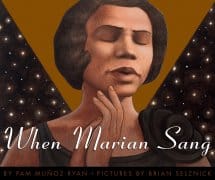
When Marian Sang by Pam Mu ñoz Ryan; illustrated by Brian Selznick

(Children + CT 275 .A51 R92 2002)

An introduction to the life of Marian Anderson, extraordinary singer and civil rights activist, who was the first African American to perform at the Metropolitan Opera, whose life and career encouraged social change.

The Daring Nelly Bly: America’s Star Reporter by Bonnie Christensen

(Children + CT 275. B527 C57 2003)

Introduces the life of Nellie Bly who, as a “stunt reporter” for the New York World newspaper in the late 1800s, championed women’s rights and traveled around the world faster than anyone ever had.

The Daring Escape of Ellen Craft by Cathy Moore; illustrated by Mary O’Keefe Young

(Children CT 275 .C723 M66 2002)

“On December 21, 1848, Ellen Craft slipped out into the cold, dark night and took her first steps toward freedom. Ellen and her husband, William, had a daring plan to escape from slavery. Posing as a white man, Ellen hoped to travel north as William’s slave master. If anyone discovered her, she’d be severely punished. But Ellen was willing to risk everything—even death—to be free.” —provided by the publisher

Ella Fitzgerald: The Tale of a Vocal Virtuosa by Andrea Davis Pinkney; illustrated by Brian Pinkney

(Children + CT275 .F5662 P56 2002)

A brief recounting of the career of this jazz musician in the voice of “Scat Cat Monroe.”

Voice of Freedom: Fannie Lou Hamer, Spirit of the Civil Rights Movement by Carole Boston Weatherford; illustrated by Ekua Holmes

(Children + CT275 .H346 W42 2015)

Celebrates the life and legacy of civil rights advocate Fannie Lou Hamer in inspiring words and vibrant artwork.

Zora Hurston and the Chinaberry Tree by William Miller; illustrated by Cornelius Van Wright and Ying-Hwa Hu

(Children + CT 275 .H868 M54 1994)

“William Miller presents a lyrical account of a little-known episode in the childhood of the renowned writer Zora Neale Hurston. This inspirational story will appeal to all readers who, like Zora, believe in their dreams.” —provided by the publisher

Rosa by Nikki Giovanni; illustrated by Bryan Collier

(Children + CT 275 .P3752 G56 2005)

“Rosa Parks is one of the most famous figures in American history. On December 1, 1955, she got on a Montgomery, Alabama city bus after work and refused to give up her seat to a white man, an act that sparked a revolution.” —provided by the publisher

They Called Her Molly Pitcher by Anne Rockwell; illustrated by Cynthia von Buhler

(Children CT 275 .P5566 R62 2002)

A picture book biography of Revolutionary War heroine, Mary Ludwig Hayes McCauly, also called “Molly Pitcher.”

A Voice of Her Own: The Story of Phillis Wheatley , Slave Poet by Kathryn Lasky; illustrated by Paul Lee

(Children Lg CT 275 .W525 L37 2003)

A biography of an African girl brought to New England as a slave in 1761 who became famous on both sides of the Atlantic as the first Black poet in America.

Beatrix: Various Episodes from the Life of Beatrix Potter by Jeanette Winter

(Children CT 788 .P68 W56 2003)

This simple biography of Beatrix Potter, best known for writing The Tale of Peter Rabbit, includes excerpts from her published letters and journals and reveals why she drew and wrote about animals.

Cloth Lullaby: The Woven Life of Louise Bourgeois by Amy Novesky; illustrated by Isabelle Arsenault

(Children + CT 1018 .B69 .N68 2016)

“Louise spent her childhood in France as an apprentice to her mother before she became a tapestry artist herself. She worked with fabric throughout her career, and this biographical picture book shows how Bourgeois’s childhood experiences weaving with her loving, nurturing mother provided the inspiration for her most famous works. With a beautifully nuanced and poetic story, this book stunningly captures the relationship between mother and daughter and illuminates how memories are woven into us all.” —provided by the publisher

Amelia to Zora: Twenty-Six Women Who Changed the World by Cynthia Chin-Lee; illustrated by Miriam Klein Stahl

(Children CT 3207 .C49 2005)

“From adventurer Amelia Earhart to computer pioneer Grace Hopper to novelist Zora Neale Hurston, discover women who have made a difference in people’s lives.” —provided by the publisher

Rad American Women: A to Z by Kate Schatz; illustrated by Megan Halsey and Sean Addy

(Children CT 3260 .S33 2015)

“Profiled are 26 American women from the 18th through 21st centuries, who have made-or are still making–history as artists, writers, teachers, lawyers, or athletes. The women come from a variety of economic and ethnic backgrounds and many had to overcome extreme hardships. One woman represents each alphabetical letter beginning with Angela Davis, an activist, teacher, and writer, and concludes with Zora Neale Hurston, an anthropologist and writer” — Provided by publisher.

Josephine: The Dazzling Life of Josephine Baker by Patricia Hruby Powell; illustrated by Christian Robinson

(Children + GV 1785 .B3 P68 2014)

A portrait of the passionate performer and civil rights advocate Josephine Baker, the woman who worked her way from the slums of St. Louis to the grandest stages in the world.

Bloomers! by Rhonda Blumberg; illustrated by Mary Morgan

(Children HQ 1236.5 .U6 B58 1993)

Explains how the new-fashioned outfit, bloomers, helped Amelia Bloomer, Elizabeth Cady Stanton, and Susan B. Anthony spread the word about women’s rights.

Beautiful Warrior: The Legend of the Nun’s Kung Fu by Emily Arnold McCully

(Children + PZ7 .M14 Be 1998)

Tells the story of two unlikely kung fu masters and how their skill in martial arts saves them both.

Drum Dream Girl: How One Girl’s Courage Changed Music by Margarita Engle; illustrated by Rafael L ópez

(Children Picture Book + ENGLE)

Follows a girl in the 1920s as she strives to become a drummer, despite being continually reminded that only boys play the drums, and that there has never been a female drummer in Cuba. Includes note about Millo Castro Zaldarriaga, who inspired the story, and Anacaona, the all-girl dance band she formed with her sisters.

The Escape of Oney Judge: Martha Washington’s Slave Finds Freedom by Emily Arnold McCully

(Children Picture Book + MCCUL)

Young Oney Judge risks everything to escape a life of slavery in the household of George and Martha Washington and to make her own way as a free black woman.

Red Butterfly: How a Princess Smuggled the Secret of Silk Out of China by Deborah Noyes; illustrated by Sophie Blackall

(Children Picture Book + NOYES)

In long-ago China, as a young princess prepares to leave her parents’ kingdom to travel to far-off Khotan where she is to marry the king, she decides to surreptitiously take with her a precious reminder of home.

Aunt Harriet’s Underground Railroad in the Sky by Faith Ringgold

(Children Picture Book Lg RINGG)

With Harriet Tubman as her guide, Cassie retraces the steps escaping slaves took on the Underground Railroad in order to reunite with her younger brother.

Frida by Jonah Winter; illustrated by Ana Juan

(Children Picture Book WINTE)

About the childhood of Frida Kahlo and how it influenced her art.

Biographies

Claudette Colvin: Twice Toward Justice by Phillip Hoose

(Children CT 275 .C6495 H66 2009)

Biography of one of the first young activists to resist bus segregation in Montgomery, Alabama.

Amelia Lost: The Life and Disappearance of Amelia Earhart by Candace Fleming

(Children CT 275 .E15 F53 2011)

Tells the story of Amelia Earhart’s life—as a child, a woman, and a pilot—and describes the search for her missing plane.

Margaret Fuller: Bluestocking, Romantic, Revolutionary by Ellen Wilson

(Children CT 275 .F85 W55)

A biography of an American writer active in early women’s rights activities and prominent in the transcendentalist movement of the early 1800’s.

The World at Her Fingertips: The Story of Helen Keller by Joan Dash

(Children CT 275 .K4486 D37 2001)

Biography of the socialist, anti-racist, disability rights activist.

Woman Against Slavery: The Story of Harriet Beecher Stowe by Anthony Scott

(Children CT 275 .S866 S36)

Biography of the author and abolitionist.

Only Passing Through: The Story of Sojourner Truth by Anne Rockwell; illustrated by R. Gregory Christie

(Children CT 275 .T78 R62 2000)

Biography of the abolitionist and women’s rights activist.

Kindred Spirit: A Biography of L.M. Montgomery, Creator of Anne of Green Gables by Catherine M. Andronik

(Children CT 310 .M66 A62)

Covers the personal life and literary career of the Canadian writer best known for her novels about Anne, a girl from Prince Edward Island.

The Bronte Sisters: The Brief Lives of Charlotte, Emily, and Anne by Catherine Reef

(Children CT 787 .B76 R43 2012)

“The Bronte sisters were the most extraordinary of literary siblings. In the nineteenth century, when women were discouraged from writing and publishing books, all three produced one or more novels now considered masterpieces.” —provided by the publisher

Untamed: The Wild Life of Jane Goodall by Anita Silvey

(Children + CT 788 .G65 S55 2015)

“This biography for children will trace Goodall’s life, but each chapter will also focus on two or more the chimpanzees that she observed, with information in sidebars about these particular animals. Along with biographical details, the book will explore the ethical issues that surround Goodall’s work and show what has changed in our understanding of Great Apes. What do we know today about these animals in terms of language, speech, tool use, and DNA? How has sophisticated technology—GPS systems, Satellite imagery, portable digital microphones—been used to gain new information about animal populations.” —provided by the publisher

Joan of Arc by Diane Stanley

(Children + DC 103.5 .S66 1998)

A biography of the fifteenth-century peasant girl who led a French army to victory against the English and was burned at the stake for witchcraft.

Women of Hope: African Americans Who Made a Difference by Joyce Hansen

(Children Lg E 185.86 .H27 1998)

Features photographs and biographies of twelve African-American women.

With Courage and Cloth: Winning the Fight for a Woman’s Right to Vote by Ann Bausum

(Children + JK1896 .B38 2004)

Recounts the story of the fight for women’s suffrage with particular focus on the efforts of Alice Paul.

09.28.2016

Ghosts

Picture Books

Leo: A Ghost Story by Mac Barnett; illustrated by Christian Robinson

(Children Picture Book + BARNE)

“You would like being friends with Leo. He likes to draw, he makes delicious snacks, and most people can’t even see him. Because Leo is also a ghost. When a new family moves into his home and Leo’s efforts to welcome them are misunderstood, Leo decides it is time to leave and see the world” –Provided by publisher.

Skeleton Hiccups by Margery Cuyler; illustrated by S. D. Schindler

(Children Picture Book + CUYLE)

Ghost tries to help Skeleton get rid of the hiccups.

Little Ghost by Kate Khdir and Sue Nash; illustrated by Caroline Church

(Children Picture Book + KHDIR)

Ghost’s attempts to scare the pupils at a human school result in his becoming part of their Halloween play.

Ghosts in the House by Kazuno Kohara

(Children Picture Book + KOHAR)

Tired of living in a haunted house, a young witch captures, washes, and turns her pesky ghosts into curtains and a tablecloth.

The Snow Ghosts by Leo Landry

(Children Picture Book LANDR)

Snow ghosts live in the far north, and they love to play and have fun.

The Haunted Hamburger and Other Ghostly Stories by David LaRochelle; illustrated by Paul Meisel

(Children Picture Book + LAROC)

A ghost father tells his children three frightening stories to help them go to sleep at night.

Ol’ Clip Clop: A Ghost Story by Patricia C. McKissack; illustrated by Eric Velasquez

(Children Picture Book + MCKIS)

One October night in 1745, John Leep, a mean and stingy lawyer, sets out to evict a widow from one of his rental houses and is followed by a ghostly rider.

The Ghost-Eye Tree by Bill Martin, Jr. and John Archambault ; illustrated by Ted Rand

(Children Picture Book + MARTI)

Walking down a dark lonely road on an errand one night, a brother and sister argue over who is afraid of the dread Ghost-Eye tree.

Just in Case: A Trickster Tale and Spanish Alphabet Book by Yuyi Morales

(Children Picture Book + MORAL)

As Se ñor Calavera prepares for Grandma Beetle’s birthday he finds an alphabetical assortment of unusual presents, but with the help of Zelmiro the Ghost, he finds the best gift of all.

The Bake Shop Ghost by Jacqueline K. Ogburn; illustrated by Marjorie Priceman

(Children Picture Book + OGBUR)

Miss Cora Lee Merriweather haunts her bake shop after her death, until the new shop owner makes a deal with her.

The Canterville Ghost by Oscar Wilde; illustrated by Lisbeth Zwerger

(Children + PZ7.W64583 Can 1986)

A celebrated and feared English ghost is outraged when the new American owners of his haunting place refuse to take him seriously and actually fight back against him.

Beginning Readers

A Ghost Named Fred

Nathaniel Benchley; illustrated by Ben Schecter

(Children Picture Book BENCH)

Chapter Books

The Night Gardener by Jonathan Auxier

(Children PZ7.A931 Ni 2014)

Irish orphans Molly, fourteen, and Kip, ten, travel to England to work as servants in a crumbling manor house where nothing is quite what it seems to be, and soon the siblings are confronted by a mysterious stranger and secrets of the cursed house.

Doll Bones by Holly Black

(Children PZ7.B52878 Dol 2013)

Zach, Alice, and Poppy, friends from a Pennsylvania middle school who have long enjoyed acting out imaginary adventures with dolls and action figures, embark on a real-life quest to Ohio to bury a doll made from the ashes of a dead girl.

Spirit’s Key by Edith Cohn

(Children PZ7.C66493 Spi 2014)

Having finally developed the psychic ability her father has used to provide for them, twelve-year-old Spirit Holden, aided by the ghost of her beloved dog Sky, investigates the mystery of why wild dogs are dying on their remote island.

All the Lovely Bad Ones by Mary Downing Hahn

(Children PZ7.H1256 Al 2008)

While spending the summer at their grandmother’s Vermont inn, two prankster siblings awaken young ghosts from the inn’s distant past who refuse to “rest in peace.”

The Ghost of Crutchfield Hall by Mary Downing Hahn

(Children PZ7.H1256 Gho 2010)

In the nineteenth century, ten-year-old Florence Crutchfield leaves a London orphanage to live with her great-uncle, great-aunt, and sickly cousin James, but she soon realizes the home has another resident, who means to do her and James harm.

The Beasts of Clawstone Castle by Eva Ibbotson; illustrated by Kevin Hawkes

(Children PZ7.I11555 Bea 2006)

While spending the summer with elderly relatives at Clawstone Castle in northern England, Madlyn and her brother Rollo, with the help of several ghosts, attempt to save the rare cattle that live on the castle grounds.

The Haunting of Granite Falls by Eva Ibbotson; illustrated with Kevin Hawkes

(Children PZ7.I11555 Hau 2004)

Constable & Toop by Gareth P. Jones

(Children PZ7.J712 Co 2013)

In Victorian London, an undertaker’s son who can see ghosts and is haunted by their constant demands for attention must decide whether to help when a horrible disease imprisons ghosts into empty houses in the world of the living.

The Ghost of Thomas Kempe by Penelope Lively

(Children PZ7.L7397 Gh)

The Wild Hunt of Hagworthy by Penelope Lively

(Children PZ7.L7397 Wi)

Liesl & Po by Lauren Oliver; illustrated by Kei Acedera

(Children PZ7.O475 Lie 2011)

A mix-up involving the greatest magic in the world has tremendous consequences for Liesl, an orphan who has been locked in an attic, Will, an alchemist’s runaway apprentice, and Po, a ghost, as they are pursued by friend and foe while making an important journey.

The Screaming Staircase by Jonathan Stroud

(Children PZ7.S92475 Sc 2013)

Follows three young operatives of a Psychic Detection Agency as they battle an epidemic of ghosts in London.

Young Adult

The Ghosts of Kerfol by Deborah Noyes

(Young Adult PZ7.N96157 Gh 2008)

Over the centuries, the inhabitants of author Edith Wharton’s fictional mansion, Kerfol, are haunted by the ghosts of dead dogs, fractured relationships, and the bitter taste of revenge.

The Turning by Francine Prose

(Young Adult PZ7.P94347 Tur 2012)

“A teen boy becomes the babysitter for two very peculiar children on a haunted island in this modern retelling of The Turn of the Screw”– Provided by publisher.

The Other Side of Dark by Sarah Smith

(Young Adult PZ7.S65918 Oth 2010)

Since losing both of her parents, fifteen-year-old Katie can see and talk to ghosts, which makes her a loner until fellow student Law sees her drawing of a historic house and together they seek a treasure rumored to be hidden there by illegal slave-traders.

Afterworlds by Scott Westerfield

(Young Adult PZ7.W5197 Aft 2014)

In alternating chapters, eighteen-year-old Darcy Patel navigates the New York City publishing world, and Lizzie, the heroine of Darcy’s novel, slips into the “Afterworld” to survive a terrorist attack and becomes a spirit guide, as both face many challenges and both fall in love.

09.08.2016

Staff Book Suggestions Autumn 2016

Kristin Cook

Jonathan Strange & Mr. Norrell by Susanna Clarke
(Library of Congress PZ4.C605 Jo 2004​​​)

In the early nineteenth century, magic begins to return to England, a place where only gentleman-magicians have existed for 300 years—academics but not practitioners. As the Napoleonic wars rage on the Continent, these practical magicians must decide where their interests lie—in their own world, which they can help defend, or in that of faerie, which promises to unlock more of the mysteries of ancient English magic. Populated with unforgettable characters (and some of my favourite I’ve ever read), JSAMN is a sweeping, powerful narrative about the choices of men and their effect on those in the shadows—women, servants, the poor—who are often marginalized but on whom the world turns. This is a great novel for a long weekend with some tea or spiced cider as the leaves begin to fall!

Jimmy Feeney

Amazing Tales From The Red Sox Dugout by Jim Prime and Bill Nowlin
(Library of Congress GV875.B62 P74 2012)

A collection of entertaining stories of former Sox players who graced Fenway over the last century. Some tales you’ll remember, some you won’t, and some you’ll forget as soon as you read them. Not a pitcher’s duel, but it is relaxing as an afternoon in the bleachers.

Judith Maas
Bernard Berenson: A Life in the Picture Trade by Rachel Cohen
(Library of Congress CT275.B467 C63 2013)

To all appearances, the life of Bernard Berenson (1865–1959) was a dream come true: leaving behind his impoverished immigrant origins, he attained fame as an art historian and connoisseur and lived in grand style in his Florence villa. But this biography casts Berenson in a more interesting light, as someone torn between his desire to contemplate Italian Renaissance art as an end in itself and his need and desire for money. Over time, he devoted his talents more and more to the business side of the art world, authenticating paintings in a secret arrangement with an art dealer. Despite many accomplishments, he spoke of himself as being a failure.      

Cohen’s biography explores Berenson’s character, his many friendships and romances, and the different worlds in which he traveled. His intellectual life began in Boston, where he became a devoted reader from an early age, thanks to the Boston Public Library, and, with the support of patrons, attended Harvard. Highlights of the book for me were its accounts of nineteenth-century Boston and a chapter describing how Berenson looked at paintings and why he thought a painted version of an object gives a viewer more pleasure than the object itself.

Kaelin Rasmussen
Invisible Man by Ralph Ellison
(Library of Congress​ PZ4.E47 In)

This twentieth-century American classic has been on my list for a long time. Though not particularly evocative of autumn, the book does start out in an academic setting, fitting for the start of a new school year. The narrator is a young African American man attending college in the segregated South, at an all-black institution funded by wealthy Northern white men. The story traces the young man’s journey, from youthful complaisance in the South to disillusionment in the North, in the heart of Harlem, where he struggles to understand a hostile world and the brutal truth of racism in this country. He concludes that his race has rendered him invisible. Beautifully written, but not easy to read, this superb novel is as relevant today as when it was first published in 1952.

Alyssa True
The Rival Queens: Catherine de’ Medici, her Daughter Marguerite de Valois, and the Betrayal that Ignited a Kingdom by Nancy Bazelon Goldstone
(Library of Congress CT1018.C39 G64 2015)

The Rival Queens is for those who enjoy badly-behaved royals with a healthy dose of snark. This is an enthralling double biography of Catherine de’ Medici and her daughter Marguerite de Valois, both queens of France. Despite her cynicism toward most of the nobility, Goldstone paints a fair picture of Margot/Marguerite/Margaret, who is definitely the tragic hero of this tale.

Mary Warnement

All For Nothing by Walter Kempowski​

(Library of Congress NEW PZ4.K326 Al 2015​)

This novel must be informed by the research Kempowski conducted for decades to produce both his nine-volume novel Die deutsche Chronik and magnificent series Echolot or “Sonar” of which only the last volume, Swansong, 1945, has been translated into English. Many refer to Echolot as a collage—letters, memoir, testimony—all first-hand accounts of war-time in Germany that he amassed and selected. He did not choose a particular place or class but rather sought to represent the entirety. All For Nothing focuses on one particular family and those surrounding them in one place, a town in East Prussia, in the winter of 1945 as the Russians approach. We know what happens, but he does not allow his characters that 20/20 vision. This is published by Granta and The Guardian loved it. If you are looking for WWII-era thriller, this is not it. The unease of waiting and not knowing takes precedence as a series of travelers pass by and through this home of a fading aristocratic family. The intensity builds as the family considers taking to the road and becoming refugees themselves. I shall say no more.

If interested in the topic but you want more traditional story-telling, I recommend Chris Bohjalian’s Skeletons at the Feast, also in the collection.

Hannah Weisman

Nothing to Envy: Ordinary Lives in North Korea by Barbara Demick

(Library of Congress HN730.6.A8 D46 2009​)

Barbara Demick’s non-fiction account of life in North Korea follows six individuals through the 1990s into the early 2000s as they survive “the Arduous March” (North Korea’s deadly famine), the death of Kim Il-sung and the transition to the dictatorship of Kim Jong-il, the harsh conditions of life under a totalitarian regime, and eventual defection. Demick’s detailed narrative—focused on individuals rather than facts and figures—reads like a novel, making the grim subject matter easier to grapple with. Nothing to Envy is both intriguing and terrifying and provides an excellent introduction to the realities of life in North Korea.

09.02.2016

Books and Libraries

Picture Books

But Excuse Me That is My Book by Lauren Child

(Children Picture Book + CHILD)

When Lola’s favorite book is not on the library’s shelf, her older brother, Charlie, tries to find another book she will enjoy.

The House of Wisdom by Florence Parry Heide & Judith Heide Gilliland; illustrated by Mary GrandPré

(Children Picture Book + HEIDE)

Ishaq, the son of the chief translator to the Caliph of ancient Baghdad, travels the world in search of precious books and manuscripts and brings them back to the great library known as the House of Wisdom.

Library Mouse by Daniel Kirk

(Children Picture Book + KIRK)

Sam, a shy but creative mouse who lives in a library, decides to write and illustrate his own stories which he places on the shelves with the other library books, but when children find the tales, they all want to meet the author.

Library Lion by Michelle Knudsen; illustrated by Kevin Hawkes

(Children Picture Book + KNUDS)

A lion starts visiting the local library but runs into trouble as he tries to both obey the rules and help his librarian friend.

The Midnight Library by Kazuno Kohara

(Children Picture Book + KOHAR)

“Once there was a library that only opened at night. Step inside and meet the little librarian and her three assistant owls.” Provided by publisher.

Bats at the Library by Brian Lies

(Children Picture Book LIES)

Bored with another normal, inky evening, bats discover an open library window and fly in to enjoy the photocopier, water fountain, and especially the books and stories found there.

Lola at the Library by Anna McQuinn; illustrated by Rosalind Beardshaw

(Children Picture Book MCQUI)

“Lola loves Tuesdays. That’s when she and her mommy go to the library. Lola meets her friends there. They share books and don’t have to be quiet all the time. The nice librarian tells stories. There is a big machine that buzzes Lola’s books in and out, and she can take any books she wants home with her. Lola and her mommy always stop for a treat on the way home. No wonder Lola loves the library.” Provided by publisher.

Tomás and the Library Lady by Pat Mora; illustrated by Raúl Colón

(Children Picture Book + MORA)

While helping his family in their work as migrant laborers far from their home, Tomás finds an entire world to explore in the books at the local public library.

Miss Moore Thought Otherwise: How Anne Carroll Moore Created Libraries for Children by Jan Pinborough; illustrated by Debby Atwell

(Children Picture Book + PINBO)

Examines the story of how librarian Ann Carroll Moore created the first children’s room at the New York Public Library.

Marguerite Makes a Book by Bruce Robertson; illustrated by Kathryn Hewitt

(Children + PZ7 .R55 Ma)

In medieval Paris, Marguerite helps her nearly blind father finish painting an illuminated manuscript for his patron, Lady Isabelle.

Beginning Readers

Mr. Putter and Tabby Turn the Page by Cynthia Rylant

(Children Picture Book RYLAN)

Mr. Putter and Mrs. Teaberry bring Tabby and Zeke to the library for a special storytime.

Chapter Books

Booked by Kwame Alexander

(Children PZ7.A3771 Bo 2016)

“In this middle grade novel-in-verse by the Newbery Medal-winning and Coretta Scott King Honor Award-winning author of The Crossover, soccer, family, love, and friendship, take center stage as twelve-year-old Nick learns the power of words as he wrestles with problems at home, stands up to a bully, and tries to impress the girl of his dreams.” Provided by publisher.

The Grimm Legacy by Polly Shulman

(Children PZ7.S559474 Gr 2010)

New York high school student Elizabeth gets an after-school job as a page at the “New-York Circulating Material Repository,” and when she gains coveted access to its Grimm Collection of magical objects, she and the other pages are drawn into a series of frightening adventures involving mythical creatures and stolen goods.

The Library Card by Jerry Spinelli

(Children PZ7.S7546 Li 1997)

The lives of four young people in different circumstances are changed by their encounters with books.

The Great Good Thing by Rod Townley

(Children PZ7.T628 Gr 2001)

Nothing ever changes inside the storybook kingdom inhabited by twelve-year-old Princess Sylvie, her parents, and many other characters until Sylvie discovers that by allying herself with the Reader she can experience new adventures beyond the confines of the book.

The Forbidden Library by Django Wexler

(Children PZ7.W523 Fo 2014)

When her father is lost at sea shortly after meeting a very unusual visitor, Alice must leave her home to live with an “uncle” whose rural Pennsylvania estate includes a massive and mysterious library that holds much more than books.

Young Adult

The Book of Dead Days by Marcus Sedgwick

(Young Adult PZ7.S4435 Bo 2004)

With the help of his servant and an orphan girl, a magician named Valerian searches graveyards, churches, and underground waterways for a book he hopes will save him from a pact he has made with evil.’

The Book Thief by Markus Zusak

(Young Adult PZ7.Z837 Boo 2006)

Trying to make sense of the horrors of World War II, Death relates the story of Liesel—a young German girl whose book-stealing and story-telling talents help sustain her family and the Jewish man they are hiding, as well as their neighbors

Informational Texts

Book by John Agard

(Children Z4.Z9 A625 2015)

Books contain countless tales but what if Book told its own story? From clay tablets to e-readers, here is a quirky, kid-friendly look at the book.

How a Book is Made by Aliki

(Children + Z116.A2 A42 1986)

Side by Side: Five Favorite Picture Book Teams Go to Work by Leonard S. Marcus

(Children + Z286.P53 M37 2001)

Describes the process by which several teams of authors and illustrators have created such picture books as “Louis the Fish,” “The Glorious Flight,” “The Stinky Cheese Man and Other Fairly Stupid Tales,” “Sam and the Tigers,” and “The Magic School Bus Explores the Senses.”

Ways of Telling: Conversations on the Art of the Picture Book by Leonard S. Marcus

(Children NC965 .M345 2002)

A collection of interviews with fourteen artists and writers of picture books who, regardless of their country of origin, have had a major impact in the United States.

Richard Wright and the Library Card by William Miller; illustrated by Gregory Christie

(Children + CT275.W7445 M54 1997)

Based on a scene from Wright’s autobiography, Black Boy, in which the seventeen-year-old African-American borrows a white man’s library card and devours every book as a ticket to freedom.

Children’s Book Covers: Great Book Jackets and Cover Design by Alan Powers

(Children + NC973 .P68 2003)

06.22.2016

Staff Book Suggestions Summer 2016

Emily Anderson

Brilliant Beacons: A History of the American Lighthouse​ by Eric Jay Dolin
(Library of Congress Classification​ NEW VK1023 .D65 2016​​)

Combine your love of history, biography, the ocean, adventure, and birds (?), and commemorate the three hundredth anniversary of America’s oldest light station, Boston Light, by enjoying this comprehensive history of America’s lights. Build up your lighthouse enthusiasm by watching Eric Jay Dolin’s Athenæum lecture on Vimeo, or listen to the podcast recording on SoundCloud.

A Short, Bright Flash: Augustin Fresnel and the Birth of the Modern Lighthouse by Theresa Levitt
(Library of Congress Classification​ VK1015 .L48 2013​​)

A fascinating history of the invention that enhanced the safety, cost efficiency, and effect of lighthouses worldwide, and the man whose research altered the science of optics.

David Dearinger

Burr​ by Gore Vidal
(Library of Congress PZ3.V6668 Bu​​)

Forget all the hoopla about Alexander Hamilton. Aaron Burr was a far more interesting character, especially as he appears in Gore Vidal’s fascinating, thoroughly readable, and hysterical historical novel (And if you are worried about historical accuracy: Vidal’s Burr is no more fictionalized than Broadway’s Hamilton—and, even without the hip-hop, he’s a lot more fun). In fact, Vidal gives us a Burr who, though aged, is as brilliant, feisty, cunning—and randy—as he was in his youth, glimpses of which we get through Burr’s “memoirs” that Vidal occasionally inserts into the narrative. Whatever else he might be, Vidal’s Burr is also a true patriot, which makes one suspect that Vidal’s Burr is, in many ways, Vidal himself.

Emily Levine

The Circle​ by Dave Eggers
(Library of Congress PZ4.E30 Cir 2013​​)

In his dystopian novel, Eggers follows Mae, his young heroine, into an internet startup company to explore questions of social media, privacy, democracy, history, and collective memory in twenty-first century America.

Musicophilia by Oliver Sacks
(Library of Congress ML3830 .S13 2007​​)

Oliver Sacks, celebrated neurologist and author, explores the connection between music and the human psyche through several extraordinary nonfiction stories.

Heather Lonks
Call the Midwife: A Memoir of Birth, Joy, and Hard Times by Jennifer Worth
(Library of Congress CT788.W777 A3 2012​)

For those of you who, like me, are already going through withdrawals and just can’t wait for the Call the Midwife Christmas special, I highly recommend picking up the memoir the show is based on.

Call the Midwife: A Memoir of Birth, Joy, and Hard Times by Jennifer Worth is the first part of the affectionately termed Midwife Trilogy. I couldn’t put this book down! Some of the stories are reminiscent of specific episodes, and it is fun to try and remember how the characters looked in the show. And there are a number of stories that were brand new to me.

The wonderful thing about reading this memoir is we really hear Jenny’s voice. We get her internal dialogue, including her struggle adapting to life in Poplar and how she feels interacting with its slew of characters. The stories are just as heartwarming (and heartbreaking) as the television program. I can’t wait to continue reading about Jenny’s East End adventures in the second installment, Shadows of the Workhouse.

Judith Maas
Downtown: My Manhattan by Pete Hamill​
(Library of Congress F128.3 .H25 2004)

Pete Hamill grew up in Brooklyn and still remembers his first glimpse of Manhattan—from the foot of the pedestrian ramp of the Brooklyn Bridge: it looked like Oz. That sense of excitement has stayed with him. He began his journalism career as a reporter for the New York Post in 1960, finding that he always wanted to keep learning about the people and the neighborhoods he covered, even after his stories were written. Walking around lower Manhattan, he says, he still seeks not adventure, but chances to see the familiar in new ways.

Hamill intersperses memoir and history, exploring how streets and neighborhoods—the Bowery, Broadway, Park Row, Fifth Avenue, the Lower East Side—changed over time. All kinds of subjects come to light, from the rise of newspapers, to the beginnings of tap dancing, to the development of the grid, to the stories behind landmark buildings. He doesn’t just give the facts, but tries to envision everyday life in bygone New York, to see the city from the perspective of the old Knickerbocker families or the newly arrived immigrants. Along the way, Hamill reflects on New York’s never-ending dynamism and on why the city is the “capital of nostalgia.”

Carolle Morini
Love, Nina by Nina Stibbe​
(Library of Congress​ CT788.S853 A4 2014)

Dear Reader,

Reading this book has been such a joy. Here is a recent conversation I had with a friend about it.

Me: I am so very happy  one of the members suggested this book to me to read this summer.

Friend: How come?

Me: It makes me laugh.

Friend: That’s cool, what else?

Me: One of the people in the book was the editor of the London Review of Books and I like learning more about her. The nanny, Nina, captured the characteristic of the family she worked for and all the people who visited so well! I feel like I am sitting with them at the table eating pie made from tin filling.

Friend: Tin filling?

Me: You have to read the book.

Friend: Maybe.

Me: YOU HAVE TO READ IT! It is an epistolary novel. Nina write to her sister in the 1980s about all her London adventures!

Friend: EPISTOLARY!! Why didn’t you say that to begin with?! I love epistolary novels!

Me: sigh.

Enjoy the book!

Kaelin Rasmussen
Solaris by Stanislaw Lem​​
(Library of Congress​ NEW PZ4.L537 So 1987)

I only recently became aware of this science fiction classic, but it was worth the wait. Solaris was first published in Warsaw in 1961, was translated into French, and then translated into English, from the French, in 1970. The story follows the (now) classic scenario of humans in the future interacting with extraterrestrial life. There’s a lot to this story: part mystery, part ghost story, part philosophical rumination. It has excellent, deftly drawn characters, and the world-building is top-notch. The plot: for more than one hundred years, scientists have studied the mysterious planet Solaris—its surface is covered by a massive ocean that’s not made of water, but is in fact theorized to be a sentient life form. The only thing scientists know for sure is that the Ocean has defied all attempts to classify it and ignored all overtures of communication. After some puzzling messages are sent to Earth from the space station orbiting Solaris, rookie Solarisist Kelvin is sent to find out what’s going on. He is horrified to find himself confronted with a being, an exact copy of a long-dead lover, apparently plucked from his memory. She is not human, but she thinks she is. The grief-stricken Kelvin attempts to find out what she is and why, asking himself how two species with no common ground—not language, not memory, not even life and death—could ever hope to understand one another.

Arnold Serapilio
The Brief and Frightening Reign of Phil​ by George Saunders
(Library of Congress PZ4.S2548 Br 2005)

Published in 2005, George Saunders’s absurdist take on border disputes, bad leadership, and civic responsibility resonates to an unsettling degree in 2016. And it’s all over in under 130 pages, making this funny and smart romp one heck of a breezy read.

Mary Warnement

Expert in Murder by Nicola Upson

(Library of Congress NEW PZ4.U685 Ex 2008)

In the mood for a mystery from the heyday of whodunnits from the 1930s but you’ve already read all of the classics? Well, Upson has written one set in 1934 whose detective is Josephine Tey, which was the pen name used by Elizabeth Mackintosh for her classics, Man in the Queue and The Daughter of Time. Upson has done her homework to add convincing details, like giving a character a typewriter with the brand name “Good Companion,” referencing Saveloy skins and May Gaskell’s war library for soldiers, making the policeman an educated man with a taste for paintings, and revolving the action around the final performances of the long-running Richard of Bordeaux, an actual play written by Mackintosh. This is a well-plotted and suspenseful story, though the end may have dragged a bit, beyond the denouement. Mystery lovers with a taste for that period and bookish intrigue will enjoy this.

03.31.2016

Staff Book Suggestions Spring 2016

Kristin Cook

Vita Nova by Louise Glück
(Library of Congress PS3557.L8 V58 1999​)

Spring and autumn are my favourite times for poetry, and last fall I fell in love with poet Lousie Glück, who makes her home in Cambridge. In mid-April I read Vita Nova in one sitting, a collection of poems about spring, about death and rebirth, about starting over. Although the ostensible subject matter of the collection is the aftermath of a broken marriage, Vita Nova is replete with symbols drawn from classical mythology. As a historian and art historian, I find these themes in her work a hearkening back to oral tradition, to the foundations of poetry. In the New York Times Book Review it was once written that “no American poet writes better than Louise Glück[;] perhaps none can lead us so deeply into our own nature.” This exploration of the human condition has led critics to consider Glück’s work to be “bleak” or “dark,” but I find her work wholly uplifting, perhaps because of what poetryfoundation.org calls her poetry’s “dreamlike quality that at the same time deals with the realities of passionate and emotional subject.” If you wish to explore her work, the Athenæum holds many of her publications, as well as a volume of her collected works.

Adriene Galindo

Notes From a Small Island by Bill Bryson
(Library of Congress DA566.4 .B79 1996​)

If you’ve visited Great Britain before, many of Bryson’s anecdotes will sound all too familiar. I enjoyed being virtually transported back to one of my favorite places on the planet and being reminded of its lovable quirks. If you’ve never been to England, Wales, or Scotland, this book is a fun, quick read introducing you to the charming people and places you’ll find there. Notes From a Small Island is Bryson’s final tour of Britain before returning to America after living 20 years as an expat. By the end of the book, you and Bill will wonder together why on earth he would want to leave such a lovely place.​ Flaubert’s verdant pastures and dusty roads of provincial France come alive, as does Madame’s hunger for the good life and fiery passions. A Gallic workout for the senses.

James Kraus
Submission by Michel Houellebecq; translated from French by Lorin Stein
(Library of Congress NEW PZ4.H8334 Su 2015​)

Released in its English translation in late 2015, Submission, Michel Houellebecq’s (pronounced: well-beck) fourth novel, put the author into a near Rushdie-like exile after the book rankled Muslim extremists due its portrayal of the of the New Islamic Party candidate’s election to French President and the consequent induction of Islamic Law. Houellebecq’s caricature “graced” the cover of the January 7, 2015 lampooning tabloid Charlie Hebdo​. That morning two Islamic gunmen shot and killed twelve Hebdo staff members and sparked the international Je Suis Charile movement.

The Islamic President’s election is a minor portion in a brief book, much like the controversial references to Mohammed in Rushdie’s Satanic Verses. Through its main character and narrator François—​the bored, depressive, self-indulgent Sorbonne University Professor and J. K. Huysman expert—Submission questions how we all submit on a daily basis, and how true submission is an act of devotion in a society awash in manipulation, politicking and instantaneous impulse gratification.

Judith Maas
The Man That Got Away: The Life and Songs of Harold Arlen by Walter Rimler
(Library of Congress NEW CT275.A75 R55 2015​)

Harold Arlen’s music has always been better known than his name. A sampling of his songs shows that he deserves much better: “Over the Rainbow,” “Get Happy,” “The Man That Got Away,” “Blues in the Night,” “One for My Baby,” “World on a String,” “Stormy Weather,” “Come Rain or Come Shine,” “Last Night When We Were Young.” Songwriters across generations, from Irving Berlin to Paul McCartney, have admired his work.

Arlen (1905–1986) grew up in Buffalo, the son of a cantor, and drew upon memories of his father’s music when writing his songs. Largely self-taught, he started out as a singer, pianist, arranger, and bandleader, before finding his calling as a composer, pretty much by accident—he came up with the melody of “Get Happy” in 1929 to pass the time during a gig as a rehearsal pianist. Over a long career, he worked in vaudeville houses and nightclubs, on Broadway, and in Hollywood, and collaborated with such great lyricists as Johnny Mercer, E. Y. Harburg, and Ira Gershwin. 

Reading this biography, I especially enjoyed learning about Arlen’s working methods, the genesis of many of the songs, the ups and downs of the music business, and what qualities makes an Arlen song an Arlen song.

Kaelin Rasmussen
The Crime of Sylvestre Bonnard by Anatole France; translated by A. W. Evans​
(Cutter Classification VFG .F84 .c)

When I first learned that this nineteenth century novel’s protagonist is a scholarly bibliophile, even a bibliomaniac, I expected to enjoy the book. When I read the first page or so and found that M. Bonnard, that respected antiquarian and member of the Institute, enjoys sitting in his library browsing catalogues of medieval manuscripts and confiding in his haughty feline companion, I knew I had found a new favorite. The story follows Bonnard’s pursuit of an obscure and elusive manuscript, mostly disengaged with the characters he encounters along the way. A chance act of kindness, however, helps him find people who mean as much to him (or almost, anyway!) as his beloved books.

Arnold Serapilio
Never Let Me Go by Kazuo Ishiguro
(Library of Congress PZ4.I78 Ne 2005)

I’m well behind the eight ball on this one, but for the seven people left who haven’t already read Ishiguro’s Never Let Me Go, now’s as good a time as any. His wistful, understated prose is suffused with melancholy, making this an odd choice for a spring read, since we usually associate spring with rejuvenation and joy. Well, maybe it was just the flowers and trees blooming and sunlight settling in, but I found this story—which charts the dynamics between three friends from school, their fears and hopes and failings and love for each other—quietly uplifting. That may sound like faint praise, but it was just the reminder I needed that life goes on even if you let go.

Alyssa True
My Grandfather Would Have Shot Me: A Black Woman Discovers Her Nazi Past by Jennifer Teege and Nikola Sellmair
((Library of Congress NEW CT1098.T43 A3 2015​)

I personally recommended the Athenæum acquire this book after I read it in 2015. The author, Jennifer Teege, was in her forties when she realized her birth mother was the youngest daughter of Amon Goeth, a notorious Nazi commandant made famous to another generation by Ralph Fiennes’s portrayal in Schindler’s List. Teege, who studied Hebrew in Israel and whose birth father is Nigerian, struggled to reconcile the heinousness in her heritage. The book splits its narration between Teege and journalist Nikola Sellmair. This was the first book in a while I read even when I could have done anything else.

Mary Warnement

Germany: Memories of a Nation by Neil MacGregor

(Library of Congress DD17 .M33 2014)

I have taken my time to read this encylopædic-like tome by Neil MacGregor, recently retired director of the British Museum, who based this book on his BBC Radio 4 show and accompanying exhibition at the British Museum. The premise will be familiar to those who have enjoyed recent books exploring history through a discrete set of objects (In fact, the MacGregor and the British Museum started the trend with A History of the World in 100 Objects). Each chapter uses one object as a starting-point, and because this coincided with a BM exhibition, that item is usually held by the BM; however, the conversation leads to other objects held in Germany and elsewhere. The radio program featured input from experts at other institutions, and even reading the text, you feel as though you are part of a conversation. The objects range from paintings by Holbein that one only sees in museums to lowly Notgeld which can be purchased by anyone for a couple dollars. If you have any interest in German history, I highly recommend this engaging book. I recommend reading one chapter before dinner; especially if you are having sausage (see chapter 10).

12.04.2015

Staff Book Suggestions Winter 2016

Emily Anderson

Tales by H.P. Lovecraft
(Library of Congress Classification PZ3.L9417 Tal 2005)

“Bear in mind closely that I did not see any actual visual horror at the end,” but I can recommend curling up by a fire with some cocoa, and chilling oneself through reading. Explore the well-known streets of New England in these short stories, and enjoy the possibility of never looking at those streets the same again.

Elizabeth Borah

Birds of the Boston Public Garden: A Study in Migration by Horace Winslow Wright

(Cutter Classification L9Z64 .W93​)

It’s not exactly up-to-date or enthralling subject matter, but this little record of birds encountered in the Public Garden may prove of interest to those looking to examine the changes to Boston’s urban avian population in the past century. As the author states in introducing the volume, published in January of 1909, “It may be said that should the records herein set forth lead others to obtain future records and continue the study of migratory life within the Garden […] the pursuit will be all pleasure and the result so much gain.” Happily, for ease of access by modern birdwatchers, it’s available for free online in full (both web-view and e-book) via Google Books.

Further reading: for urban wildlife enthusiasts whose interests extend to mammalian histories, I highly recommend these two articles on the social and somewhat experimental impacts of the eastern gray squirrel.

Will Evans

Madame Bovary: Provincial Ways by Gustave Flaubert; translated with an introduction and notes by Lydia Davis.
(Library of Congress Children’s PZ3.F618 Ma 2010)

A sure antidote to the numbing effects of winter! In Lydia Davis’s translation Flaubert’s verdant pastures and dusty roads of provincial France come alive, as does Madame’s hunger for the good life and fiery passions. A Gallic workout for the senses.

James Kraus
Purity by Jonathan Franzen
(Library of Congress NEW PZ4.F841 Pu 2015)

Some folks despise Jonathan Franzen’s face. Some despise his voice. Others despise his face and his voice. There are those who find his constructs and characters insufferable, and still others who claim he is a misogynist. But Franzen’s latest novel, Purity, is his finest work to date. He exacts laser-sharp social analysis in a tale that rolls out invitingly slow and builds to a bullet-train’s pace for a touching finish. When I finished, I missed the characters. Self-admittedly his most reworked and reedited novel, Franzen’s prose is clear and smooth and resolves both a reader’s and reviewer’s criticisms of his prior novels. I may stand alone, but Purity gets my vote for favorite book of 2015.

Judith Maas
The Great Fortune by Olivia Manning
(Library of Congress PZ3.M3213 Gr)

The Great Fortune is Book I of Olivia Manning’s Balkan trilogy, published between 1960 and 1965 and drawn from Manning’s own experiences as a young married woman and British expatriate in southeastern Europe during World War II. The novel is set in Bucharest in late 1939 and early 1940, the period known as the “phony war.” Manning’s subject is not the privations of war, but its forebodings: she explores the day-to-day lives of her characters amidst uncertainty as newsreels, propaganda displays, and radio broadcasts create a sense of impending disaster.

The main characters are British newlyweds Guy and Harriet Pringle and their circle of acquaintances. Guy, a teacher, revels in sociability; he is a friend to all, happiest when in a group. The novel’s point of view belongs mostly to Harriet, lonely in her marriage, ill at ease in a foreign country, and cool and appraising in her observations.

Manning creates characters from many different worlds and backgrounds, and charts the strains and intrigues in their relationships. As a onetime painter, she has a great gift for describing places—her images of city and countryside are not just background, but add to the novel’s sense of menace and unease.

Elizabeth O’Meara
Brand Luther: How an Unheralded Monk Turned His Small Town into a Center of Publishing, Made Himself the Most Famous Man in Europe—and Started the Protestant Reformation by Andrew Pettegree
(Library of Congress NEW CT1098.L88 P47 2015)

The title of this book pretty much says it all! It lets you know immediately the author’s premise that without the new technology of printing, Luther’s message of reformation of the Catholic Church would never have ignited the movement that ultimately resulted in Protestantism.

We are introduced to the sixteenth century world where Luther lived and worked. The author does an excellent job of illustrating the impact of Luther’s writing on the fledgling printing industry, and of showing how printers (and Luther) began to understand the usefulness of highlighting Martin Luther’s name and developed a recognizable ‘brand’ of his pamphlets that would stand out in the book-selling market.

Having just finished the book Gutenberg’s Apprentice, I was drawn to this book and was not disappointed. It’s thoroughly engaging, well written, and nicely illustrates the impact and development of printing that allowed Luther’s message to spread.

Mary Warnement

Life is Meals: A Food Lover’s Book of Days by James and Kay Salter; with illustrations by Fabrice Moireau

(Library of Congress TX631 .S225 2006)

I haven’t finished this book and do not plan to anytime soon because I want to savor it a page (or two, or three) at a time. This pretty volume—with brightly striped endpapers and built-in ribbon bookmark—sits among cookbooks in my kitchen on a bracketed wooden shelf made for me by my father (coincidentally a Korean War veteran like Salter, whose first novel, The Hunters, explores the experiences of a pilot in that overlooked war-that-wasn’t-named). There are recipes, but this is not a cookbook; it’s more like a conversation with Salter and his wife Kay, also a professional writer. Almost as if they’ve invited you to a dinner party. There are snippets of history, literary references, and of course advice (how to become a “regular” or how to bring your own bottle of wine to a restaurant). Both were known to friends as great hosts, and this is an enjoyable, charmingly illustrated glimpse into a life of shared conviviality. Don’t worry: I bought my own copy. The Athenæum’s copy is available. If you need to keep it longer than two months, we’re happy to renew it. Just keep in mind you must return it someday.

09.14.2015

Staff Book Suggestions Autumn 2015

Emily Anderson

A Backward Glance by Edith Wharton
(Cutter Classification 65 .W55 .b)

After using the reciprocal benefits of Athenæum membership to visit Edith Wharton’s house in Lenox, The Mount, I was inspired to learn more about the author. And who better to tell her story than Mrs. Wharton herself? While lacking in much information on her books, personal life, or dates, A Backward Glance offers humorous and breezy memories from an otherwise very private person. It can read as a who’s who of friends and family loved most by the author (emphasis on Henry James), but Wharton fans and newcomers alike will easily forgive this and lose track of themselves in her beautiful writing.

Elizabeth Borah
Future Boston: The History of a City, 1990–2100 edited by David Alexander Smith
(Library of Congress Classification PZ1.F99 Fu)

While this selection was written during the 1980s and published in 1995, Future Boston rings eerily of global warming issues facing Boston today: case in point, our Boston: Sink Or Swim panel this autumn.

Created collaboratively by eight Bostonian authors, Future Boston centers on environment change themes as a basis for an anthology of speculative science fiction tales where a changing Boston itself is the strongest protagonist. Structurally, the book is a “chronological” series of loosely-linked stories of the citizens of Boston dealing with the slow reclamation of the Hub by the forces of nature: namely, the sea’s influence on the harbor, and the arrival of otherworldly visitors, for both communication and commerce.

Sometimes somber, sometimes charming, and always utterly Bostonian, this collection is an engrossing read. All the stories are gripping, and though separate, work extremely well as a complete “history” from all walks of Boston life. For modern citizens of this historic city built so near (and over) water, this book hits close to home, but also entertains and brings to life a number of familiar locales.

Kristin Cook
The Ruby in the Smoke by Philip Pullman
(Library of Congress Children’s PZ7.P968 Ru 2000)

Before writing the beloved His Dark Materials trilogy, Philip Pullman wrote the Sally Lockhart mystery series, beginning with The Ruby in the Smoke.

Set in Victorian London and following the fortunes of the orphaned Sally Lockhart, schooled in math and pistol shooting and not much else, The Ruby in the Smoke opens on an October morning when murder is afoot. A mysterious letter received upon her father’s death quickly exposes Sally to more than her father’s world of shipping, teaching her about the opium trade and early photography, as well as making her question how those around her view women’s rights. Sally’s strength as a character is that she exhibits pride and fear in a relatable way. As the number of her friends grow, so too does the number of her enemies, and to find out the truth about her father’s death and her own past, Sally has to both advocate for herself and make sacrifices.

I only picked up my used copy of this book recently, despite having it for years. I always wait until the time seems right to start a book, and this one didn’t disappoint. If you enjoy this book, there are two others in the series, and one other considered a “Sally Lockhart Mystery” though only minor characters from the series are involved. Because of the graphic opium use in The Ruby in the Smoke, I suggest it is suitable for older young adult audiences.

Judith Maas
The Last Amateur: The Life of William J. Stillman by Stephen L. Dyson
(Library of Congress NEW CT275.S853 D97 2014)

William J. Stillman (1828–1901) would have had trouble answering the proverbial “What do you do?”question. He worked in and pioneered many different fields and learned his trades as he went along. Born in Schenectady, N.Y., he began his career in the 1850s as a landscape painter and co-founded and edited The Crayon, a journal of arts criticism. When he retired in the 1890s, he was covering Rome and the Balkans for the The Times of London. In between he served as American consul in Rome and Crete, where he developed an interest in archæology and photography; he would become well known for his photographs of Athens and its monuments. Writing for American and British magazines and newspapers, he covered the arts, society, and politics. He was a memorable character, both idealist and curmudgeon, and threw himself into the controversies of his times. Dyson recounts Stillman’s zigzag career path and describes his varied pursuits, from creating a philosophers’ camp in the Adirondacks to sailing along sites associated with the Odyssey.

Carolle Morini
The Story of the Lost Child by Elena Ferrante
(Library of Congress PZ4.F356 Sto 2015)

Elena Ferrante’s  The Story of the Lost Child, final book in the Neapolitan novels. Need I say more?

[ed.] Nope.

Kaelin Rasmussen
Book Collecting: A Modern Guide edited by Jean Peters
(Library of Congress Z987 .B68)

Published in 1977, this collection of essays on the subject of book collecting and book history is a classic of scholarship of the last quarter of the twentieth century. While its publication date may lead one to suspect it of being slightly outdated (or rather, pre-Internet!), it is still considered one of the foundational works on the subject of bibliographical history—a field of study that has grown immensely in the last hundred years or so. This book is an excellent introduction to the history, practice, and study of book collecting. It has essays on collecting, buying, preserving and appraising antiquarian books, spotting fakes, and bibliographical scholarship. Though not outwardly evocative of fall, this book does remind me of things scholarly, fitting for the start of a new school year.

Blackout by Connie Willis
(Library of Congress NEW PZ4.W734 Bl 2010)

All Clear by Connie Willis
(Library of Congress NEW PZ4.W734 Al 2010)

If thoughts of encroaching winter trouble you, try a little escape into history! It was with real pleasure that I recently cataloged these two books (well, one book in two parts) by Connie Willis, one of only four female science fiction “Grand Masters,” for the Athenæum’s collection. Almost ten years in the writing, Blackout and All Clear are the American author’s superbly researched, expertly plotted take on England, mostly London, during World War II. Willis makes splendid use of the time travel trope to bring us an immersive work of both historical fiction and science fiction. The basic premise begins in the not-so-distant future, where time travel technology has been developed and used at Oxford University to further the study of history. Oxford historians no longer merely read and write history—they travel back into the past to observe it first hand! Three young historians, Polly, Michael, and Merope, travel back to different points of World War II on routine research trips: Polly as a shopgirl on Oxford Street in London to observe the first few weeks of the Blitz; Michael to document acts of heroism in the evacuation at Dunkirk; and Merope to study evacuee children in the English countryside. They have always operated on the assumption that the timeline protects itself, that they cannot affect the outcome of pivotal moments in history. But a sudden malfunction in the time travel technology leaves them stranded, stuck trying to survive in wartime England, and an increasing number of small historical discrepancies leave the three friends wondering if their very presence might alter the outcome of the war. The story is less about the actual mechanism of time travel and more concerned with the question of how small actions and ordinary people impact the great events of history. With her understated, often humorous style, Willis touches on myriad aspects of the war in England, large and small: from Dunkirk to VE day, from the Queen’s beloved dogs to Alan Turing’s bicycle to naughty Whitechapel urchins. Excellent characters and a suspenseful storyline complete the package. Absolutely no previous science fiction experience necessary!

Suzanne Terry

H is for Hawk by Helen MacDonald

(Library of Congress NEW QL696.F32 M33 2014)

Still grieving her father’s recent death, British university professor Helen MacDonald decides she will train a goshawk. This book contains some of the most lyrical nature writing I’ve ever read. You will also learn all about the rudiments of falconry and the sad life of the author T.H. White, an austringer as well.

Mary Warnement

Berlin Now: The City After the Wallby Peter Schneider

(Library of Congress DD881.3 .S36 2014)

A year ago, we commemorated the fortieth anniversary of the fall of the Berlin Wall. Mary Elise Sarotte published The Collapse: The Accidental Opening of the Berlin Wall and spoke at the Athenæum on the chaos of November 9, 1989, and the months leading to the bloodless fall. The translation of Wall Jumper: A Berlin Story appeared in 1984, written by Peter Schneider, political activist turned author, who wrote: ”It will take us longer to tear down the Wall in our heads than any wrecking company will need for the Wall we can see.” Berlin Now is a journalistic and anecdotal account of what has happened since the Wall fell and leaves the reader to decide to what extent any divide remains between east and west in Berlin.

Silver Leyby Adrian Bell

(Library of Congress PZ3.B41142 Si)

I usually insist on reading in chronological order, but here I recommend the second volume of Bell’s  fictionalized trilogy of his own life as a Londoner turned Suffolk farmer. Autumn calls to mind the harvest, even for those of us not engaged in agricultural endeavors. In this volume, his family leaves London to join him for the romantic country life; though they were not prepared for what would come, it was not fad. They stick it out six years and become committed to the life. He leaves his tiny cottage, where his man Walter and Walter’s wife move in, to join his family in Groveside, a larger home where he lives more as a gentleman farmer. Until his family moves on, and he easily decides to return to his simpler life—though I wondered at the callous mention of turning out Walter. But he also describes the many empty farms and poor conditions for agriculture in the 1920s so perhaps there were many available cottages. His turn of phrase is exquisite, although the last few pages, where he describes politics and his love interest, made him seem less sympathetic to me. His narrative is informed by a line from Seneca that was emblazoned on his gymnasium’s wall: res severa est verum gaudium, true joy is a serious thing.