10.01.2014

Beverly Hector-Smith

October 2014

By Mary Warnement

Not all who find a congenial space to write at the Athenӕum are professional authors earning a living from their intellect and imaginations, their pens and keyboards. Beverly Hector-Smith is one of the many amateurs who find what they need at 10½, and she recently was surprised to be asked to write for a publication. She never thought she could or would write anything that anyone outside her family would be interested in, but at an event, Brenton Simons, president of the New England Historic Genealogical Society, brought the editor of American Ancestors over to meet her and encouraged them to talk. Beverly had been considering sharing her research with her family, but she had never dreamed of publishing anything. To use her grandmother’s favorite expression, that would have been “too much pork for a shilling,” or as she understood it, “way too much to expect.” Why her grandmother used to say this is just one of the many questions about small, intimate details that inspired her to research her family history.

Beverly was born March 5, 1937 in Boston. Her mother and father, both born in Massachusetts, were in a long line of ancestors from the New England area. A graduate of Boston City Hospital Nursing, Simmons College, and Boston College, Beverly was a nurse for over fifty years and a nurse practitioner, qualified to offer certain treatments without a doctor’s supervision, from 1980. Working at Children’s Hospital, her hectic schedule often made her miss her train at Back Bay station, and she started visiting the public library to pass the time. According to family lore, her second great grandfather had lived on Stanhope Street in the Back Bay area. She thought she would start with the Boston Directories to confirm his home, but the sources did not support what she had heard all her life. She realized she loved researching; she enjoyed looking, even when answers could not be found, and she learned a lot she had not originally been seeking.

“What else don’t I know?” That question led her to the library stacks and brought her back, again and again, as she gleaned more information from both libraries and family members. One cousin gave her a sheaf of documents; another relative, a proprietor, introduced her to the Athenӕum and sponsored her for a couple years, but then Beverly decided to join on her own. After her retirement in 2006, she finally had ample time to focus on her many unanswered questions.

Most of her research has benefitted from the specialized resources at the New England Historic Genealogical Society, but she has found some at the Athenӕum. (For instance, the Boston Directories are in the reference stacks on the second floor and their worn condition reflects their usefulness to many members over the years, and members will soon be able to access them online as part of the Athenӕum’s digital collections.) What she has especially valued is a quiet place to write where she can ask for help when she needs it. As she finished her article, she was a fixture at the end of the table in the reference department where she could easily access the directories and the reference librarians. She learned that being published includes, in an ideal world, being edited. She had learned so much more than could be included in the article, which focused on one ancestor. Beverly continues her research and is writing a larger document for her family to enjoy. Members will no doubt see her in the stacks of the Athenӕum.

09.02.2014

Daniel Berkeley Updike

September 2014

By Daniel Ness

Daniel Berkeley Updike was born in Providence, Rhode Island, on February 24, 1860 to a well-to-do Episcopalian family that placed great importance in culture, education, and religion. He was the only child born to Caesar Augustus Updike and Elisabeth Bigelow Adams, which resulted in significant pressure being placed on him to continue the success and prestige of the family name. Despite his father’s occupation as a lawyer and politician, Daniel Berkeley was destined to follow his own calling, which led him to Boston to pursue his interest in typography, book design, and printing. “In the early stages of the Arts and Crafts movement Updike’s Boston relatives had taken an active part and it was through them that his typographical interest sprouted” (Winship, 11).

Updike worked his way up from an errand boy at Houghton and Mifflin Publishing Company, to printer and book designer at the Riverside Press in Cambridge, Massachusetts before founding Merrymount Press in 1896. The press initially focused on typographical design, but later expanded to encompass all aspects of printing. Updike staffed his new endeavor with many of his former co-workers whose abilities had met his satisfaction while working with them at the Riverside Press. None was more important to the press than John Bianchi, who was quickly put in charge of the other workers and became his business partner in 1915. Early on, Updike was heavily influenced by William Morris of the Kelmscott Press which prided itself on “doing common work uncommonly well.” This principle remained with Updike throughout the course of his life.

The Merrymount Press catered deliberately and by preference to a limited, superior public, which supported its efforts to supply a superior quality of ordinary output. This enabled it to establish a reputation for delivering only the very best obtainable typography, impression, illustrations, and binding regardless of the costs. Updike’s book designs combine the functional and the beautiful; they are noteworthy for their clarity of organization, easy readability, and excellent workmanship. One of his finest examples of early printing was the Altar Book, which was launched at Easter in 1896. The book’s exquisite typography and design placed Updike in high regard as a well-respected liturgical printer for those of the Episcopalian faith. Later in 1928, he was commissioned by J. P. Morgan to design the prototype for the revision of the Book of Common Prayer. “No piece of printing went through the Press that was watched over more attentively, with more unremitting thought for each line and page, in itself and in its setting” (Winship, 124). 

Aside from founding the Merrymount Press, Updike was also a highly respected historian of typography and in 1922 authored Printing Types, Their History, Forms, and Use: A study in survivals, which became an authoritative source on typography. The book was published by Harvard University Press and coincided with a series of lectures he was asked to give for the School of Business Administration at Harvard University. After Updike’s death in 1941, John Bianchi purchased the press and along with his son, Daniel Berkeley Bianchi (named after Updike), continued the press for eight more years until it was officially closed in 1949. Merrymount Press was one of the finest American presses of the time and served as an exemplary model for others to follow. The press provided proof that beauty can be attained through dignity and simplicity. 

Bibliography:

Hutner, Martin. The Merrymount Press : an exhibition on the occasion of the 100th anniversary of the founding of the press. Cambridge, MA : Houghton Library Harvard University, 1993.

Winsor, George Parker. Daniel Berkeley Updike and the Merrymount Press of Boston Massachusetts, 1860, 1894, 1941. Rochester, NY: The Printing House of Leo Hart, 1947.

Updike, Daniel Berkeley. Notes on the Merrymount Press & its Work. With a Bibliographic List of Books printed at the Press, 1893-1933 by Julian Pearce Smith. San Francisco : A. Wofsy Fine Arts, 1975.

Updike, Daniel Berkeley. Printing Types Their History Forms & Use: A study in survivals. Cambridge, MA : Harvard University Press, 1922.

07.29.2014

Marjan Kamali

August 2014

By Emilia Poppe Mountain

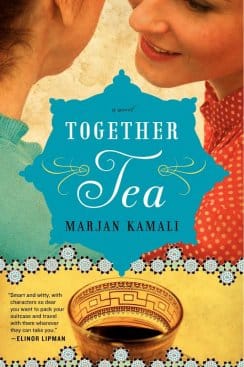
Marjan Kamali was born in Turkey to Iranian parents.  Her father was a diplomat who traveled extensively. The family accompanied him to Germany and then Kenya where the Kamali children consumed Enid Blyton novels by the dozens in grade school. They eventually arrived in post-Revolution Iran in 1980 when Kamali was only nine years old.  While English books had become less common in schools, shops and libraries in Iran after the revolution, the family still had classics in their home.  Kamali’s older sister was adamant that her sister’s English language skills not falter, so she precociously took upon herself the role of tutor—even going so far as to assign book reports. So as Saddam Hussein’s bombs rained down on Tehran during the Iran-Iraq war, the Kamali children would hide in the basement, emotionally and intellectually “escaping” as best they could into the worlds of Jane Austen, Charles Dickens and the Brontё sisters.

In 1982, Kamali’s family moved to Forest Hills, Queens, where she continued to enjoy reading, discovering American classics in middle and high school. In 1993, she graduated from U.C. Berkeley with a B.A. in English Literature and married soon after. She and her husband moved to Basel, Switzerland, where she obtained work as a scientific publications editor. Basel’s location was pleasantly convenient for extensive sight-seeing through Germany and France. In these years, Kamali began writing “little stories,” and dreamed of one day writing for a living.

When she and her husband moved back to New York in the late 1990s, Kamali enrolled at Columbia Business School.  The MBA program was an attempt to be practical, but the entire time, she felt like “a fish out of water.” It was actually at Columbia’s “math camp” that she got the idea for the short story that would become the first chapter of her debut novel, Together Tea (2013).  She was taking a class on spreadsheets and suddenly couldn’t stop imagining bizarre potential uses for them, such as rating one’s eligibility for marriage. It wasn’t long before she was drafting the tale of an Iranian mother who—to the great dismay of her daughter—uses spreadsheets to rate potential sons-in-law. While still working on her business degree, Kamali met with one of her old professors from Berkeley, the late Leonard Michaels. After teasing her for being a business school “sell out,” he read the short story she’d just written about the spreadsheet-loving matchmaker, and replied, “You know what this is, don’t you? It’s the first chapter to your first novel.”

Inspired by Michael’s words, Kamali enrolled in the M.F.A. for Creative Writing Program at N.Y.U.  Thus began her “crazy double life,” where she would commute from New Jersey to her uptown business school, surrounded by all of her “preppy republican friends” by day, then commute down to Greenwich Village and attend writing classes with all of her “artsy liberal friends” by night.  It was an overwhelming schedule to keep, and yet, she kept thinking of all of the girlfriends she had left behind in Iran, whose opportunities had been restricted.  She admitted to suffering from a sense of “immigrant guilt,” knowing that she was lucky to have escaped to a place where she had so many more options. Therefore, she persevered.  The birth of her first child required a short break from the universities, but by the end of 2002, just before her second child was born, she had completed both degrees and handed in a creative writing thesis entitled Together Tea.

In 2004, Kamali moved from New York to Australia. As seems to be the case with many mother-authors, creative writing continually took a backseat to work and caring for children. She recalls being so tired when her children were young that she could hardly string a sentence together, never mind write stories.  Finally one day, after moving back to Boston and dropping off her youngest child at his first day of kindergarten, she returned to her strangely quiet home and found herself pacing.  She had no idea what to do.  That night, her husband reminded her of the manuscript she had stashed away.  After a time, she went back to it and was shocked to realize, “Oh my goodness, this is about a daughter who is so hard on her poor mother!” Parenthood had given her a new sense of sympathy for the story’s meddlesome matriarch, so she began heavily editing the manuscript. She first changed the tense from present (popular in Y.A. fiction) to past.  Next, she decided to tell the stories from the perspectives of both the daughter and the mother, alternating between chapters. In the second half of the novel, mother and daughter (Darya and Mina), often at odds, seek to heal their relationship and address their own existential crises in a way that shocks family and friends—by taking a vacation to Iran.  Now a Massachusetts Center for the Book “Must-Read,” Together Tea travels between decades and continents, sharing the impressions and experiences of Iranian-Americans who find themselves perpetually “living on the hyphen.”

Kamali requires quiet in order to immerse herself in the world of her characters. As both a mother and an adjunct business writing professor at Boston University, quiet is hard to come by.  With the gift of a membership, her friend Jay Buchta introduced her to the silence of the Boston Athenæum, which has given her a tranquil place to think about the characters in the manuscript she affectionately refers to as “number two.” It’s a love story that takes place during the summer of the 1953 Iranian coup d’état and in present-day Massachusetts. 

Kamali believes her work is timely, given the political relations between the United States and Iran, and she sincerely hopes that her American readers will gain a greater understanding of life for both Iranians and Iranian-Americans. Indeed, her work echoes with the firm belief that governments should never be confused with people.  And yet, regardless of the national or ethnic affiliations of her characters, she hopes to tell universal stories of family and friends, lovingly crafted meals, fine art and the creative impulse, and most importantly, the transformative power of empathy.

Bibliography:

Kamali, Marjan. Together Tea. New York: Ecco, 2013

07.01.2014

Franklin Benjamin Sanborn

July 2014

By Alexandra Winzeler

This month, we feature an Athenæum Author often at the fringes of many other famous lives and stories, from the Transcendentalists of Concord to the wildest abolitionists of the Civil War. He led a life of literature, tragedy, controversy, and passion, this “dark celebrity” of Boston: Mr. Franklin Benjamin Sanborn. 

Sanborn was born on December 15th, 1831 in Hampton Falls, New Hampshire, the fourth of what would later become six children. Later known for as an avid abolitionist, Sanborn reflected that even as a child he thought himself “already capable of making some stir in the world.” In his young life, Sanborn was close with his brother Charles, ten years his senior, with whom he did much reading and studying of various languages including Latin and French. 

Both brothers had a passion for politics and after the 1840 election, older brother, Charles became more heavily involved in local journalism and social policy; younger brother Franklin “sympathized entirely with him and his views.” Both were young to be so swept up in the issues of the age: Charles in his early twenties and Franklin in his teens. 

Sanborn lost some direction during his later teenage years: “I had formed no scheme of my life,” beyond declining the suggestion that he should become a cadet in West Point. Around 1850 he says he “drifted along” visiting friends and even “joining a cooking club.” He had also joined a local literary society for reading and writing several years before and kept up his presence in the club.  His writings from one of these meetings were passed along by mutual friends to his future wife Ariana Smith Walker. After this initial spark, they were close companions, writing many letters and poems and exchanging ideas on literature and life. 

After much encouragement from Miss Walker, Sanborn eventually enrolled in Phillips Exeter academy in New Hampshire to continue his education. During his studies at Phillips Exeter and later at Harvard, Sanborn was inspired by (and befriended some) of the great writers and thinkers of the age and area. His time at Harvard associated him with the likes of Henry David Thoreau, Walt Whitman, Bret Harte, and Henry James, all “still unrisen stars in our firmament.” Others he sought out in Concord also included Ralph Waldo Emerson, Nathaniel Hawthorne, and Louisa May Alcott. 

In 1853 while Sanborn studied at Exeter, he confessed his love to Miss Walker and they were engaged to be married as soon as he finished his term. However, their engagement rushed to marriage at the return of a recurring “mysterious illness” which had bothered Miss Walker for many years. They had been married only eight days before the illness took her life and she passed away August 31, 1854. Sanborn, deeply affected by the loss, was often seen in the cemetery, “the epitome of romantic Victorian mourning.” Despite a failed proposal to Emerson’s daughter and Sanborn’s marriage to his cousin, Louisa Augusta Leavitt in 1862, he wrote decades later that “Never in a long life—now half a century since her death—have I found another so truly a woman” as Ariana Walker.   

However, he also acknowledged that the sad passing of Miss Walker helped propel him into the next phase of his life. Indeed, his then brother-in-law, George Walker, forged a connection between Sanborn and the civil war revolutionary John Brown. Mr. Walker wrote a letter of recommendation on behalf of Brown who had come to New England seeking funds for his cause. Brown was a fiery addition to Sanborn’s life and the author took a leading role in raising financial support for Brown, bringing in over $17,000 in 1855. That summer, as secretary of the Massachusetts Kansas Committee (which worked to make Kansas an independent, slave-free state), Sanborn traveled through the prairie states and territories on a tumultuous tour of “inspection and consultation.” For the New England scholar, the high tempers of citizens and the ever-present border skirmishes were outside of his usual activities. He carried a revolver for the trip, though was loathe to use it, and he returned to Massachusetts “without further adventure.” 

During this escalation of national tension, Sanborn was a critical member of the Secret Six, an organization of six men who financially supported John Brown in his abolitionist campaign and in the greater cause of a free state of Kansas. In addition to Sanborn, its members included: Thomas Wentworth Higginson, Samuel Gridley Howe, Theodore Parker, Gerrit Smith, and George Luther Stearns. Without open acknowledgment, their funds also supported Brown’s iconic raid on Harper’s Ferry. The six did not know the full details of Brown’s plan, though Sanborn knew the most, serving frequently as Brown’s contact for the rest of the group.  He says “although Brown had casually asked me…what I should think of an attack on the arsenal at Harper’s Ferry, it did not give me the impression that he meant to begin there.” Though the Secret Six sought to fund and support the freedom of Kansas, they purposely kept themselves unaware of Brown’s full intentions. This would prove a helpful strategy in the controversy that followed. 

A nation-wide fervor exploded after the infamous conflict at Harper’s Ferry arsenal on October 16th, 1859. After the raid, southern officials seized an “indefinite number” of Sanborn’s letters to Brown and others at Brown’s headquarters at Kennedy Farm in Maryland. As soon as the news of the lost letters reached Sanborn in Massachusetts, he searched through his own papers, destroying any that might compromise others involved. He met with other members of the secret society who feared they “might be suddenly and secretly arrested and hurried out of the protection of Massachusetts law.” Sanborn quickly left the area and settled briefly in Quebec.  Along the way he “did not testify anywhere, silence being the best protection my implicated friends could have.” 

However, after a week away, letters from his sister and from friend Ralph Waldo Emerson urged him to travel back to Concord. Upon his return Sanborn conducted his life in Massachusetts as usual, continuing his support for Brown’s cause and family. He learned of the ongoing fates of his co-conspirators: one of the Secret six fled to England, and another to upstate New York. Others in the area outside of the Secret Six were arrested for their connections to Brown. Sanborn’s anxiety increased. 

Sanborn proposed to Virginia senator James Mason that he testify regarding the case in Massachusetts, rather than the south, but the request was promptly denied. Fearing his safety, Sanborn again retreated to Canada in January of 1860. He waited several weeks without remarkable news and returned to Concord, thinking officials had given up their chase of him.  But on April 3, 1860, he was put under arrest, handcuffed in his home. Sanborn reflects that he was “young and strong and resented this indignity,” fighting his captors all the way to the carriage. He “braced [his] feet against the posts” of every door and fence to slow their progress.  Meanwhile, his sister raised the alarm in the neighborhood, sending church bells ringing and dozens of Concord’s occupant’s rushing to his aid. Sanborn was held in confinement overnight, but his arrest was deemed illegal by a local judge and he was released.

Enough evidence could not be pieced together from the letters that had been seized at Brown’s headquarters in Maryland and the mob that came to Sanborn’s rescue in Concord showed it would be a difficult task to lay a charge to Sanborn’s involvement. Eventually the legal focus faded and Sanborn lived freely.  In the aftermath of Harper’s Ferry he wrote many letters to newspapers speaking on behalf of the other Secret Six members and later for John Brown himself. Sanborn had only admiration and praise for Brown: “From the first I honored him and the more I learned of his life the more I honored him…John Brown and Abraham Lincoln were the two most illustrious martyr-heroes of their time.” 

Sanborn quickly published a glowing biography of his revolutionary friend. Sanborn spent the intervening years continuing to teach young scholars in Concord, as well as editing and working with publications such as Boston Commonwealth and The Springfield Republican. He wrote many additional biographies of his lively and famous friends including Emerson, Thoreau, and Hawthorne. 

Though Sanborn “never the least regretted my small share in Brown’s enterprise” he did feel responsible for his execution and the strain that placed on his remaining family. Throughout his elder years, Sanborn made numerous efforts to raise funds for the Brown family. Many years later, in 1910, he was appalled when another biography on Brown was published by Osward Garrison Villard. This version was more critical of controversial acts throughout Brown’s life, expanding on topics that Sanborn’s hero-admiration of this “icon of liberty” did not touch. 

In 1917, when traveling to visit his son in New Jersey, Sanborn sustained a broken leg when he collided with a railroad baggage car. The wound did not heal well, and he contracted a fever, subsequently passing away at the age of 86. To honor him, Massachusetts’ House of Representatives adopted a bill celebrating the social work he had accomplished, giving particular mention to his role as “confidential adviser to John Brown of Harper’s Ferry, for whose sake he was ostracized, maltreated and subjected to the indignity of false arrest, having been saved from deportation from Massachusetts by only mob violence.” 

Sanborn lived a long and inspired life, always seeking to help a worthy cause. He maintained deep and unwavering friendships with a ranging cast of characters and only had proud and glorious words with which to describe them. 

Image Credit:

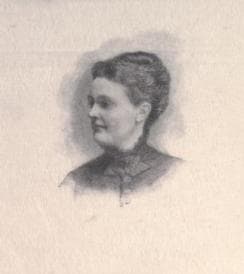
Franklin Benjamin Sanborn, 1882.  Albumen print.  Alcott, A. Bronson.  Sonnets and Canzonets.  Boston: Roberts Brothers.  

Bibliography:

Renehan, Edward J. jr..  The Secret Six.  New York: Crown Publishers Inc.  1995. 
Library of Congress: E451 .R44 1995 

Sanborn, F.B. Recollections of Seventy Years.  Boston: The Gorham Press.  1909. 
Cutter Classification: 65 .Sa53 

Sanborn, F. B.  New Hampshire Biography and Autobiography (1831-1860).  Privately Printed: Concord, New Hampshire.  1905. 
Cutter Classification: 65 .Sa53 .a 

Swift, Lindsay. (1917, Mar). Tribute to F.B. Sanborn.  Massachusetts Historical Society Proceedings.  50, 209-213. 
Cutter Classification: 65 .Sa53 .s 

Selected Works by Sanborn:

Collected Poems of Franklin Benjamin Sanborn of Transcendental Concord
Cutter Classification: VEP +Sa472 

Dr. S. G. Howe, the Philanthropist
Cutter Classification: 65 .H832 .s 

Emerson and His Friends in Concord
Cutter Classification: 964C7 +S 

Henry D. Thoreau
Cutter Classification: 65 .T395 .sa 

The Life and Letters of John Brown, Liberator of Kansas, and Martyr of Virginia
Cutter Classification: 65 .B814 .sa


06.11.2014

Staff Book Suggestions Summer 2014

Emily Anderson

The Sunny Side by A. A. Milne

(Cutter Classification VEA .M63 .s)

If the summer heat causes you to prefer “short, easy words, like ‘What about lunch?'” Milne is perfect for you. The Sunny Side collects Milne’s writing for Punch magazine in the first quarter of the 20th century, and carries all the breeze and charm that Milne is loved for.

Kristin Cook

Tuck Everlasting by Natalie Babbitt

(Children’s Room, Library of Congress PZ7.B1135 Tu 1991)

A children’s story set at the height of August, this dark morality tale reveals that immortality is not all that it seems. Absolutely recommended to adults as well, or for family reading.

David Dearinger

D-Day: The Battle of Normandy by Antony Beevor

(Library of Congress D756.5.N6 B387)

June 6 of this year was the 70th anniversary of the Allied landings on the beaches of Normandy: D-Day. One way to honor and remember this anniversary is to read Antony Beevor’s excellent D-Day: The Battle of Normandy (2009). A military historian and a great story-teller, Beevor jumps right into the moment of D-Day: this is truly a focused study. But here the story is told in a marvelously nuanced and angled way that keeps the history riveting and even suspenseful. Beevor lets the events of that first week of June seventy years ago unfold from the standpoints of the various entities that, willingly or not, participated in it. This includes the politicians and the generals the common soldiers and the civilians, the British, the French, the Germans, the Canadaians, and the Americans. Beevor lays out the battle plans and troop movements without ever becoming boring or overly pedantic: in other words, this is a good read for novice and expert alike and certainly is a must-read for anyone interested in the history of World War II. (Beevor does write with the presumption that his reader has some basic knowledge of World War II, but he gives the non-expert a leg-up by including a number of helpful maps, charts, and lists, both in the book itself and, as supporting material, on his website). Perhaps this is not the kind of book you imagined reading over the summer. But let’s face it: the story of D-Day is the greatest beach story ever told.

Lena Denis

The Little Friend by Donna Tartt

(Library of Congress PZ4.T188 Li 2002) 

A very smart little girl in Mississippi resolves to spend her summer vacation solving the murder of her older brother, a horrific case that happened when she was an infant and went cold soon after. As the story twists and turns, she uncovers dark and dangerous secrets about her town’s past and the people living around her, as well as some chilling things about herself.

Coorain Devin

A Rebours (Against Nature) by J.-K. Huysmans

(Cutter Classification VFF .H98 .a)

Too many summer barbeques and trips to the beach? This novel is perfect if you hate going outside or the company of others. It follows the life of Jean des Esseintes, a reclusive aristocrat. Despite the novel’s age (1884!), it still feels like a breath of fresh air, although the protagonist would surely prefer air conditioning.

Hugh McCall

Aftermath by Rhidian Brook

(Library of Congress PZ4.B86835 Af 2013)

Set in Hamburg in 1946, this is a historical novel essentially about the horrendous impact of the bombing of Hamburg and reintegration of Germany into the western world following the defeat of the Nazis. A very powerful, beautiful novel.

Carolle Morini

Colette’s France: Her Lives, Her Loves by Jane Gilmour

(Library of Congress + CT1018.C66 G54 2013)

Unable to travel this summer? Than do what I did this spring and check out Colettes’ France: Her Lives, Her Loves, by Jane Gilmour. What makes this book special, even if you already know everything about Colette, is that it is illustrated with many photographic reproductions of her manuscripts, photographs of herself, people she was close to, and places she lived and loved. Through Gilmour’s writing and the photographs, one is transported to France in the late 19th and early 20th centuries.

Emilia Mountain

Defending Jacob by William Landay

(Library of Congress PZ4 .L.2505 Def 2012)

A fast paced murder investigation set in Cambridge and Newton, MA. The search for the killer is emotionally grueling and the intense summer heat isn’t helping matters. By our own Athenaeum Author, William Landay, this novel contains plenty of stimulating scientific and philosophical food for thought regarding family, community, and the seemingly endless, but fascinating, nature vs. nurture debate.

Kaelin Rassmusen

Gaudy Night by Dorothy L. Sayers

(Library of Congress PZ3.S2738 Ga 1936)

My favorite of the Lord Peter Wimsey and Harriet Vane novels by Dorothy Sayers.  The story begins with Harriet Vane’s class reunion at Shrewsbury College, Oxford, and the mystery unfolds from there, complete with distracted dons, plenty of library research, and summer afternoons spent punting on the Thames.  A classic mystery, with an emphasis on character development, and an incisive look at the state of women in higher education in the 1930s. 

Suzanne Terry

We Were Liars by E. Lockhart

(Children’s Room, New Books, Library of Congress PZ7.L79757 We 2014)

Three generations of the beautiful and privileged Sinclair family spend their summers on their private island off the coast of Massachusetts.  A close-knit group of four teens provoke an incident that has tragic results for everyone. Lockhart totally nails the Yankee WASPs in her lyrical and descriptive prose. A cross between Susan Minot’s Monkeysand George Howe Colt’s The Big House, with a shocking twist ending.

Deborah Vernon

Cinnamon and Gunpowder: A Novel by Eli Brown

(New Book Shelves, Library of Congress PZ4.B8765 Cin 2013)

This novel follows an unlikely duo—a cowardly albeit good-hearted chef, Owen Wedgewood, and his captor, the canny if unpredictable pirate captain Mad Hannah Mabbot. Told through the adoringly peevish perspective of Owen, we see him grapple with Mabbot’s challenge—feed her a sumptuous meal every Sunday or else become food for the fishes. Weevils, witches, cannonballs, and a dearth of eggs do not stop Owen from crafting meals that you want to lick off the page—and Mabbot agrees in more ways than one.

If Daniel Defoe were writing today, he may have created something akin to Eli Brown’s Cinnamon and Gunpowder. There is swashbuckling adventure and plenty of laughs to go round, but it is also a well-crafted dip into history, a morally inquisitive work, and wonderfully written. A light summer read that turns out not to be so light and is the better for it. 

Mary Warnement

Stasiland: Stories from Behind the Berlin Wall by Anna Funder

(New Books, Library of Congress HV8210.5.A2 F86 2011)

You may not want to read this book. Can you handle examples of human’s inhumanity and the ability to rationalize it? Balance the freedoms achieved by internal exile with the crimes committed against the spirit? Witness the crushing of the will without a bruising touch? Anna Funder, an Australian, started this project when living in Berlin in the 1990s and her routine brought her into contact with those who suffered at the hands of the Stasi as well as those who collaborated with them. She wanted to learn more, as she watched this country reunify, and so she placed an ad for former Stasi because she wanted both sides of the story, often devastatingly sad but not without moments of inspired kindness as well as a balanced treatment of a complex era in human history. This book won the Samuel Johnson Prize; its setting is post-reunification; however, every story starts during the era of the wall. The Athenӕum also has many traditional histories on the subject, and I recommend Frederick Taylor’s Berlin Wall: A World Divided, 1961-1989 (NY: HarperCollins, 2006), Library of Congress DD881 .T39 2006. My next virtual, non-fiction trip to Berlin is The File: A Personal History by Timothy Garton Ash, Library of Congress Classification DD287.4 .G375 1997.

An Old Betrayal by Charles Finch

(New Books, Library of Congress Classification PZ4.F4922 Old 2013)

I include two recommendations in order to offer something a lot lighter than an oral history of dictatorship.

“And what happiness to share it with someone.” I’m not spoiling anything by sharing the last line. This latest entry in the Charles Lenox chronicles holds a few twists and surprises. I was delighted to be back in his London, and I enjoy that Finch has researched his period so well. Are some of his historical facts less artfully interwoven to the plot? Some reviewers have thought so, but I disagree. Then again, I thoroughly enjoy history and learning it wherever I may, especially in fiction. And so I may have the happiness of sharing it with you. If you enjoy mysteries set in mid-19th c England among the enlightened (and probably anachronistic) upper crust, you will enjoy this.

Alexandra Winzeler

Geek Love by Katherine Dunn

(Library of Congress PZ4.D92314 Ge)

While not a new publication, Geek Love by Katherine Dunn was new to me a few weeks ago and what’s more summery than an old-fashioned traveling carny family? In this book, readers follow the Binewski family as narrated by Olympia, an albino hunchback. She takes us through dusty fairgrounds of her youth, the sweltering cities of her adulthood, and the exceedingly bizarre world of human oddities. Olympia is part of a crafted group of freaks (thanks to her father’s home-grown gene-meddling) and her perspective shows us both the intimate normalcy of sibling rivalries along with the deeply strange and disturbing underbelly of the family. Like the carnival freaks themselves this book is both beautiful and grotesque, examining what happens when people are consumed by a fervor for identity and an obsession for strangeness. 
05.30.2014

Charlotte Silver

June 2014

By Emilia Poppe Mountain

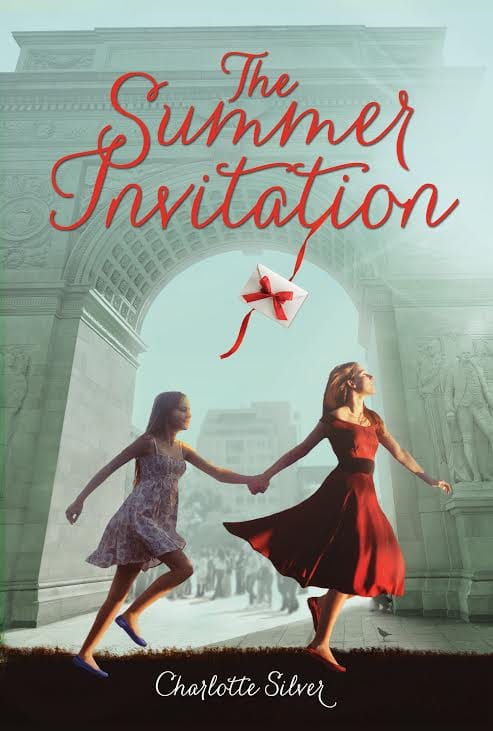
Charlotte Silver grew up in Cambridge, Massachusetts, before attending Bennington College. She studied writing at The Bread Loaf Writers’ Conference and has been published in The New York Times. Her books are: Charlotte au Chocolat: Memories of a Restaurant Girlhood (Riverhead, 2012) and The Summer Invitation (Roaring Brook Press, Spring 2014).

Q: When did you first decide to write your memoir? 

A: I wrote the very first draft of what later became CharlotteauChocolat right after Upstairs at the Pudding closed, when I was twenty. I wanted to find a way of remembering the details of this wonderful world, and in particular the beautiful, beautiful building at 10 Holyoke Street in which I was lucky enough to spend so much of my childhood. I wanted to take readers there. The book was intended to be a kind of a valentine not just to a different era in Cambridge and Boston local history, but to the vanishing art of fine dining — so many of the restaurants like the Pudding are no more, and my book is a chance to revisit them: the fresh flower arrangements, the decadent sauces and desserts, the big (not “small!”) plates, the glamour and the abundance.

Q: Your memoir often has the flair of an old Hollywood movie. Certainly, the hostesses and waiters all seemed to be after careers in show business. If Charlotte au Chocalat were to be a film, whom would you cast (living or dead, at any age) to play your eccentric array of characters?

A: Great question! Well just to start, I definitely think Lana Turner in her “Imitation of Life” phase could play my mother. She had such fantastic cocktail coats in that. Oh no, I guess that means that I would be played by Sandra Dee? I asked my mother’s business partner Mary Catherine Deibel who would play her and she said Tina Fey! And for Veronica, the woman who worked in the coatroom and used to be an Avedon model, I would say one of the great old worldly European actresses — Jeanne Moreau, maybe? Incidentally, Veronica was the basis for the “Aunt Theodora” character in my new book, The Summer Invitation, so the two books have this connection.

Q: Your memoir is heartbreaking in many instances—not only because you give us the intimate details of one mom and pop business after another being replaced by huge retail chains.   It’s also heartbreaking when you tell us that these days you and your friends mainly eat things like lightly dressed beet salads. Can we hope that you’ll continue to share more memories of butter soaked, sugar crystallized, booze drizzled recipes with us?Dust jacket: Silver, Charlotte. The Summer Invitation. New York: Roaring Book Press, 2014.

A: Oh, definitely! I still like rich food. Rest assured that my second book, The Summer Invitation, has a lot of good food and fancy meals in it too. The girls in it are always being taken to nice restaurants. 

Q: What was the inspiration for your forthcoming young adult novel, The Summer Invitation? 

A: I got the beginnings of the idea for The Summer Invitation when I really was “chaperoning” two delightful sixteen-year-old girls in Greenwich Village one August a number of years ago now. From that experience emerged a book, about two sisters who come to New York for the summer and have various romantic adventures under the tutelage of their chaperone, named Clover, and their mysterious Aunt Theodora. It was such a fun book to write and I’d love to write something for girls again! 

Q: When did you join the Boston Athenæum? 

A: I first became a member of The Boston Athenæum in 2008 when I was still living in Boston, and was delighted to be able to rejoin recently when I was home for a couple of months last fall. I did all of my revisions for my novel, Bennington Girls Are Easy, in the Fifth Floor Reading Room. What a gracious place to work. Reading from Charlotte au Chocolat in the first floor long room was also a 2012 was a fantastic experience. 

Charlotte is now living and writing in New York City. Bennington Girls Are Easy is scheduled for publication by Doubleday in 2015. 

04.28.2014

Maturin Murray Ballou

By Alexandra Winzeler

May 2014

In her memoir, Echoes of the Past, Athenæum staff member Mary Jane Regan names Maturin Murray Ballou as a “daily visitor” to the Athenæum, using his time at the library to write his popular travel books.  Many of these books are still in the circulating collection today; you can check out a few from the list below.  However, Ballou played an even bigger role in Boston history beyond enjoying the Athenæum: he was a founder of The Boston Globe newspaper. 

Maturin Murray Ballou was born on April 14th, 1820 in Boston.  He worked in journalism since he was a teenager, his father Reverend Hosea Ballou founding the Protestant publication known as the Universalist Review which ran from 1844 to 1891.  In 1839 while working as a clerk in the Boston post office, M.M. Ballou married Mary Anne Roberts and the two of them travelled widely at home and abroad in the next two decades. 

For some time, Ballou served as the editor of the Gleason’s Pictorial Drawing-Room Companion a “copiously illustrated family miscellany,” popular and singular for the amount of pictures per text in every issue.  After several successful years, Gleason traveled Europe and found he was tired of the publishing business.  He sold the periodical to his editor, Ballou, in 1854 who promptly changed the title to Ballou’s Pictorial.  Though competing illustrated newspapers rose in New York, Ballou’s Pictorial still led in the topics of travel and natural history. 

By the start of 1855, Ballou was additionally publishing his own paper, Ballou’s Dollar Monthly Magazine, to great success, eventually discontinuing Gleason’s in 1859.  Ballou’s periodical changed its name in 1866 to simply Ballou’s Monthly Magazine when the price was raised to $1.50.  He went on producing the monthly magazine for more than 30 years, eventually selling it to Thomes and Talbot in 1886. 

In 1871 it is easy to see why Ballou’s opinion had such sway over advertiser Stephen Niles, when talk of creating a new Boston newspaper began: “at 51 Ballou was a man of letters and a man of affairs who had published several books of travel and history, a monthly magazine, and the first substantial illustrated weekly.”  Ballou inspired Niles, telling him there was a place for a “superior newspaper” in Boston.  By the close of Niles’ initial meetings regarding a new publication, the group had gained funding and the vessel of the Boston Globe had set sail, with Maturin Murray Ballou at the helm as editor. 

The first issue was published March 4th, 1872, initially called, Maturin Ballou’s Globe, and it was 8 page, 7 columns, all for the price of 4 cents.  Back in the 1850s, while working at Gleason’s Pictorial, Ballou had been in favor of strongly moral content, printing a series of essays on the clergymen of Boston, for example.  Likewise he had strong thoughts on the direction for The Globe and announced this to the public in its first issue, writing that the publication would be “devoted to the intelligent and dignified discussion of political and social ethics and current events at home and abroad” and literature and the arts should be given “ample and judicious attention from experienced individuals.”

While leading the publication, Ballou certainly staffed The Globe with “experienced individuals,” including Percy Whipple, a talented literary lecturer, Benjamin Edward Woolf, a composer of plays and opera, Charles E. Pascoe as foreign editor, and Benjamin F. Burnham as their legal specialist.  Ballou also hired a woman, which was rare for the day, Georgia Hamlen of Charleston, who at first worked various chores, and eventually took over writing literary reviews for Percy Whipple.

A financial depression at the time made the newspaper world a hard one, administrators waging a constant battle of adjusting pricing and hoping for additional subscriptions.  Due to the tough times and waning public interest, Ballou left The Globe in June of 1873.  The newspaper endured, however, and continued to work towards Ballou’s grand goal of making The Globe “second to none in the country.”

After his work in journalism, Ballou kept up his passion for world travel, circumnavigating the globe at his own path and pace.  His travels continued to inspire his voluminous writing on countless foreign countries.  He passed away in 1895 while abroad in Egypt with his wife.  Despite the frequent excursions that took him away from the city he helped shape, Ballou was ultimately buried in Boston. 

Selected Works:

Bibliography:

  • Lyons, Louis M.  Newspaper Story: One Hundred Years of the Boston Globe.  Cambridge, MA: Belknap Press of Harvard University Press.  1971. 
  • Marquis Who’s Who Incorporated.  Who Was Who in America: Historical Volume 1607-1896.  Chicago: Marquis Publications.  1963. 
  • “Maturin Murray Ballou.”  Wikipedia.  Updated April 3, 2014.  URL
  • Mott, Frank Luther.  A History of American Magazines 1850-1865.  Cambridge, MA: Harvard University Press.  1938.  Vol II.
  • Pierce, Sally.  “Gleason’s Pictorial: Elevating and Celebrating American Life.”  The Ephemera Journal. Vol. 5. 1992. pp.13-24.
  • Regan, Mary Jane.  Echoes from the Past: Reminiscences of the Boston Athenæum.  Boston Athenæum: 1927. 
04.24.2014

Sarah Orne Jewett

March 2014

By Kristy Lockhart

“Find your quiet center of life and write from that to the world.” – Sarah Orne Jewett

Sarah Orne Jewett was born in 1849, in South Berwick Maine, the small village that would be her artistic inspiration and her “true home” for the entirety of her life. Her father was a physician and would often take his young daughter along with him on visits to the homes of local farmers and fisherman. These early outings likely inspired Jewett’s profound love of the people of Maine and their way of life. She attended the Berwick Academy through 1865, though frequent illnesses kept her home and tutored by her father. Jewett would later say that she considered herself to be primarily self-educated through excessive reading, and this became a lifelong trend: she remained an enthusiastic consumer of the written word and a supporter of many of her artistic contemporaries, even as she found success with her own writing. Jewett published her first story, “Jenny Garrow’s Lovers” in 1868, when she was only nineteen years old. For that work and her other early stories she used the pen name “Alice Eliot” or “A. C. Eliot”. A decade later those stories and others would be published as Deephaven (1877), a collection depicting a fictional New England town modeled on South Berwick. She wrote three novels: A Country Doctor (1884), A Marsh Island (1885), and The Tory Lover (1901), as well as several books for children. Her greatest strength lay in her collections of short stories and vignettes, particularly The Country of Pointed Firs (1896), by far her most well-known work. As with much of her work, it focused on a fictional town in Maine. In her works, Jewett returned to the recurring theme of the changing landscape of those towns, where shipyards and wharves were closing, and where young people, particularly men, were beginning to leave the old villages.  She had a precise way of writing and a compact style that many of her contemporaries admired. In her obituary, the Boston Globe remarked on the strength that lay in “the detail of her work, in fine touches, in simplicity.” Despite spending most of her time in Maine, Jewett was a valued member of Boston’s flourishing literary circle and often stayed part of each year in the city. She was always welcome in the home of her dear friend Annie Fields, who lived in the heart of Beacon Hill. Authors like Oliver Wendall Holmes, Rudyard Kipling, Henry James, Harriet Beecher Stowe, Alfred Tennyson, Mark Twain, and Henry Wadsworth Longfellow were also guests at Mrs. Fields’ beautiful home at 148 Charles Street. It was another friendship, with Mrs. Cabot of Beacon Hill, which would connect Jewett to the Boston Athenæum. The two became close friends at the end of Mrs. Cabot’s life and Sarah often kept her company after the older woman became bed-ridden. Upon her death, Mrs. Cabot willed Sarah her membership to the Athenæum, an appropriate choice given their shared love of literature. Jewett’s lasting legacy also includes her influence on another “great” American author. In 1907, she first met Willa Cather, whom she befriended and mentored in a relationship with a deep and lasting impact. At the time, Cather was working as a journalist in New York City, something Jewett discouraged because she believed Cather needed to dedicate herself entirely to her work. When asked for an opinion on a piece of writing, Jewett responded at length, passing on advice gleaned from her own career: “You must write the human heart, the great consciousness that all humanity goes to make up. Otherwise what might be strength in a writer is only crudeness, and what might be insight is only observation; sentiment falls to sentimentality—you can write about life, but never write life itself.” She encouraged Cather to write what she knew, to write the life and experiences that had shaped her own world. In turn, Cather dedicated O Pioneers!, based upon memories of her childhood in Nebraska, to Jewett. In 1902 Jewett suffered an accident that damaged her spine and head. These injuries left her in poor health for the rest of her life, and sadly put an end to her writing. She retained her positive outlook and continued to spend time with her friends in Boston. In 1909, she passed away at her beloved house in Berwick, of which she had said years earlier: “I was born here and I hope to die here, leaving the lilac bushes still green and growing and all the chairs in their places.” 

Selected Works:

  • Deephaven (1877), Library of Congress: PZ3.J55 De
  • Country by-ways (1881), Library of Congress: PZ3.J55 Cou
  • Marsh Island (1885), Library of Congress: PZ3.J55 Ls
  • Betty Leicester; a story for girls (1890), Library of Congress: PZ7.J556 Be 
  • Strangers and Wayfarers , Library of Congress: PZ3.J55 St 
  • Tales of New England <(1894), Library of Congress: PZ3.J55 Ta 
  • The Country of the Pointed Firs (1896), Library of Congress: PZ3.J55 Co
  • The Tory Lover(1901), Library of Congress: PZ3.J55 To
  • Old Friends and New (1907), Library of Congress: PZ3.J55 O1

Bibliography:

  • Cohen, Rachel. A Chance Meeting: Intertwined Lives of American Writers and Artists, 1854-1967. New York: Random House, 2004.
  • “Death Claims Famed Writer.” Boston Daily Globe (1872-1922) June 25 1909.
  • Fields, Annie, ed. Letters of Sarah Orne Jewett. Boston: Houghton Mifflin Company, 1911.
  • “Jewett, Sarah Orne.” Encyclopædia Americana: International Edition. 2000. Print.
  • Silverthorne, Elizabeth. Sarah Orne Jewett: A Writer’s Life. Woodstock: Overlook Press, 1993.
04.02.2014

Sara Hoagland Hunter

By Emilia Poppe Mountain

April 2014

Children’s author Sara Hunter was born in Dover, MA, to John (“Jack”) and Sara (“Sally”) Ray Hoagland. She describes her young self as the “bossy” tomboy older sister who both devised and led the neighborhood children in all manner of shenanigans, typically inspired by the books she consumed by the dozens. Hunter remembers Dover as one of those old fashioned towns where the children weren’t allowed inside before dinner—so entertainment was key. Sure, there was always ice skating and other games, but with Hunter as ring leader, there were also plays and tests of bravery. There were even investigative adventures based upon Nancy Drew novels. One day, she and the local children broke into an unsuspecting neighbor’s shed, carried away by the plot of The Bungalow Mystery. The grown-ups were not nearly as amused as the children.

Hunter credits her first grade teacher, Mrs. Quinlan, with her dramatic introduction to the magic of books. Through her teacher’s recommendations, Hunter became enthralled with the power of a book to transport her into a completely different world.  A children’s biography series introduced her to Thomas Edison. She then convinced her parents to purchase her a chemistry set, and inspired by his biography, dutifully tore all of the labels off the chemical jars and replaced them with images of skulls and crossbones.  She had moments of reckoning with her book characters though. Running away from home with her favorite belongings attached to a stick and a thermos of stolen coffee to emulate Tom Sawyer and Huck Finn, turned out to be neither as fun, nor as delicious, as Mark Twain made it seem.

The Lighthouse Santa

Hunter enrolled at Dartmouth College in 1972—the first year of coeducation. Soon after graduation, she began working at Christian Science Monitor, first in Boston, then in New York. A few years later, she returned to Dover to teach high school English and reading skills. Thus, she was able to experience the peculiar pleasure of calling her former teachers by their first names and assigning homework to her friends’ younger siblings. She recalls that some of her most rewarding work during that time was teaching public speaking. During these sessions, she saw many students shine who didn’t normally excel at academics; these were students who were outgoing and funny among their friends but had difficulty consuming and analyzing texts. This observation prompted her to enroll in Harvard’s graduate program for reading and reading disabilities, where she studied with Dr. Jeanne Chall.

In the years following graduation, she married Andy Hunter, adopted two children, directed a documentary about the adoption process, and began teaching part time in childhood enrichment programs. When her children entered grade school, she began working in earnest on three different children’s books.  Her first book was part of an Easy-to-Read series, featuring “Sesame Street” characters. Her young daughter was a great help, telling her when a word was too hard for the book. Hunter remembers being incredibly nervous while pitching the story across the enormous conference table at Jim Henson headquarters in Manhattan. In order to stay calm, she made sure to stare at the life size portrait of Kermit dressed as Gainsborough’s “The Blue Boy” almost the entire time. During her children’s elementary school years, she was also writing scripts, parodies and other story books for Warner Bros., Looney Tunes, and Nickelodeon.

Every Turtle Counts by Sara Hoagland Hunter

Hearkening back to her early fascination with books like Ursula Nordstrom’s The Secret Language and Clifford B. Hicks’ Alvin’s Secret Code, Hunter decided to write a story acknowledging the little known Navajo code talkers of World War II. The Unbreakable Code (illustrated by Julia Miner) was published in 1996 and won many awards, including the Smithsonian magazine Notable Children’s Book of the Year. To this day, she is still visiting elementary schools to discuss this book and experiment with code games. Her next picture book, The Lighthouse Santa, was based on the real life Edward Rowe Snow. Also known as “The Flying Santa,” Snow was a magical presence in the lives of lighthouse families who looked forward to his present-dropping flights for over forty years. Hunter read from this book at the Boston Athenæum in 2011. Her forthcoming Every Turtle Counts, illustrated by Susan Spellman, tells the story of the rare species of turtle that washes ashore each year on the shores of Cape Cod and the dedicated residents who undertake the task of rescuing them. The main character is based on Hunter’s niece, a great animal lover who happens to be autistic.

When asked what authors she might turn to for inspiration, Hunter praises Horton Foote’s ability to capture a small town, E.B. White “for clarity, tenderness and speaking to the heart,” and Louisa May Alcott for the tales of family to which she aspires. (As a child, she remembers being enchanted with Alcott’s writing desk with a view to Walden Pond and is pleased to report that she’s been able to position her current writing desk with a similar orientation). She also admires Ralph Waldo Emerson for ideas, Kate DiCamillo and Sherman Alexie for contemporary children’s fiction, and Keven Henkes for picture books. She enjoys Henry Beston and Sarah Orne Jewett for their descriptions of nature.  She recently read and loved John Kennedy Toole’s A Confederacy of Dunces and is re-reading an old favorite, Watership Down by Richard Adams.

Hunter enjoys reading, writing, and sharing her work at the Boston Athenæum because of the “inspiring aura of rich history, all around.” She is scheduled to visit and share her thoughts on Every Turtle Counts in the autumn of 2014.

Selected Works:

The Unbreakable Code. Illustrated by Julia Miner. Flagstaff, AZ: Northland Pub., c1996. (On order)
The Lighthouse Santa.Illustrated by Julia Miner. Boston: Flying Dog Stories, c2011. (Children Picture Book + HUNTE)
Every Turtle Counts. Illustrated by Susan Spellman. Portsmouth, NH: Peter E. Randall Pub., 2014. (On order)

03.26.2014

Staff Book Suggestions Spring 2014

Elizabeth Borah
Thermae Romae [Vol.1] by Mari Yamazaki
(New Books, Library of Congress PZ4.Y192 Th 2012)

This wonderful manga (Japanese comic) is a visual treat for both ancient Roman history buffs and comic fans alike. Mari Yamazaki has won a handful of awards for her imaginative historical fiction stories, and they are well deserved: her attention to detail, contextual humor, and intricate illustrations are masterful.

The short series tells the story of Lucius, a Roman bath architect trying to devise more innovative spaces and thermae. One day, he slips in the bath and when he emerges, he finds himself in a modern-day Japanese bath house! Though puzzled, he is fascinated by the strange modern contraptions he discovers in this strange new world. Eventually, the implementation of what he sees on his mysterious trips to the “other side” attracts the attention of Emperor Hadrian.

For anyone looking for a glimpse into Roman and Japanese bath cultures, this is a fun series for readers of all ages to enjoy. The volume itself is read right-to-left, in keeping with the original Japanese style, and each page is elaborately printed to make for an immersive reading experience.

Robot Ghosts and Wired Dreams: Japanese Science Fiction from Origins to Anime

By Christopher Bolton, Istvan Csicsery-Ronay, Jr., and Takayuki Tatsumi, editors.

(New Books, Library of Congress + PL747.57.S3 R63 2007)

For new or old fans of Japanese science fiction and animated works outside the childish vein, Robot Ghosts and Wired Dreams is a wonderful academic look at modern masterpieces as well the early influences of these genres. With sections discussing literature, film, manga, and anime, this collection of essays offers a much-needed serious critique of works which have been overlooked in academic writing. Even if one is not particularly well-versed on these subjects, the introduction to the book helps to verse the reader in the important terms and language of the genres. Hopefully reading about all the works described in this book will inspire you to watch or read them for a more fully enjoyable experience!

Pat Boulos

The Goldfinch by Donna Tartt

(New Books, Library of Congress PZ4.T188 Gol 2013)

An explosion at the Met kills the narrator’s beloved mother, resulting in his unlikely possession of a Dutch masterwork called “The Goldfinch.” The plot follows narrator Theo from Park Avenue to Las Vegas back to New York and the underworld of art. Humorous sidekicks, eccentric characters, and gangsters abound.

David Dearinger

Photography and the American Civil War by Jeff Rosenheim

(Library of Congress + E468.7 .R674 2013)

Photography of the American Civil War is a landmark in art-historical studies of the Civil War. It is of the highest scholarly quality while also managing to be very readable. The text and the copious illustrations are equally informative and poignant and, together, make a worthy record of the magnificent, almost overwhelming exhibition for which the book was published. With its superb form and content, the book earned the College Art Association’s Alfred Barr Prize, one of the most prestigious awards given in the field.

Jimmy Feeney

A History of Howard Johnson’s: How a Massachusetts Soda Fountain Became an American Icon by Anthony Mitchell Sammarco

(New Books, Library of Congress TX945.5.H595 S25 2013)

A delicious trip down Memory Lane.  Photos to flavor your appetites, all 28 of them, sprinkled with “jimmies,” of course. Don’t forget the all you can eat Friday Fish Fry—just in time for Lenten dinners.

Hugh McCall

The Writing Class: A Novel by Jincy Willet

(New Books, Library of Congress PZ4 .W698 Wr 2008)

A murder mystery where everyone in the writing class is a suspect. A very entertaining read. 

Carolle Morini

Literary Miniatures by Florence Noiville, transl. Teresa Lavender Fagan

(New Books, Library of Congress PN452 .N65 2013)

What I have enjoyed most about this book is learning about authors I was not familiar with and learned something new about a few favorite authors of mine. Originally these literary miniatures were published in Le Monde. Noiville revisits the interviews she conducted from the late 1990s – 2012 and puts together, in alphabetical order, her gallery of authors. It would not be fair if I didn’t warn you about the side effect of reading this book: your “books to read pile” will grow; much taller than you anticipated.

Emilia Mountain

“Imbolc Poems” by Jill Hammer

Journal of Feminist Studies in Religion, Vol. 22, No. 1 (Spring, 2006), pp. 75-82

http://www.jstor.org/stable/20487854

In this series of poems, Jill Hammer bravely takes on the voices of the great goddesses of yore as they contemplate the coming of spring. We have so many wonderful electronic resources available to members. If you’d like help accessing content like Hill’s poems in JSTOR, or any other databases, please feel free to stop by and ask for assistance.

Amanda Pirog

My Education: A Novel by Susan Choi

(New Books, Library of Congress, PZ4.C5452 My 2013)

My Education is the story of Regina Gottlieb, beginning when she is a twenty-one year old graduate student of English literature, enmeshed in the complicated marriage of two of her school’s professors. Though most of the novel is spent detailing young Regina’s naiveté and passionate ardor, the novel’s narrator is an adult Regina, looking upon her younger self without judgment or scorn, yet with highly focused precision. Each sentence, each emotion, each scene is beautifully constructed with metaphor, appearing vividly in the mind’s eye, down to a character’s wrinkles or the packaging of convenience store food.

What at first appears to be a story of scandal is instead a coming-of-age tale, where new-found adulthood reconciles with hard-earned adult life. Susan Choi’s prose is rich, truthful, and hard to put down. 

Deborah Vernon

The Love Affairs of Nathaniel P. by Adelle Waldman

(New Books, Library of Congress PZ4.W14934 Lo 2013)

This slim novel offers a witty but also poignant critique of today’s twenty and thirtysomethings. Insecurities thwart the title character’s search for love. Can intimacy survive in a petty world?

Mary Warnement

Beatrix Potter’s Gardening Life: The Plants and Places that Inspired the Classic Children’s Tales by Marta McDowell.

(New Books, Library of Congress CT788.P68 M32 2013)

What a breath of fresh air. Just what I needed for spring, in the midst of grey skies and chill that go along with my main reading this winter on the history of Berlin. Beatrix and her bunnies bounced through my weekend. I wouldn’t have even cared if her Peter had gnawed on my garden. He’d have to gnaw very hard to get through the frozen stems. I’d call this book thin, except that it’s hefty. The reproductions of her watercolors are delightful. McDowell paired botanicals with examples of the plants in her published books in an enchanting way. Both archival photographs and modern photos of her gardens adorn the book. It’s a quick read, but the high quality paper, excellent for photos, make the book, even with its sweet dimensions, a heavy tome. This is light but not without research. McDowell knows Potter’s biography and knows plants. An excellent pairing. I cannot wait to give this as a gift. Shh, don’t give it away.

Alexandra Winzeler

The Golem and the Jinni by Helen Wecker

(Library of Congress PZ4 .W385 Go 2013)

This book is an elegant balance of realistic human troubles and the magical and fantastical. Chava, the golem in the title, is left to make her way in historic New York alone after her master dies. Ahmad, the jinni, finds himself released in the city but still captive in a human form. The two cross paths with each other as well as a multitude of human characters, both kind and sinister. Though this book is shelved with adult fiction, it could easily be appropriate to other young adult readers as well. It is a graceful, multicultural story about identity, need, and personal power, set in a tangible history and wrapped in delicious mythology.