
10.31.2012

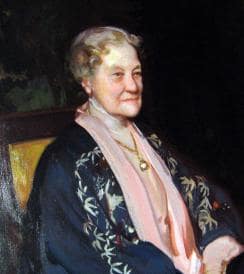
Margaret Deland

November, 2012
By Chloe Morse-Harding

“Yet, though untended, still the Garden glows, / And ‘gainst its walls the city’s heart still beats, / And out from it each summer wind that blows, / Carries some sweetness to the tired streets”

-excerpt from “The Old Garden,” a poem from The Old Garden, and Other Verses

Poet and novelist Margaretta Wade Campbell Deland (1857-1945) was born in Allegheny, Pennsylvania, a suburb of Pittsburgh, to parents Sample Campbell and Margaretta Wade, both of whom were clothing merchants.  Deland’s mother died in childbirth, and her father died shortly after, leaving her in the care of her aunt and uncle, Lois and Benjamin Bakewell Campbell, a deeply Calvinist family who lived in a neighboring estate.  Thus, from the age of two weeks, Deland lived with her relatives and regarded them as her parents.

As a child, Deland primarily kept the company of her neighboring cousins, but she also found other playmates.  “A pet chicken named ‘Anatomy of Melancholy,’ dogs, frogs, snakes were companions” as well.  Besides her many pets and cousins, Deland also made time for reading.  “The family library was large, and young Margaret Campbell read the best it had to offer.  Shakespeare, Hawthorne, Scott, and Defoe” among others.  Perhaps being surrounded by such a powerful group of authors was what stoked Deland’s passion for writing: she started writing her own short stories at the age of thirteen. 

Deland transitioned from child to young adult at the age of sixteen with the surprise engagement to a thirty-eight year old neighbor.  Mrs. Campbell decided Deland should instead go off to school, and so she was sent to New York’s Pelham Priory, a wealthy boarding school.  Following Pelham Priory, Deland attended Cooper Union, also in New York.  A year later, she was offered a teaching position at the Girls’ Normal School in New York (now called Hunter College).  

Immersed in her new life, Deland spent her vacations in Vermont with the other teachers instead of going home.  One summer, Deland met a new friend, a Bostonian teacher named Emily.  They kept in touch, writing letters back and forth.  The following summer, they met again in Vermont and Emily introduced Deland to her brother, Lorin Fuller Deland, with whom Margaret Campbell fell in love.  The couple got engaged shortly after.  In May of 1880, on the Campbell estate back in Pennsylvania, the two were married.  Shortly after, they settled back in Boston.

While living in Boston, Deland and her new husband attended Trinity Episcopal Church.  Deland became close friends with Lucy Derby, who was acquainted with many people in the Boston literary scene.  When Deland showed her new friend the verses that she composed in her spare time, Derby instilled such confidence in Deland that she brought them to the famous Boston-based printer and chromolithographer, Louis Prang, who began purchasing her writing to add to the cards he printed. 

Derby wanted further success for her friend, and also sent one of Deland’s poems to the editor of Harper’s New Monthly Magazine.  Then, in March of 1885, Deland’s poem “The Succory” was published.  Three years later, Deland’s first novel, John Ward, Preacher, was published.  This book was so popular that Deland was able to purchase a summer home in Kennebunkport, Maine which she named “Greywood.”  And so began a highly successful literary career that lasted into World War II, with her last book, an autobiography called Golden Yesterdays, which was published in 1941, four years before her death.  Her most notable books were the “Old Chester Tales,” a series of novels set in the fictional town of Old Chester.  After this series came out, critics began to compare Deland to Jane Austen and George Eliot.

Besides writing, Deland spent much of her adult life working for different charities.  Shortly after their marriage, Deland realized that she and Lorin were unable to have children, so she devoted much of her time to helping unwed mothers and their children start new lives.  Deland also organized many different fundraisers for various organizations.  For example: “Deland’s love of flowers was widely known, and in the middle of the decade she began what became an annual jonquil sale to raise money for charity.”  One of her homes in particular, 35 Newbury Street, was well known for flowers that Deland planted. 

Even after Deland’s writing career had truly taken off, she continued her charity work, branching out in a variety of different directions.  In 1893, Deland headed the Library Committee for Massachusetts.  In 1916, during World War I, she started the Authors’ Fund for the relief of Wounded Soldiers of the Allied Nations.  Late in 1917, Deland left for France and did relief work.  When she returned, she received a Doctor of Letters from Bates College, and was bestowed with this honor as well: “[w]hen Mrs. Deland was elected to the National Institute of Arts and Letters on Nov. 10, 1926, she became one of the first women to be chosen for membership in the institute.” 

During the course of her life, Deland received many honors and was regarded highly in many circles and organizations throughout the United States and Europe.  A talented writer and poet, she also had a keen business sense and used her time charitably and thoughtfully.  Today, one can remember Deland by reading one of her popular novels or countless essays, or by visiting her home at 76 Mt. Vernon Street, as it is part of the Beacon Hill Walk led by the Boston Women’s Heritage Trail.

Within its rare books collections, the Boston Athenaeum holds a copy of Deland’s “The Old Garden” decorated by the renowned English artist Walter Crane (1845-1915), who was called “the father of the illustrated children’s book” by the famous printer, Edmund Evans.  This particular edition was published in 1894 in Boston by Houghton, Mifflin & Company.  The following images are scans from this book.

Selected Works:

The Old Garden and other verses.  Boston: Houghton, Mifflin and Company, 1886 (Cutter VEP .D374)
Mr. Tommy Dove, and other stories.  Boston: Houghton, Mifflin and Company, 1893 (Cutter :VEF .D374 .m)  **Off-site storage|
Phillip and his Wife.  Boston: Houghton, Mifflin and Company, 1894 (Cutter :VEF .D374 .ph)  **Off-site storage
John Ward, preacher.  Leipzig: Bernhard Tauchnitz, 1889 (Cutter :VEF .D374 .j .4) **Off-site storage
Old Chester Tales.  New York: Harper & Brothers, 1898 (Cutter :VEF .D374 .o)  **Off-site storage
Dr. Lavendar’s People.  New York: Harper & Brothers, 1903 (PZ3.D371 Do)
Awakening of Helena Richie.  New York: Harper & Brothers, 1906 (PZ3.D371 Aw)
Iron Woman.  New York: Harper & Brothers, 1911 (PZ3.D371 Ir)
Around old Chester.  New York: Harper & Brothers, 1915 (PZ3.D371 Ar)
The Promises of Alice.  Harper & Brothers, 1919 (PZ3.D371 Pr)
The Kays.  New York: Harper & Brothers, 1926 (PZ3. D371 Ka)

If this be I, as I suppose it to be.  New York: D. Appleton-Century Company, Incorporated, 1935 (Cutter 65 .D372)
Golden Yesterdays.  New York: Harper, 1941 (Cutter 65. D372 .a .2)

Bibliography:

(1945, January 14).  Margaret Deland Writer, Dies at 87.  The New York Times, pp. 40.
Beacon Hill.  Retrieved from http://bwht.org/beacon-hill/
Margaret Deland.  Retrieved from http://en.wikipedia.org/wiki/Margaret_Deland
Margaret Deland’s residence.  Retrieved from http://www.massbook.org/OnlineMap–New/GreaterMetro/Boston/margaret_deland.html
Reep, Diana C. (1985).  Margaret Deland.  Boston: Twayne Publishers.
Walter Crane (1845-1915).  Retrieved from http://www.iupui.edu/~engwft/crane.htm
09.26.2012

Candace Huntington

October, 2012
By Emilia Poppe Mountain

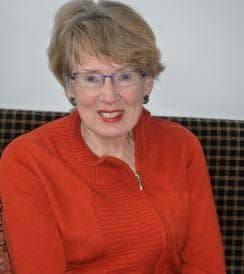
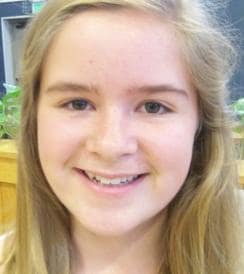
In the Spring of 2012, one of our Young Readers, Candace Huntington, was published in Stone Soup, a magazine of art and literature from children aged 8 to 13.  In the following interview, which took place in our beautiful Children’s Library, Huntington shares her views on poetry, children’s literature, and her visits to the Boston Athenæum.

Mountain: How did you go about writing the poem “Morphing into Monsters,” published in the April 2012 edition of Stone Soup?

Huntington: I wrote this poem at Overland, a camp at Williams College in the Berkshires.  They had different sessions and mine was writing.  They told us to write a poem about a game we like to play. I go to Martha’s Vineyard every summer, where my cousins and I play a game called Monster Tag.  That was the first thing that popped into my mind. 

Mountain:  How has it felt to be a published poet?

Huntington: It’s been amazing.  I entered it last fall.  They sent me a letter saying I made it to the top 5% and then a couple months later they sent another letter saying they were going to publish it, which was great.  My friend always reads Stone Soup and she was really excited when she came across my poem.  My mom emailed my teachers and told them and they were pretty excited too.  

Mountain: When did you begin writing?

Huntington: I started writing by myself.  I like to read, so I thought it would be fun.  My favorite book was The Westing Game.  When I was eight or so, my parents bought a book that had “Walking through the Woods on a Snowy Evening” in it.  I didn’t know it was famous when I found it in there.  I just thought it was really cool.  So it’s one of the poems that inspired me to start writing.  That and a book of silly poems by Shel Silverstein.

Mountain: What type of reading and writing do you like to do?

Huntington: I usually write poems, but I’ve started writing some short stories, usually realistic fiction, but I would like to try writing Science Fiction since I have been reading it a lot.  I loved The Hunger Games by Suzanne Collins.  One of my favorite books that I checked out of here recently was Unwind by Neal Shusterman.  It’s a dystopian novel where parents sign up troublesome kids to be “unwound”–have their bodies taken apart for transplants.   I’m really liking some of my summer reading for school too, like The King Must Die by Mary Renault, about Theseus and the Minotaur. When I was little, I read Jack Gantos’ Joey Pigza books.  He came in one day and I got to meet him.  I like how he told his own story.

Mountain: Do you write on the computer, by hand, both?

Huntington: I usually draft on the computer, but if I’m out and about, I usually have my journal with me– so I can write there and type it up later.  I collect journals.  My favorite one is from the Museum of Modern Art in New York.

Mountain: When did you first come to the Boston Athenæum?

Huntington: My family got a membership a few years ago.  I’ve done a lot of homework at this table.  I love how it is really quiet, so I can focus. And the air conditioning in the summer helps me focus too.  I come here to do homework or summer reading or to check out books.

Mountain: What languages do you speak?

Huntington: I took French for two years in middle school.  In High School, I’ll be taking Latin and and I’m really looking forward to it, along with my history classes on ancient Rome.  And I’m 1/8 Armenian, so I would like to learn that language someday.

Mountain: Any future publication plans?

Huntington: I found an online magazine called Teen Ink.  Maybe I’ll try entering something there!

Mountain: Have you been inspired in terms of a career yet, or is that still a long way off?

Huntington: Yes, I have.  I want to be a journalist– maybe even a photojournalist– of World News.  I just got my own camera, so I’ve been taking photos, mainly of nature on Martha’s Vineyard. 

The Boston Athenæum subscribes to many magazines for children and young adults, including Calliope, Cobblestone, Cricket, Faces, Family Fun, Kids Discover, Ladybug, New Moon Girls, Skipping Stones, Sports Illustrated Kids, Stone Soup and Zoo Books.

09.05.2012

Lilla Cabot Perry

September 2012
By Noah Sheola

Lilla Cabot Perry (1848-1933) is best known as an Impressionist painter. She was a published author as well, writing four volumes of original poetry and a translation of classical Greek verse.

Born January 13, 1848 to Dr. Samuel Cabot, a surgeon, and Hannah Lowell Jackson Cabot, Lilla Cabot was descended from two of Boston’s most prominent families. Her father was a Boston Athenæum proprietor, as were several relatives on her mother’s side, affording Lilla Cabot lending privileges and access to the library.

Raised in Boston, Lilla Cabot first studied painting in 1867 while traveling in Europe with her family. In 1874 she married scholar and Harvard professor Thomas Sergeant Perry. The Perrys’ Marlborough Street home became a literary salon where many of the city’s foremost writers and artists gathered, among them William Dean Howells and Thomas Perry’s boyhood chum Henry James.

In 1886 Lilla Cabot Perry resumed her art studies, this time at the Cowles School of Art in Boston. In 1889 the Perrys traveled to Giverny, France, joining the community of artists then coalescing around Claude Monet. The couple returned often to Giverny, and Mrs. Perry became a vocal proponent of Monet’s work through her lectures at the Boston Art Students Association. Her first solo exhibition was held at Boston’s St. Botolph Club in 1897, inaugurating a long and successful career. Along with portraits, which provided an important source of income for the family, Perry painted landscapes and domestic scenes, often of her daughters Margaret, Edith, and Alice.

In 1898 Professor Perry became chair of English Literature at Keiogijiku College in Tokyo. The Perrys lived in Japan until 1901, during which time Mrs. Perry painted over eighty pictures. On returning Boston, the Perrys resumed residence at Marlborough Street. In 1903 they purchased a farmhouse in Hancock, New Hampshire. The summer home eventually became a year-round residence as the Perrys settled into village life in the picturesque New Hampshire foothills. Thomas Perry died in 1928. As she entered her eighties Lilla Cabot Perry continued to paint prolifically until her death on February 28, 1933. The Perrys’ ashes are buried at Pine Ridge Cemetery in Hancock.

As a writer, Lilla Cabot Perry is primarily known as the author of “Reminiscences of Claude Monet from 1889 to 1909.” First published in the Magazine of Art in 1927, it remains a key resource for Monet’s biographers. Though she published five volumes of poetry, her work never attracted widespread notice or popular acclaim. As a painter, however, Perry enjoyed financial success as well as critical praise and the esteem of her peers. A founding member of the Guild of Boston Artists, Mrs. Perry was honored with a silver medal at the Massachusetts Charitable Mechanics Association Exhibition of 1892, and bronze medals at the 1904 St. Louis Exposition and the 1915 Panama-Pacific Exposition in San Francisco. Appreciation for Perry’s work has grown in the decades since her death. A 1969 retrospective at the Hirschl and Adler Galleries helped reestablish her place in the ranks of American Impressionists and in March 1982 her paintings were the subject of an exhibition at the Boston Athenæum.

Image credit: Frederick A. Bosley (1881–1941) Lilla Cabot Perry, 1931 Oil on canvas, 29¼ x 27 in. Collection of the Boston Athenæum, Gift of A. Everette James, M.D., 1990.

References:

Hirschler, Erica E. (2001). A Studio of Her Own: Women Artists in Boston, 1870-1940. Boston: Museum of Fine Arts, Boston.

Martindale, Meredith. (1990). Lilla Cabot Perry, an American Impressionist. Washington, D.C.: National Museum of Women in the Arts, 1990.

Morse, John Torrey (1929). Thomas Sergeant Perry; a Memoir. Boston, New York: Houghton Mifflin Company, 1929.

Perry, Lilla Cabot (1969). Lilla Cabot Perry: A Retrospective Exhibition. New York: Hirschl and Adler Galleries, Inc.

Philpott, A. (1933, Oct 29). Saw landscape with the soul of a poet. Daily Boston Globe (1928-1960), pp. A20. http://search.proquest.com/docview/757573650?accountid=35416

Bibliography:

The Heart of the Weed (1887)

From the Garden of Hellas (1891)

Impressions: A Book of Verse (1898)

From the Garden of Hellas: Translations into Verse from the Greek Anthology (1907)

The Jar of Dreams (1923)

“Reminiscences of Claude Monet from 1889 to 1909” (1927). Magazine of Art. Vol. 18 no. 3 119-125.

07.18.2012

Ruth Butler

August 2012
By Emilia Poppe Mountain

Ruth Butler was born in Buffalo, N.Y. Her mother, Hermine Hansen, was descended from three generations of teachers, while her father, George Butler, looked back to a great grandfather who was a leading architect in Ireland. Something of this heritage mix worked for her. Her mother signed her up for art lessons on Saturdays when she was five. Butler remembers painting moody village scenes with dark, brooding skies—sometimes inhabited by witches. It was only recently when she saw the Charles Burchfield show at the Whitney that she learned that in this period of her life, Burchfield lived some thirty miles away from her family’s town. She wonders if she did not see illustrations of his work in the local press and that it was he who inspired all that darkness.

By the time she was ready for college, her family had moved to Illinois, and she chose the combination of Western Reserve University and the Cleveland Institute of Art as good spots for furthering her education. In the end it was not the schools, but the Cleveland Museum of Art, where she had a part-time job, that held the most sway in determining the next step. She wanted to be an art historian, and this led to the Institute of Fine Arts in New York. After a year of being a Medievalist—which did not work—by chance she took a summer course with H.W. Janson, who himself had just switched his focus from Renaissance sculpture to 19th century sculpture, a field that interested very few people in the 1950s. But for her, it was the right match.

In 1957 Butler won a Fulbright and headed for Paris to begin research on a PhD dissertation on the early work of Rodin and its relationship to that of the previous generation of sculptors. She remembers Paris as being a rather dreary post-war city and the Musée Rodin as one of the least visited, ill-kept museums in the city. She also spent some hours as the only person, save the guards, in the Grande Galerie of the Louvre, which was unheated during winter months.  It was an astonishing period, but she also feels it was a difficult one. Among the difficulties for Butler was the fact that the archives of the Musée Rodin were closed. Many years later she would learn what a rich resource that archive is and make use of it.

A year after she returned from France she got her first teaching position at Boston University where she taught four courses including a graduate course in Medieval Art. “I did nothing but eat, sleep, prepare lectures and give lectures,” is the way she remembers that experience. Her next “real” job was at University of Maryland, College Park, and while there she finally began to make something out of the work she did for her PhD. The J.B. Speed Museum in Louisville Ky. invited her to mount an exhibition of French sculpture. She then put together Nineteenth Century French Sculpture: Monuments for the Middle Class. It was still not a fashionable subject. It even surprised French scholars.  Sometimes they addressed her as “Mme. Louisville.”

Following the Louisville show and catalogue, New York Graphics commissioned her to write a general book on sculpture. Western Sculpture: Definitions of Man came out in 1975. As she explains the title is a quote from Joseph Beuys, who in 1969 said: “Man hasn’t thought much until now about sculpture. The fact that sculpture is a complex creation has been neglected. What interests me is the fact that sculpture supplies a definition of man.” But that was in the small print that few people read and a few years later the title was much criticized by feminists.

In the period when Butler was working on Western Sculpture, she read a very interesting article in The New York Times about a new public and experimental (no classes larger than 20)  university designed to serve inner-city students in Boston. She remembered how much she had enjoyed living in Boston and she liked the description of such a university. So she applied for a job which brought her back to Boston to teach at U Mass/Boston for twenty years, serving as Chair of the Art Department for seven years.

From 1980 on Butler’s writing focused on Rodin. Rodin in Perspective was published by Prentice-Hall in 1980. Next she was one of a team of curators that mounted Rodin Rediscovered at the National Gallery in Washington in 1981. When the archives in Paris were finally open and available, she turned her attention to a biography of Rodin. Rodin: the Shape of Genius was published by Yale University Press in 1993. 

"Hidden in the Shadow," by Ruth Butler. Scan by Pat Boulos, Boston Athenaeum, with permision from Butler.

By this time, Butler was such a familiar face at the Musée Rodin that they invited her to serve on the Museum’s Conseil d’Administration giving her the opportunity for even more frequent visits to the Musée Rodin. This led to her most recent book:  Hidden in the Shadow of the Master:  The Model-Wives of Cézanne, Monet & Rodin. On one of her many walks through the museum she noticed a label which was not correct.  It accompanied an early Rodin painting indicating that it was a portrait of the artist’s mother. Actually it was a painting of Rose Beuret, Rodin’s wife. Butler mentioned this to a member of the staff.  Some years went by, but the label did not change. This got Butler thinking in broader terms about the important role played by artists’ wives, especially among the artists of the Impressionist generation. These thoughts ultimately became Hidden in the Shadow of the Master

Given the growing discomforts of overseas travel (her first travels to France were by ship), Butler feels at present that Rodin and French sculpture are in her past. She now has developed a keen interest in nineteenth-century bronze sculpture in the Boston area. She has no idea where this will lead.  Butler re-joined the Boston Athenæum a few years ago as part of her desire to develop her understanding of local bronze sculpture. In the past, when she was working on her Rodin biography, she had spent many an afternoon thinking and writing in the fifth floor reading room. “It’s such a wonderful place to work; it’s a place where a person feels totally connected to the beginnings of culture in America. One just cannot get over that.”

Selected Bibliography:

Carvings, Casts & Replicas: Nineteenth-century sculpture from Europe & America in New England collections

Library of Congress Classification

+ NB457 .H86 1994

Hidden in the Shadow of the Master: The model-wives of Cézanne, Monet, and Rodin

Library of Congress Classification

CT1012 .B87 2008

Nineteenth Century French Sculpture: Monuments for the middle class (1971)

Cutter Classification

UHF +Sp32

Rodin in Perspective (1980)

Library of Congress Classification

NB553.R7 R69

Rodin: The shape of genius

Library of Congress Classification

+ NB553.R7 B88 1993

Rodin’s Monument to Victor Hugo

Library of Congress Classification

+ NB553.R7 A4 1998

Western Sculpture: Definitions of man (1975)

Cutter Classification

UH +B978

07.02.2012

Nora Perry

July 2012
By Chloe Morse-Harding 

“Within ambition’s lofty gains / She strives to dull Love’s tender pains; / All other comfort she disdains.
The laurel crown is forming fast, / She feels its royal weight at last, / And thinks the triumph slays the past.
O woman heart, ye’ll find again / The burning fire, the tender pain, / For Love will never thus be slain.”

-excerpt from “Coincidence,” a poem from After the Ball, and other poems

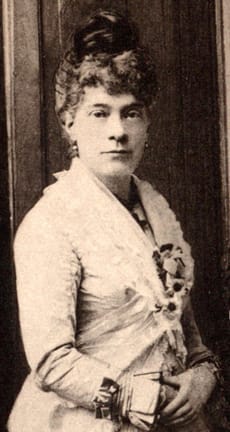
Nora Perry (1831/41-1896), beloved author, journalist, and poet, was born in Dudley, MA to parents Harvey and Sarah (Benson) Perry.  When she was a child, the Perry family moved to a two-story home near Brown University in Providence where her father was employed as merchant.  She spent her adult life living in Boston and her later years in Lexington, MA.  During a visit to her home town, Dudley, Perry suffered from a stroke and died the following evening on May 13th. 

Perry was educated at both home and in private schools, where she “received a varied and liberal training in many lines.”  Some felt that “her literary talent was predominant always,” and her first venture into writing was at the young age of eight, when she wrote “The Shipwreck.”  This unpublished short story was not a sweet, innocent tale; it was a bone-chilling romance that scared her young friends.  Perry grew up loving books like Arabian Nights and other “boys’ stories,” and, she was often quoted saying that “she was rather proud of the fact that she never went through the ‘Byron Age.’”  As she got older, Perry also enjoyed Emerson’s essays, as well as the poetry of Robert and Elizabeth Barrett Browning.

Perry’s first published serial, “Rosalind Newcomb,” debuted in Harper’s Magazine during 1859-1860, although her first published piece was printed in a religious magazine.  Soon after, she moved to Boston, MA and worked as the Boston correspondent for both the Chicago Tribune, and then the Providence Journal

Perry’s first commercially successful poem, “Tying her bonnet under her chin,” although originally given to (and turned down by) the Atlantic Monthly, was published in the National Era, a weekly newspaper produced in Washington, DC.  The poem became so popular that is was sung all over New England, and parodied and copied in many different publications.  This popularity finally caught up with the Atlantic Monthly staff, who offered to publish another original poem if it was just like the one published in the National Era.  Ms. Perry accepted, and they went on to publish, “After the ball,” one of her best-loved pieces.  Longfellow praised the poem, noting that it was “a very cleverly versified poem that—a very artistic poem.”  Shortly after, Ms. Perry published After the Ball and, other poems.  The book received good acclaim; in the February 1875 issue of Harper’s New Monthly Magazine, it was said to have “poetic feeling, fancy, delicate sentiment, grace, and music.”  Although Perry “wrote only when she felt so inclined,” she published multiple children’s books, as well as a myriad of poems and stories in other well-known serials.  She was so well-known that in 1890, she was listed as one of the 125 suggested writers who would become part of The Critic’s Twenty “Immortelles.”

Perry was honest and genuine, vivacious and clever.  And as one editor wrote of her, she was charming, or, at least “when she chose to be charming.”  She preferred the company of men, as she “seemed keenly conscious of, and particularly antagonistic to, the characteristically feminine foibles.”  Yet, she still “possessed many warm and loyal friends among women,” such as fellow writers Rose Terry Cooke and Harriet Prescott Spofford, who remained a lifelong friend.  Spofford referred to Perry as a noble and lyrical poet, noting that “[h]er songs seem to sing themselves, and their music bubbles up like the notes from the throat of a bird, one phrase answering the other in exquisite melody.”  She was respected by many poets, writers, and critics, including our May Athenaeum Author, Edwin Percy Whipple, who wrote that Perry “is a poetess who is all alive with the spirit of sweet content and glee.  She sings as a bird sings, from an abounding, overflowing joy of heart.”  Perry also included in her circle of friends the Boston Osgoods, the Ticknor family, writer and journalist Arthur Warren, the poet Whittier, abolitionist and lawyer Wendall Phillips, and writer George William Curtis.  She was an incredibly loyal friend, and often went above and beyond when it came to helping friends.  Perry was also very close to her mother, whose death caused Perry intense feelings of grief and loneliness.    

Perry was fiercely independent and opinionated, and was never shy about her strong likes and dislikes.  One friend surmised that it was perhaps this love of independence that caused her to remain unmarried.  It was known amongst her close friends, though, that she had many loving admirers, although “none of whom, however, satisfied her long, or, perhaps, ever really touched her heart.” 

Perhaps Perry’s greatest gift was that of her own personal belief of charity in regards to encouragement and mentoring.  Of Ms. Perry, her friend Ms. Caroline Ticknor wrote: “Let one who associates with the word ‘charity’ the murmured thanks of some degenerate tramp, replace the mental picture with a thought of some inspiration derived by some discouraged young writer, from a few personal lines penned by an author who has already won a place in the inhospitable world of letter, and yet who pauses to say, ‘That was well done; you can do better still.  Go on.’”

Selected Works:

After the Ball, and other poems. Boston: James R. Osgood and Company, 1875.  (Cutter  VEP. P42)

The Tragedy of the Unexpected, and other stories. Boston: Houghton, Mifflin and Company, 1880.   (Cutter  :VEF.P428.tr)

A Book of Love Stories. Boston: James R. Osgood and Company, 1881.  (Cutter  :VEF.P428.b)

For a Woman: a novel. Boston: Ticknor and Company, 1886.  (Cutter  :VEF.P428.fo)

New Songs and Ballads. Boston: Ticknor and Company, 1887.  (Cutter  VEP.P42.n)

 A Flock of Girls and their friends. Boston: Ticknor and Company, 1888.  (Cutter  :VEF.P428.f)

The Youngest Miss Lorton, and other stories. Boston: Ticknor and Company, 1889.  (Cutter  :VEJ.P428.y)

Another Flock of Girls. Boston: Little, Brown, and Company, 1890.  (Cutter  :VEF.P438.a)

Lyrics and Legends. Boston: Little, Brown, and Company, 1891.  (Cutter  VEP.P42.L)

Hope Benham: a story for girls. Boston: Little, Brown, and Company, 1894.  (Cutter  :VEJ.P428.h)

A Flock of Boys and Girls. Boston: Little, Brown, and Company, 1895.  (Cutter  :VEF.P428.fl)

Sources:

(1988).  Women Writers on Women Writing.  Legacy, 5 (1), 67-69.

Brunner, H. C. (1896, May 23).  Nora Perry.  The Critic, pp. 375.

The Ex-Editor (1896, May 16).  The Ex-Editor in New York: The veteran relates some of his experiences with Nora Perry.  Philadelphia Enquirer, pp. 6.

Gilman, A. (1879).  Poets’ homes: Pen and pencil sketches of American poets and their homes.  Boston: D. Lothrop and Company.

Greenleaf, O. H. (1896, May 15).  Nora Perry: Death of the favorite New England writer. Boston Daily Advertiser, pp. 2.

Johnson, R., & Brown, J. H. (Eds.). (1906).  Perry, Nora.  In The biographical dictionary of America: Brief biographies of authors, administrators, clergymen, editors, engineers, jurists, merchants, officials, philanthropists, scientists, statesmen, and others who are making American history (Vol. 8).  Boston: American Biographical Society.

Malone, D. (1934).  Perry, Nora.  In Dictionary of American biography (Vol. 14, pp. 489-490).  New York: Charles Scribner’s Sons.

Perry, N. (1884, November 18).  Letter to Arthur Warren.  Arthur Warren: Letters Received, 1884-1920, Mss.L665.  Box 1. The Boston Athenaeum, Massachusetts.

Ticknor, C. (1903).  A New England singer.  The Lamp, 26 (5), 363-374.

Willard, F. E., & Livermore, M. A. (Eds.). (1893).   Perry, Miss Nora.  In A woman of the century: Fourteen hundred-seventy biographical sketches accompanied by portraits of leading American women in all walks of life (pp. 567). New York: Charles Wells Moulton.

05.31.2012

Philip McFarland

June 2012
By Emilia Poppe Mountain

Philip McFarland was born in 1930 in Birmingham, Alabama, to Thomas Alfred, a lawyer, and Lucile Sylvester McFarland.  He remembers himself as a shy young man who came to love his history and English classes above all others.  The idea that he might someday go on to be a writer dawned around the age of fourteen, after classmates had sought him out for advice on improving their school themes.  When he was halfway through high school, a neighbor in Birmingham mentioned that Exeter Academy in New Hampshire was looking outside New England for talented students.  The family got in touch with the school, and its director of admissions stopped by on his next trip south.  Before long, the fourteen-year-old scholarship boy found himself among rock walls and birch trees that he’d only read about in the poems of Robert Frost.  He felt a bit dazed by it all but could not have been happier. 

McFarland went on from Exeter to Oberlin College.  He had seen the beautiful Ohio campus at his sister’s graduation and sensed that the nation’s first coeducational college would furnish a welcome change from Exeter’s all-male environment.  Partway through Oberlin, he spent three months hitchhiking around the country, by prearrangement sending weekly columns about his adventures back to the Cleveland Press.  One vivid memory lingers, of his being stranded for hours at a sweltering desert crossroads in California, trying in vain to hitch a ride.  Very few vehicles of any kind came by, and the few that did didn’t even slow down.  It was dusk when a lone car emerged over the distant horizon.  McFarland fell to his knees and clasped his hands fervently together.  “Two young men in their jaunty, top-down convertible were approaching.  They stopped a short distance beyond me and called back, ‘Your prayers have been answered!’  I rushed at them and scrambled into the back seat, immensely relieved.  Doris Day was on the radio singing, ‘It’s Magic.’  And it was magic, as in high luxury we took off at a great clip under the desert stars.  It was as blissful a moment out of my youth as I can remember.”  

Graduating from college as a history major during the Korean War, McFarland did his obligatory military service in the Navy.  He was stationed on a destroyer for eighteen months before being transferred to a communications base in Morocco.  On concluding his service, he learned that Oberlin had set up a new postgraduate scholarship funded by an alumnus, the editor of the Kansas City Star. McFarland applied for and was awarded the grant, and thus was able to attend St. Catharine’s College, Cambridge University, where after two years he earned a second BA, this time in English literature.  Later, he journeyed back to California, to take advantage of an offer to put together a catalog for a friend’s uncle, an antique arms collector.  The catalog sufficiently impressed Houghton Mifflin Publishers in Boston that he was hired to edit literature anthologies back East for use in public high schools.  After six years as an editor, he went into teaching, at Concord Academy, initially to further a new career as a textbook author.  But McFarland discovered that he loved teaching English more than assembling the contents of textbooks.  He remained at Concord Academy for thirty happy years.

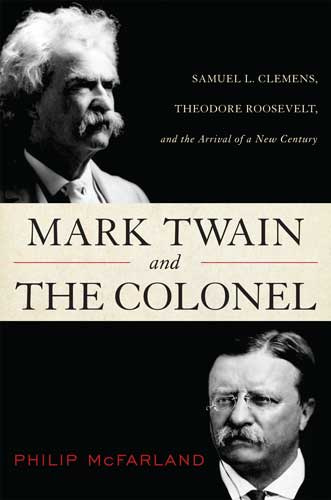
Dust jacket, Philip McFarland, photo courtesy of the author

In 1960, McFarland had written a novel, A House Full of Women, published by Simon & Schuster, which the critic Granville Hicks adjudged in the Saturday Review to be one of the three best first novels of that year (the other two, according to Hicks, were John Knowles’ A Separate Peace and Harper Lee’s To Kill a Mockingbird). With the exception of Seasons of Fear (1984), a fictional rendering of an actual slave revolt in New York City in 1741, McFarland has spent the last three decades writing histories and biographies.  Having determined at the start to write of Washington Irving and his times, he mentioned that aspiration to a Beacon Hill friend, who promptly introduced him to the resources of the Boston Athenæum.  It proved to be as blissful a professional occurrence in adulthood as had been the top-down convertible ride in the California desert in his youth.  The Irving project resulted in Sojourners (1979), and his months at the Athenæum grew into a life membership.  Other books followed, each emerging from something encountered while writing the preceding one.  Sea Dangers (1985) tells the story of a mutiny in the U. S. Navy in 1842.  The Brave Bostonians (1995) is a narrative of the year before the outbreak of the American Revolution.  McFarland’s Hawthorne in Concord, published in 2004, led on to his next historical biography, Loves of Harriet Beecher Stowe (2007)—two stories of American authors who knew and respected each other but whose works, in McFarland’s view, could not have been more different.

McFarland jokes that whenever he and his wife ponder leaving Lexington, after forty-two years of living there, they end up rejecting alternatives with the continued refrain: “No, no, too far from the Athenæum.”  He credits “the Boston Athenæum’s collections, its wonderful Interlibrary Loan services, and its knowledgeable, ever helpful, ever agreeable staff with making his particular kind of writing not only possible but immensely pleasurable.”  He has lectured at the Boston Athenæum and can frequently be found at one of the fifth-floor reading tables.  Some time ago, he was in the library consulting Bernard De Voto’s Mark Twain in Eruption when he came upon Sam Clemens’s outspoken opinion that Theodore Roosevelt was by far the worst president the country has ever had.  Why would Mark Twain think that?  Answering the question led to four or five years of research and writing; and if you’re curious about what the research revealed of Clemens’s reasoning, check out Mark Twain and the Colonel, available on our shelves in July and come to the lecture on July 19, 2012 – 12:00pm – 1:00pm.

05.01.2012

Edwin Percy Whipple

Edwin Percy Whipple

By Noah Sheola

Books, – lighthouses erected in the great sea of time, – books, the precious depositories of the thoughts and creations of genius, – books, by whose sorcery times past become time present, and the whole pageantry of the world’s history moves in solemn procession before our eyes.”  -E.P. Whipple in Lectures on Subjects Connected with Literature and Life (1850).

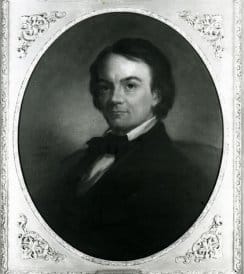
In mid nineteenth-century Boston, essayist Edwin Percy Whipple was hailed as the most discerning literary critic of his generation, lauded for his humor, eloquence, and piercing intellect.  By 1908, thirty years after his death, the Boston Daily Globe was describing Whipple as “a great Boston critic and scarcely recalled essayist”, and little has occurred in the intervening century to revitalize the renown he once enjoyed.  A critic’s fame seldom outlasts that of his subjects, and so it is altogether predictable that E.P. Whipple has been forgotten, even as his friends and peers Oliver Wendell Holmes and Nathaniel Hawthorne have become household names.  Whipple was a proprietor of the Boston Athenaeum from 1855 until his death, and  portrait of Whipple can be viewed on the stair landing between the fourth and fifth floors, where many visitors to the library have undoubtedly paused and wondered as they catch their breath, ‘just who was E.P Whipple?’

Edwin Percy Whipple was born in Gloucester, Massachusetts to Matthew and Lydia (Gardiner) Whipple.  After Matthew Whipple died of cholera when Edwin was still an infant, Lydia and her four sons moved to Salem, Massachusetts.  Demonstrating a bookish disposition at an early age, Whipple whetted his appreciation for literature and history with frequent visits to the Salem Athenaeum.  When Edwin Whipple graduated from the local high school at age fifteen his work had already been published in a Salem newspaper.  He took a job as a clerk in a local bank, moving to Boston in 1837.  In Boston Whipple found an outlet for his literary talents in the debates and lectures of the Mercantile Library Association, where he co-founded the Attic Nights Club, a small group which met weekly to discuss and debate contemporary literature.

Starting in 1843 with an essay on Macaulay in the Boston Miscellany, Whipple’s critical essays appeared regularly, though often anonymously, in publications such as Harper’s Magazine and American Review.  In 1845 Whipple left the brokerage office at which he had been employed since moving to Boston and accepted a position as supervisor of the news office of the Merchant’s Exchange Building.  

In 1847 Whipple married Charlotte B. Hastings, whose acquaintance with Oliver Wendell Holmes helped establish the couple’s residence at 11 Pinckney Street as a literary salon where Longfellow, Whittier, Emerson, and others gathered to discuss literature.  

In 1848 Whipple published a compilation of his work under the title Essays and Reviews.  The subjects included English and American writers of the nineteenth century, as well as contemporary authors.  Essays and Reviews sold well enough to be reprinted continually for the next forty years and did much to establish Whipple as the preeminent literary critic of the day.

It was through the success of his lectures, however, that Whipple gained renown as a public intellectual.  Small of stature, myopic, and shy, Whipple was nonetheless a compelling public speaker, known for his satirical wit and modest disposition.  Traveling the country at the height of the lyceum movement, Whipple delivered as many as one thousand public lectures, drawing large audiences from Bangor to St. Louis.  Whipple subsequently edited and compiled his lectures, published as Lectures on Subjects Connected with Literature and Life (1849) and Character and Characteristic Men (1866).    

Appointed literary editor the Boston Daily Globe in 1872, Whipple continued to publish reviews and literary essays, predicting great things for up-and-comers Henry James and Mark Twain.  Whipple died in 1886, his health having suffered a long and gradual decline in the preceding years.  He was survived by his wife and a son, Edwin Augustus Whipple.  His six-volume Works were published in 1885-1887.  Recollections of Eminent Men, with Other Papers, which included previously published tributes to Louis Agassiz, Rufus Choate, Charles Sumner and others, was published in 1887.  Edwin and Charlotte Hastings Whipple are interred in a family plot in Mount Auburn Cemetery. 

Selected Works:

Character and Characteristic Men.   Boston: Ticknor and Fields, 1866.
Success and its Conditions.  Boston:   J. R. Osgood and company, 1871.
Lectures on Subjects Connected with Life and Literature.  Boston: Ticknor and Fields, 1859.
Essays and Reviews.  New York: D. Appleton, 1848.

References:

Brooks, Van Wyck (1936).  The Flowering of New England.  New York:  Dutton.
A daily lesson in history. (1908, Jun 15). Boston Daily Globe (1872-1922), pp. 12-12. http://search.proquest.com/docview/501052376?accountid=35416
Edwin
 Percy Whipple. (1886, Jun 19). Boston Daily Globe (1872-1922), pp. 4-4. http://search.proquest.com/docview/493315084?accountid=35416
Gale, Robert L. (1999).  “Whipple, Edwin Percy.” In American National Biography.  New York; Oxford:  Oxford University Press.

04.03.2012

David Ferry

April 2012

David Ferry is an American poet and translator, Sophie Chantal Hart Professor of English, Emeritus, Wellesley College and “Distinguished Visiting Scholar,” Suffolk University.  His numerous honors include the Ingram Merrill Award for Poetry and Translation (1993), the Library of Congress Rebekah Johnson Bobbitt National Prize for Poetry (2000) and the Poetry Foundation’s Ruth B. Lilly Poetry Prize for lifetime achievement (2011).  He is also a Fellow of the American Academy of Arts and Sciences.

Ferry was born in Orange, New Jersey in 1924.  He graduated from Columbia High School in Maplewood-South Orange New Jersey, and played the piano, which taught him a great deal about the metrical line in poetry.

The English Department at Amherst College, where he began undergraduate coursework in the summer of 1942, had a profound influence upon him, especially professor Reuben A. Brower (of eventual Humanities 6 fame).  Ferry was drafted into the Army Air Force in World War II early into his college career.  After returning from the war and completing his degree in 1948, he entered a doctoral program at Harvard, which eventually culminated in his book The Limits of Mortality: An Essay on Wordsworth’s Major Poems (1959). In 1952, he became a professor at Wellesley College, where he met his wife, Anne Davidson, who later went on to teach and write at Harvard University and Boston College.  Under the name Anne Ferry, she was the author of many distinguished books, among them Milton’s Epic Voice: The Narrator in Paradise LostThe “Inward “Language, The Title to the Poem and By Design: Intention in Poetry.  They had two children, Elizabeth Ferry, now an anthropologist at Brandeis University and Stephen Ferry, a photojournalist.

Ferry began writing poetry in the 1950s. His first book of poems, On the Way to the Island, was published in 1960 by Wesleyan University Press.   Strangers: A Book of Poems (1983), Dwelling Places: Poems and Translations (1992) and Of No Country I Know: New Poems and Selected Translations (1999) were published by the University of Chicago Press.  After retiring from Wellesley in 1989, Ferry’s translation career began.  Gilgamesh: A New Rendering in English Verse, was a finalist for the Nation Book Critics Circle Award.  Since then, he has translated the Odes and the Epistles of Horace and the Eclogues and Georgics of Virgil.  He is now at work on a translation of Virgil’s Aeneid. 

Two new books of poems will appear in 2012: Bewilderment: New Poems, and Translations, from the University of Chicago Press, and On This Side of the River, from the Waywiser Press (UK).

UPDATE 3/2020: Read Literary Hub’s “A Conversation with Poet David Ferry on the Occasion of His 96th Birthday”

Selected Bibliography:

Eclogues of Virgil: A Translation 
LC
PA6807.B7 F47 1999

Gilgamesh: A New Rendering in English Verse
LC
PS3556.E77 G55 1992

Odes of Horace
LC
PA6395 . F47 1997

Of No Country I Know: New and Selected Poems and Translations
LC
PS3556.E77 O37 1999

On the Way to the Island: Poems
Cutter
VEP .F418 .o

03.29.2012

Lloyd Fairsoap

April 1st, 2012
by Noah Sheola

Though once a rising star in American literature, author Lloyd Fairsoap (1842-1911) is undeservedly obscure nowadays.  A poet, essayist, and novelist, Fairsoap is well remembered at the Boston Athenæum, where his original manuscripts and early editions of his books are proudly kept today.  Fairsoap became a proprietor of Boston Athenaeum in 1889 and wrote some of his best-loved novels in the second-floor reading room. 

Lloyd Fairsoap was born in Boston in 1842 to Stephen Fairsoap, a marine agent, and Ada (Poole) Fairsoap.  Raised in a household that valued intellectual achievement, Fairsoap entered Harvard College at sixteen, where he benefitted from sitting immediately behind the young Oliver Wendell Holmes Jr. during exams.

During his senior year, with the advent of the Civil War, Fairsoap joined the Union Army, rising to the rank of spittoon-polisher and fighting in the Peninsular Campaign under General McClellan.  After the war Fairsoap applied himself to literary endeavors.  His essays appeared in The Presentiment and The Harbinger and he regularly wrote humorous verse for the Sunday edition of the Boston Oracle. In 1867 Fairsoap married Lucy Poniard of the accomplished French violist Anton Poniard and herself a conservatory-trained soprano of some note.

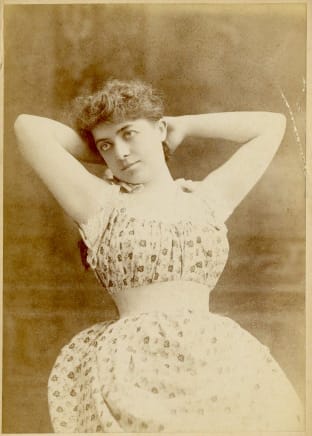
Miss Lucy Poniard, right before marriage to Fairsoap. Unidentified portrait from the Prints and Photographs Department, Boston Athenaeum.

Fairsoap published several novels in the 1880s and 1890s, the best known of which, The Island Proviso (1893), was described by George Bernhard Shaw as “singularly mawkish” and “turgidly plotted.”  A fixture among Boston socialites, Lloyd Fairsoap was notorious at gatherings, owing to his quick wit, ribald charm, and an inordinate fondness for herring.   Following an orgy of herring consumption that was astonishing even by Fairsoap standards, the celebrated novelist succumbed to a surfeit of brine, dying in the early morning of April 2nd, 1911 at his home in Boston.   He was duly interred in the Fairsoap family plot at Mount Auburn Cemetery.

02.29.2012

Ola Elizabeth Winslow

March 2012

By Noah Sheola

Fifth Floor,

December 15, 1970

Dear Second Floor,

Your invitation for tea on Thursday, December 17th raises the happiest of anticipations.  I’ll surely be right there at three o’clock.  Thank you and thank you again.  Yours truly, Elizabeth Winslow 

Handwritten note from Ola Elizabeth Winslow.  Collection of the Boston Athenæum.

Ola Elizabeth Winslow was an author and historian best known for her Pulitzer Prize winning biography of the eighteenth-century theologian Jonathan Edwards.  A proprietor of the Boston Athenæum from 1951 until her death in 1977, she is still fondly remembered by Athenæum members and staff alike. 

Born in Grant City, Missouri, to William Delos Winslow, a banker, and Hattie Elizabeth Colby, Winslow grew up in California.   She attended Stanford University, earning a bachelor’s degree in 1906 and going on to teach English at a private girls’ school.  In 1909 Winslow accepted a position teaching English at the College of the Pacific (now University of the Pacific), then located in San Jose.  After completing a master’s degree from Stanford in 1914, Winslow became Professor of English at Goucher College, in Baltimore.  She taught at Goucher for the next thirty years, during which time she completed a doctorate in English from the University of Chicago.  Her 1922 dissertation was titled “Low Comedy as Structural Element in English Drama from the Beginnings to 1642” and was published by the University of Chicago Libraries in 1926. 

Winslow’s next book was an anthology titled Harper’s Literary Museum:  A Compendium of Instructive, Entertaining and Amusing Matter Selected from Early American Writings…(1927).  Whereas the title page of this book reads “designed” by George Boas and “compiled” by Ola Elizabeth Winslow, it should be understood that Boas, a philosophy professor at Johns Hopkins, did little more than act as Winslow’s literary agent.  Though Winslow’s early work is today consigned to obscurity, her next book was an immediate success, providing the basis for her long and distinguished career.  Winslow had long aspired to write an intellectual history of Jonathan Edwards, but, upon learning that Harvard professor Perry Miller was himself at work on a similar endeavor, Winslow yielded the topic to the better known Miller and wrote a biography of Edwards instead.   Published in 1940, Jonathan Edwards, 1703-1758:  A Biography was awarded the Pulitzer Prize in biography, securing her reputation as an assiduous scholar and gifted writer.

In 1944 Winslow was appointed professor of English at Wellesley College, where she would teach until 1950, residing in faculty housing near campus.  The move represented a kind of homecoming for Winslow, her west-coast upbringing notwithstanding, for her ancestry dates back to the Mayflower, and as a specialist in colonial New England she had long felt an affinity for the region.  From 1950 to 1962 Winslow was lecturer at Radcliffe College’s winter seminars, the seasonal employment permitting her to spend time in London conducting research at the British Museum for her study of Pilgrim’s Progress author John Bunyan.  Published in 1961, John Bunyan, was a finalist for the National Book Award.

Now writing full-time, the ensuing years were the most prolific period of Winslow’s career, owing to her indomitable work ethic and, just perhaps, the writer’s sanctuary she found on the fifth floor of the Boston Athenæum, of which she had been a share-holder since 1951.  By the 1960s Winslow had become one of the better known habitués of the library, her presence well documented in the Athenæum archives.  She now spent most of her time in Maine however, having bought a farmhouse in Sheepscot with her Pulitzer Prize earnings.  She returned to Boston each November to spend the winter near her favorite library, renting a modest apartment at 4 Chestnut Street. 

Edward Clark

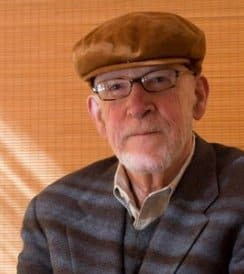
In the winter of 1970 Winslow befriended fellow author and Athenaeum member Edward Clark, professor of English at Suffolk University.  Clark has written up his recollections of his friendship with Winslow in a brief, unpublished memoir titled An Athenæum Friendship, which has served as primary source for the present biographical sketch.  Clark recounts how his pleasant conversations with Winslow evolved into “a daily ritual,” involving collegial discussion and clandestine doughnuts. Clark’s memoir relates many details of Winslow’s winters in Boston, including the particulars of her weekly routine.  On Saturdays she ran errands and shopped and on Sundays attended the First Unitarian Church on Marlborough Street.  On Monday morning she was at the Athenæum as soon as the doors were open, promptly claiming a table on the fifth floor where she wrote until noon.  For lunch she favored tea and an egg-salad sandwich at a neighborhood shop.  She would buy a plain doughnut to share with Mr. Clark, whom she now called Ed, he in turn addressing her as Elizabeth.  When Edward Clark met Winslow she was working on a book on the Boston small pox epidemic of 1721.  It would be her final work.  Published in 1974, A Destroying Angel: The Conquest of Smallpox in Colonial Bostonwas dedicated to Dr. Blake Cady, who had operated on her following a diagnosis with breast cancer.  While Winslow ultimately survived cancer she was nonetheless near the end of her long life.  In 1977 Winslow, who never married and had no children, died in Damariscotta, Maine.  Reflecting on her Athenaeum friendship with Edward Clark, she included him in her will, leaving him “my small antique walnut table, my large square carpeted stool, and one floor lamp, and also my share in the Boston Library Society (now the Boston Athenæum).”

Selected Works:

Jonathan Edwards, 1703–1758 (1940)
Meetinghouse Hill, 1630–1783 (1952)
Master Roger Williams (1957)
John Bunyan (1961)
Samuel Sewall of Boston (1964)
Portsmouth, the Life of a Town (1966)
Jonathan Edwards, Basic Writings [ed.] (1966)
John Eliot: Apostle to the Indians (1968)
“And Plead for the Rights of All”: Old South Church in Boston, 1669–1969 (1970)
A Destroying Angel: The Conquest of Smallpox in Colonial Boston (1974).

References:

Clark, Edward (2011).  An Athenæum friendship.  Unpublished manuscript.
Gale, Robert L. (1999).  “Ola Elizabeth Winslow”  In American National Biography.  New York; Oxford:  Oxford University Press.   
“Ola Elizabeth Winslow.” (2001).  Contemporary Authors Online. Detroit: Gale. Gale Biography In Context. Web. 22 Feb. 2012.
“Ola Elizabeth Winslow.” Dictionary of American Biography. New York: Charles Scribner’s Sons, 1995. Gale Biography In Context. Web. 22 Feb. 2012.