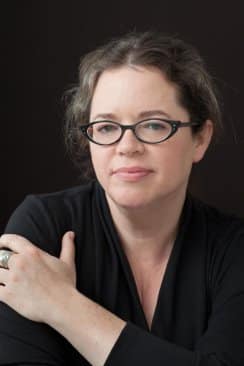
Everything in its place. Clean as you go. Whether baking or writing—and Louise Miller does both—the job requires a methodical approach. “I do my best plotting and my best thinking about writing when I’m baking. I’ve worked that into my process, so now at the end of my writing day, in the evening, I make myself a list of problems and questions and I put that list next to my prep list at work in the morning. I’ve figured out more plot issues with my novel when I had to make ten apple pies,” she says, and although she’s laughing as she says this, you know it’s absolutely true.
Miller is talking about the creation of her debut novel, The City Baker’s Guide to Country Living, much of which she wrote and revised ensconced in silence on the Athenæum’s contemplative fifth floor. She has served the Union Club as pastry chef for the past thirteen years and counting. She arrives at six in the morning, bakes until two in the afternoon, then walks around the corner to the library to write her way into the resolving evening hours. “I find there aren’t too many distractions, the three or four doors it takes me to get here, so it keeps me disciplined.”
Discipline is a recurring theme in a conversation that covers a childhood split between Watertown and Wellesley (she moved to the latter with her father when she was nine), a fortuitous opportunity to see Hamilton before it went to Broadway and exploded (she loved the show, wishes high school students could see it, and is disheartened that demand and ticket costs are so prohibitive. “I’m a big proponent of art being accessible. Anyone with a body can relate to dance.”), and a visit to the Topsfield Fair in 1999 where, on a whim, she decided to enter a pie baking contest.
Told to report to the arts and crafts building at 7:00 p.m. for the contest results, Miller arrived at the expansive, grange hall-like room to find upwards of one hundred people silently staring down three people in a glassed-off kitchen. “It felt like the lights were dimmed, and the kitchen was glowing like an aquarium,” she recalls. “The judging had run over. Everyone was just watching three people eat pie. The room was dead silent. It was so tense and bizarre. And that image haunted me for so long: what could be at stake for these people? Why would they care so much?” This encounter was the first ingredient for what would ultimately become The City Baker’s Guide to Country Living.
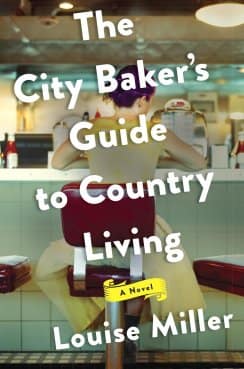
The story begins in Boston where protagonist Olivia Rawlings enjoys work as a pastry chef for a private club before accidentally setting ablaze the place in a baked Alaska presentation gone awry. Cuts and burns are inevitable. Rattled and in need of respite, she drives to Vermont with her dog Salty to visit her best friend Hannah and to consider her next step. To read the rest, stop by the New Book Shelves in the first-floor Bow Room.
The cover of Miller’s debut novel, photo courtesy of Nina Subin.
Work on the novel began in 2009, and in 2012, Miller received a scholarship to attend GrubStreet’s novel incubator program, where she learned her tendencies as a writer: she writes linearly, and visually too, focusing first and foremost on transcribing the events as they unfold in real time in the playground of her mind. She learned how to deliver formal critique on her peers’ work, how to cull the most useful bits of feedback from a wide and uneven sea of it, and how to not be precious about when/why/how she worked—i.e., how to be disciplined, to work any time there’s time, not just when she feels the electricity of inspiration.
As for writers who inspired her to pursue the craft, Miller was most moved by those who were writing about the mundane. Raymond Carver being so formative and transformative in this respect that she named her dog in his honor. “I couldn’t believe that someone could make art out of something so familiar to me. That was what really broke me open.”
Her excitement to create is clear both in her writing and our chat. She mentions more than once, often without my prompting, of the joy of writing, of the unadulterated pleasure of escaping into a world of her own design. “Writing this book was my refuge,” she says at one point. What, then, were some of the great struggles? “Writing is all problem solving—that’s the hardest part.” Problem solving and decision making. You make one thousand decisions, and then you make one thousand more, and one thousand more after that—and that’s only the first chapter. It can get exhausting just thinking about it, so let’s end on a more positive note.
What was her favorite part of the entire experience, door to door? Was it the perfecting of an earlier draft? Getting the dang story sold? Or maybe helping to choose the title and cover? How about the sweet agony of sitting alone in a room in a protracted game of chicken with that smug and taunting blank page? “I think finishing the first draft was probably my favorite part,” she says. “Because I just had started a million things in my life and not finished them, and so finishing felt really, really good.”
And as someone with the same completion complex, all I can say is: amen to
12.12.2016
Edward Rowe Snow
January 2017
By Nicole Critchley
Edward Rowe Snow is best remembered as a New England maritime historian and a Flying Santa. A proprietor of the Boston Athenæum and Massachusetts native, Snow was born in 1902. He graduated high school at the age of 16 and for the next decade traveled the world working on oil tankers, sailing ships, and also as a Hollywood extra. He entered Harvard in 1929, graduated in three years by attending summer sessions in 1932, the year he married Anna-Myrle Haegg. He was a history high school teacher in Winthrop but left to write and lecture full time. He wrote for the Patriot Ledger in Quincy from 1957 until 1982, lectured, and made several radio and TV interviews (some of which can be found on YouTube). During the war, Snow was a member of the US Air Force, Twelfth Bomber Command. He was wounded in 1942 over North Africa and discharged in 1943 because of those wounds.
A descendant of sea captains and an avid explorer, Snow found shipwrecks, coins, and other artifacts on his boating trips around Boston Harbor. He defined island as “a body of land surrounded by adventure” in Secrets of the North Atlantic Islands and worked hard to preserve Massachusetts’s islands. An example is Georges Island: when Logan Airport wanted to extend on runway that would harm Fort Warren, Snow fought to save it and it is now in the state’s park system.
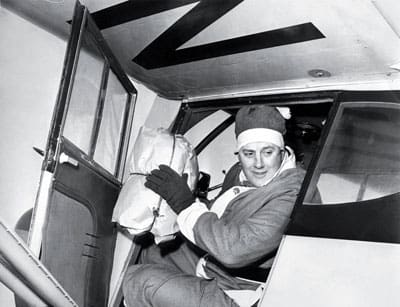
During his brief tenure teaching, one of his students got him involved with his father, Captain William Wincapaw, who had started dropping Christmas gifts to remote islands in 1929. In 1936 Snow joined him. Snow was the perfect choice of volunteer because of his hobby taking aerial photos of lighthouses. Snow delivered presents and goods (donated by sponsors and himself alike) up and down the New England coast, even expanding the flights to lighthouses on the Great Lakes and Bermuda Islands. In 1947, he visited 176 lighthouses. Beside a brief hiatus during the war, Snow would not give up the Santa suit until 1981.
While at the Athenæum, Snow researched and wrote many books on maritime New England history, including subjects such as the islands of Boston Harbor and surrounding sea, lighthouses, shipwrecks, nautical figures, sailing, forts, and sea tales. He also wrote about pirates and their treasures, stories about ghosts, and folktales about New England. He told the Boston Globe, “What I really like to do is to find a story so improbable that no one will believe it, and then prove beyond a doubt that it is true. I do think that folklore is important and that it should be preserved.” Thirty of his books are at the Athenæum. On the open shelf are The Romance of Boston Bay (1944), Women of the Sea (1962), True Tales of Pirates and Their Gold (1953), Great Sea Rescues and Tales of Survival (1958), and Boston Bay Mysteries and Other Tales (1977). His first published work, Castle Island, Its 300 Years of History and Romance (1935), is held in Special Collections and can be viewed by appointment.
Edward Rowe Snow, photo courtesy of Dolly Bicknell.
In researching his second book, The Island of Boston Harbor: Their History and Romance 1626–1935 (1935), based on his college thesis, he used and referenced many of the Athenæum’s resources. Some of these included A History of East Boston by William Sumner, The History of New England from 1630 to 1649 by John Winthrop, First Governour of the Colony of the Massachusetts Bay, A Topographical and Historical Description of Boston by Nathaniel B. Shurtleff, A Valedictory Poem by Frederick W.A.S. Brown, Prison Life by John M. Brewer, Notes on the Sea-Shore by James Lloyd Homer, The Pirates of the New England Coast, 1630–1730 by George Francis Dow, and Recollections of Alexander H. Stephens. He probably also took advantage of the Athenæum’s periodical collection; he references articles from The Bostonian, Boston Post, and the Boston Globe in this book as well.
Snow passed away on April 10, 1982 at the age of 79. He was buried near the sea he loved. There is also a children’s book in our collection based on Snow’s Christmas flights.Selected Works
Hunter, Sara Hoagland. “Edward Rowe Snow Brief life of a “Flying Santa”: 1902-1982.” Harvard Magazine, January-Feburary 2012. http://harvardmagazine.com/2012/01/vita-edward-rowe-snow
Quill Ed. “Author Edward R. Snow is Buried Near Sea He Loved and Wrote About.” Boston Globe, [Boston, Mass] 14 Apr 1982: 1.
Riley, John Wm. “Edward Rowe Snow, 79, Lecturer, Sea Author, Flying Santa Claus’.” Boston Globe, [Boston, Mass] 11 Apr 1982: 1.
Tague, Brian. “The Origins and History of the Flying Santa.” Friends of Flying Santa. 2016. http://www.flyingsanta.com/HistoryOrigins.html
Theroux, Joseph P. “Flying Santa: Edward Rowe Snow and the Romance of History.” Historic Nantucket. 2008. http://www.nha.org/pdfs/hn/HistoricNan-Winter2008.pdf
11.28.2016
Katherine Dimancescu
December 2016
Interview by Emily Levine
I recently sat down with local historian and Boston Athenæum member Katherine Dimancescu to discuss New England history writing, research, and preservation. Ms. Dimancescu elaborates on the search for her seventeenth-century maternal ancestors whom she brings to life for a modern-day audience in her books The Forgotten Chapters: My Journey into the Past and Denizens: A Narrative of Captain George Denison and his New England Contemporaries.
Q: I understand you are originally from Concord?
A: I grew up in Lincoln, not far from Concord, a very small, historic agricultural community with roots going right back to the seventeenth century. That’s where I grew up, and all of my roots are Mass Bay Colony. My mom was born and raised in Dayton, Ohio, and my dad was born and raised overseas. Before my parents decided to stay here in the 70s, our family hadn’t lived here since the 16 or 1700s, so we are returning to our roots, literally, by settling here in the East.
Q: And you also lived abroad for a little while?
A: Yes, in England, and I thought I was going to go back. I have a master in European studies from The University of Westminster, London and a second master in the history of international relations from The London School of Economics and Political Science. I truly thought when I came back to the US from graduate school that I would spend one year living here and then would be out of here to live abroad, but that did not pan out. I love England and I loved living in London. Anyways, I came home, and got a job as a managing editor.
Q: Where?
A: For a small company where I live in West Concord that no longer exists. I was working as a managing editor for an international newsletter. I got to handle the work for the former Soviet Union, countries like Azerbaijan, Georgia, Moldova, and I was responsible for putting together a monthly newsletter. It proved a challenge because a lot of those countries are and were going through very tumultuous times; you’re asking people to supply materials for a newsletter but they have far more diabolical things going on. It was never a dull moment. It was basically, ‘Excuse me, I know you have to evacuate, but can I have a moment of your time?’ I did both that kind of work and also produced the company’s reports. Both tasks totally called upon everything I had learned with my international relations degree. I loved it, I really did. And when the company was sold to Thomson Reuters I could have stayed, but I decided to switch gears.
Q: Is that when you decided to turn to history?
A: Yes. When I was 14, I went to see an ancestor’s home in Connecticut. I didn’t even know that we had an ancestral home in Connecticut up until that point. This was a private residence, the first part built around 1725 at the very end of First Period architecture. I was 14 and was in eighth grade, and my dad and I decided to pay a visit. We were amazed to find that the house was still standing, happily occupied by an older couple who bought it in the 50s. This was 1995 and there were no cell phones so we gave no warning, we just pulled up and said ‘Hi, my ancestors lived here.’ I walked into the house and I tell you, it was one of those moments that you know you are going to do something. It was a light bulb moment: ‘This is it,’ I thought, ‘I know that I am going to write a book. I am going to write this book about my family heritage. I know it’s going to be a while, but I am going to write this book.’ So in 2009, when I switched gears from being a managing editor to an author, I knew I was going to write about my ancestors in Connecticut. So that’s what got the ball rolling for what became The Forgotten Chapters, my first book.
Q: Had you undertaken any primary source research related to your family prior to that?
A: Yes, yes I had bits and pieces. My great grandmother had joined the Daughters of the American Revolution in 1923, so I had a very basic genealogy going back to our patriot ancestors who fought in the American Revolution. My starting point was the research my great grandmother did, and then I built upon that. I went to places like the Connecticut Historical Society and to the Connecticut State Library in Hartford, but some of the best things I found were in smaller local historical societies. The local societies were sometimes teeny tiny rooms usually in a library, and many act as repositories for generations of people and their subsequent materials. Local historical societies have been phenomenal for my purposes. They usually just give you a box and say ‘This is what we have for this particular family name, have at it.’ These local materials opened so many doors for me, including the fact that my ancestors owned slaves. I had no idea that my family owned slaves. They were just farmers in Connecticut, and the fact that my ancestors had slaves never came up in my family narrative. When I went to the Connecticut State Library, I saw ancestral wills with values assigned to slaves giving them to their children when people pass away. Actually, according to a family account at the historical society, my ancestors were buried near their slaves in the same burial ground but then later generations removed the slaves and buried them elsewhere in an unknown location. That was a lot for me to take in, and more than a little disturbing. You can’t deny the fact that your ancestors owned slaves when the evidence is that black and white. That took a lot to come to terms with. Here in the Northeast we say that slavery was a southern problem. We don’t really talk about slavery as much, but in this day and age it has become more commonplace.
Q: Have you had any follow-up from these discoveries in order to contextualize past slavery in the twenty-first century?
A: The huge blessing of all of this is that I have been able to meet descendants of people who were owned by my ancestors, and there is no animosity from them. They just say, ‘It was what it was, and we aren’t judging you.’ That, to me, has been incredible. To have a dialogue with them and hear their stories has been remarkable. I get to learn about my ancestors through the stories of their slaves, which is not something that I ever expected.
Q: I understand your first book is a family history, so is your second book an extension of that?
A: At its inception, my second book Denizens was going to be very historical. I loved that The Forgotten Chapters became very personal, but I wanted Denizens to be the exact opposite and be very historical. My ancestor George Denison is right up there with the ancestors that I think about the most. He is an amazing guy—he fought in King Philip’s War and the English Civil War, dealt with all sorts of land settlements—he is amazing. Anyway, it is 1631 and George, his parents, and two of his brothers settle in Roxbury when the Massachusetts Bay Colony is brand new. Who George later becomes is a product of what he is seeing and doing in Roxbury. What had not been done to date was a work about George’s life in Roxbury, with his family and his brothers. I really wanted to focus in on George’s Roxbury years and initially that is what Denizens was going to be: the making of George Denison the man. Over time as I began writing, Denizens broadened to become a story of my larger family roots in Roxbury through the lens of George’s story. Denizens then quickly went from being George’s book, which I had intended it to be, to the story of something far greater, larger, and interesting. I should have a shirt that says ‘Made in Roxbury’ because basically most of my family roots here in New England come out of Roxbury. In Denizens, I ask people to care about ancestors who are not their own. It has taken a little while to synthesize all of the material into one cohesive unit, which is why the book is taking a little longer than I had initially planned, but it’s really coming together into a cohesive narrative.
Q: Denizens sounds like a departure from your first book, as far as perspective is concerned?
A: It’s funny, both of my books are very different. They are both my babies and they’re a reflection of me, but they each have their own little unique personality. It’s amazing when they go out into the world because the reactions from readers are just across the board.
Q: When you are doing research and starting a book, when do you stop research and start writing?
A: That’s the hardest thing! It is really hard to call time on research. That’s where editors come in! I have worked with a couple of pretty amazing editors. As a writer, working with a great editor is key; they let you know when you get carried away and help you not get bogged down by minutiae you might find fascinating that others might not. The largest challenge of Denizens has been keeping it under 400 pages. That being said, there will be a third book because there is so much that I just couldn’t cover in this one, so we have not seen the last of George Denison and these people of Roxbury! The editor I am working with now is based in England. She helps me focus on what material is interesting from an English perspective. Another reason why Denizens is taking its time in being published is that I am making it bigger and better for both UK and US audiences. I did not do that with The Forgotten Chapters; the language is very different in Denizens because I am approaching an English audience from an American perspective.
Q: Where did you find the covers for your books?
A: The map on the cover of The Forgotten Chapters is from the Boston Public Library, a map of the New England coastline ca. 1675. I got special permission from the BPL to use it, and that just made the book come to life. The cover image for Denizens, which is on the website, is a depiction of the Battle of Marston Moor where we know that George Denison fought. We know he was there, and he survived. I received permission to use the image from Bridgeman Images, but it was definitely a very formal procedure.
Q: I love your blog—it seems you go to a lot of different local places to make living history really accessible to a large audience.
A: Yes, that’s about right. My feeling is that people are not going to preserve history unless they see what they are preserving. Unless they experience it and enjoy it. I do not necessarily think history has to be your own to motivate people to want to save it. I encourage people to go to places like burial grounds and house museums because that’s where history comes alive. Yes, you can read a book, but it is not the same as going to see where the history actually happened. That’s my goal with the blog: to help people explore their own family roots, but also to save history. I realize that not everyone wants to spend money on museum admissions, so I do my best to find places that maybe you can just walk around, or go to a park and have a picnic; it doesn’t have to be big bucks or going abroad, it can be a mini break, or half a day. History means different things to different people, and history is what you make of it; but it is so important that we save it. If we don’t save it now, there is going to be nothing. We are lucky in Boston that so much has been saved, but that awareness is not everywhere and it is a challenge to get people to care. We should work to spread awareness as much as we can. We can’t save all historic structures, but my goal is to save as many and give as many places a second chance as possible. One of the things I am focused on is how buildings have been given a second chance at life; historic places becoming homes, or even places of small business. That, to me, means people enjoying and respecting an historic place in their own right in a modern day and age. Look at Sturbridge Village—they have done a great job moving and appreciating historic buildings. I also love Ipswich, Massachusetts. Ipswich has some of the best and well preserved First Period architecture homes—you just walk around and it’s an outdoor museum! There is a lot of conserved and protected land up there and a lot of historic barns. When I visualize what my studio will look like I see an old barn. One day I will have an old barn!
Q: Thanks so much for your time, Kate—any final words on history today?
A: I think in school a lot of people do not get that feeling of living history, and they are bored. History is not boring! You do not need to jazz it up, if it is presented the right way. One tour can change your life, one home visit can create a writer.
[For more information on Kate’s books, The Forgotten Chapters: My Journey into the Past and Denizens: A Narrative of Captain George Denison and his New England Contemporaries, please visit Kate’s website. You can also check out Kate’s history blog on Facebook here.]
11.04.2016
Caroline M. Hewins
November 2016
By Dani Crickman
Though the Boston Athenæum featured only briefly in the life of “First Lady of the Library” Caroline M. Hewins, it served as an introduction to the profession where she would leave her lasting mark. As a student at Girls’ High and Normal School, Hewins came to the Athenæum on a special project researching the Civil War for the school’s principal. So taken with the library, she persuaded her parents to let her work there after graduation. From 1866 to 1867, Hewins was employed as an assistant under renowned librarian and bibliographer William Frederick Poole. Upon leaving the Athenæum, Hewins taught for seven years before returning to librarianship at Hartford’s Young Men’s Institute, a subscription library that became the Hartford Public Library under her direction. There, she forged a distinguished 50 year career as a key player in the early public libraries movement, best known for her work as one of the founders of library services to children. Hewins is remembered as an influential bibliographer in her own right as the author of Books for the Young, later republished as Books for Boys and Girls.
The first bibliography of books for children, Books for the Young, was published in 1882. The publication fit into Hewins’s larger goal of establishing widespread library services to children. During the same year, Hewins sent out a survey to other librarians about the services their libraries were offering to children. She had been increasing children’s membership and use of the Young Men’s Institute since her start there, culling the shelves for books well-suited to children and encouraging area schools to take out memberships so students whose families could not afford to join could visit. Before the creation of the Hartford Public Library’s children’s room in 1904, Books for the Young presented a view of childhood reading that anticipated and, indeed, necessitated the children’s librarian. Books for the Young was the product of Hewins’s iconoclastic views on children’s reading and her own expansive love of literature, formed at a young age.
Born in Roxbury on October 10, 1846, Hewins was the daughter of a wealthy merchant and the oldest of nine children. Surrounded by her extended family, Hewins had the good fortune of a happy childhood. After learning to read at age four, Hewins became a voracious reader. In her memoir, A Mid-Century Child and Her Books, Hewins reminisces on her youth as a pleasant and educative time, emphasizing the importance of pageantry and play alongside an early introduction to Western history and art. It was this imaginative liveliness and intellectual engagement that she strove to inspire in other children, through the source that had proven invaluable to her own young life: books.
Hewins’s bibliography of recommended reading covers a wide range of topics (albeit with a distinct Western focus)—religion, the arts, biography, history, the sciences, travel, outdoor skills, and domestic labor, to name a few. The selections adhered to her personal views of what constituted quality literature for children. In the preface to the 1915 edition of Books for Boys and Girls, Hewins characterizes its contents as “stories which broaden the horizon of children, cultivate their imagination and love of nature, and add to their stock of general knowledge. It contains also the historical tales and traditions that are the common property of the world, without which it is impossible to understand a sermon or the editorial page of a great daily newspaper.” Notoriously discerning in her selection, Hewins was disparaging of most popular literature. Some exceptions to this general rule, somewhat grudgingly made, provide insight into her criteria for literary excellence and her ideals for childhood: “a few stories of modern life that have become general favorites, even though they have faults of style like ‘Little Women,’ or a sensational plot like ‘Little Lord Fauntleroy,’ are in the list, for the sake of the happy, useful home-life of the one and the sunshiny friendliness of the other.” Hewins also held strong views about what kinds of stories were not appropriate for children: “Stories of the present day in which children die, are cruelly treated, or offer advice to their fathers and mothers and take charge of the finances and love affairs of their elders, are not good reading for boys and girls in happy homes, and the favorite books of less fortunate children are fairy-tales or histories rather than stories of life like their own.” Through her criteria for children’s reading, she advanced an idyllic conception of childhood, inherited from the Romantics.
Hewins viewed her efforts as a response to societal decline: “the bookish child is growing out of favor as the interests of child-life increase, and is now encouraged to use his hands in weaving baskets or taking photographs, instead of absorbing everything between the covers of the family collection of books.” Even at the turn of the twentieth century, the fear that other activities would take children’s attention away from the pursuit of reading loomed large. This trend alarmed Hewins because children’s reading, as she envisioned it, instilled both moral righteousness and civic responsibility. She tasked children’s literature with guiding the young toward the recognized masterpieces of the Western canon. She also valued children’s books that offered enjoyment to both children and adult readers and re-readers, rather than books children would outgrow, and lauded those that conformed to adult-oriented standards of literary quality.
Hewins offered guidance not just on what books children should read, but how they should encounter them in their lives: parents would do well to supply their children with reading material, but should not be overindulgent in either the amount of books or the quality of particular editions purchased. The ideal children’s book was attractive enough to be appreciated but not too precious for the wear and tear of regular reading. In this regard, Hewins’s views on children’s books fit the middle-class ethos that fueled the broad shift from subscription to public libraries.
Although she is best remembered for her services to children, this was by no means Hewins’s only area of accomplishment. As library director, first woman to address the American Library Association, and active contributor to the periodicals Library Journal and Public Libraries, she was committed to advancing the field of librarianship as a whole. Her published articles cover all manner of topics, from the benefit of open stacks to the potential hazards of electric lighting. Hewins was equally concerned with the philosophical principles that informed public libraries and the intricacies of their day-to-day operations. She encouraged women interested in entering the profession to regard librarianship as a rigorous career, writing, “There are no easy places in a library where a girl can play ‘lady.’” Her contributions to children’s services were a significant piece in a wide-ranging, groundbreaking career.
It is working with children, however, that occupied the majority of Hewins’s interest outside of her commitments as library director. With her cheerful disposition, Hewins brought a festival-like atmosphere to the many parties, outings, and activities she arranged for children. Once the Hartford Public Library had its own children’s librarian, she still made frequent visits to the children’s room. When the workday was over, she returned to the North Street Settlement House where she lived for 12 years, even opening a small library branch there, which she staffed on her own for resident children. The Hartford Public Library’s young patrons were also at the forefront of her mind when she traveled. She sent them letters from her trips abroad and collected dolls from foreign countries to share with them upon her return. Her generous involvement with children continued until the day she died, November 4, 1926, after contracting pneumonia on her way home from attending the New York Public Library’s children’s Halloween party.
By example and through Books for the Young, Hewins established the role of the children’s librarian not only as advocate for children in the library, but as critic, tastemaker, and gatekeeper. Anne Carroll Moore, Hewins’s good friend and protégé, would take up this mantle, exerting huge influence over children’s publishing and writing prolifically on books for children. Children’s librarians were instrumental to the heyday of children’s literature during the early decades of the twentieth century: their vocal, critical attention created high standards for publishing. That the best known literary award for children’s books, the Newbery Medal, is administered by the American Library Association is a direct reflection of this legacy. Children’s literature now struggles to outgrow the white, middle-class, assimilatory politics that shaped the standards of its earliest champions. But thanks to Hewins, children’s literature gained cultural status as art, worthy of discussion, critique, and recommendation. Her iconoclastic spirit leaves a legacy worth embracing in the present day, reminding contemporary children’s librarians, who retain cultural authority in determining what constitutes “good” reading for children, to examine these inherited assumptions.
With Hewins very much on our minds, the Children’s Library has begun its own new list-making endeavor—a project to highlight new acquisitions and old gems in the collection around a monthly theme. This month we’re featuring Women Who Made History.
Aller, Susan. “The Public Library Movement: Caroline Hewins Makes Room for Young Readers.” Connecticut Humanities. http://connecticuthistory.org/the-public-library-movement-caroline-hewins-makes-room-for-young-readers/
“Caroline Maria Hewins.” Connecticut Women’s Hall of Fame. http://www.cwhf.org/inductees/education-preservation/caroline-maria-hewins/#.V7TIhzWRaDZ
Farrow, Anne. “Cap and Gown for Innovator.” Hartford Public Library: Hartford History Center. http://hhc.hplct.org/cap-and-gown-for-an-innovator/
Hewins, Caroline M. Books for Boys and Girls: A Selected List. Chicago: American Library Association Publishing Board, 1915.
Hewins, Caroline M. “Library Work for Women: Some Practical Suggestions on the Subject.” Library Journal, vol. 16, June 1891, pp. 273-274. Hathi Trust Digital Library https://catalog.hathitrust.org/Record/000494488
Lindquist, Jennie D. “Caroline M. Hewins and Books for Children.” The Horn Book Magazine, Feb. 1953, pp. 13-27.
Lundin, Anne. “Constructing the Canon of Children’s Literature.” Beyond Library Walls and Ivory Towers. New York: Routledge, 2004.
10.04.2016
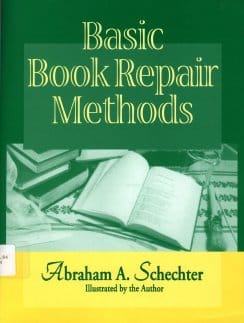
Abraham Schechter
October 2016
Interview by Carolle R. Morini, a special interview in honor of National Archive Month
Please tell us about your background—education and careers.
My childhood years were immersed in two large cities: New York and Paris, and French is my mother tongue. Thanks to the influence of place and family, my life has always been steeped in the fine arts. My mother introduced me to drawing and calligraphy. At 15, I taught myself how to develop film and print, using old box-cameras bought at SoHo flea markets. After graduating from New York’s renowned High School of Art & Design, I packed up my cameras and drawing materials and moved to Portland to attend the Maine College of Art. After graduating from art college with a BFA in the late 1980s, rooting myself in downtown Portland, I immediately found work as a commercial photographer and photography teacher. Through the 1990s, I ascended to the level of master printer, and with a few colleagues in a custom photographic lab in Portland, we built a national reputation for our techniques, printing portfolios, books, and shows for National Geographic, Aperture, and Magnum photographers. Between these projects, I also exhibited and published my own work, while teaching on the Maine College of Art faculty for a decade.
By the late 90s, I saw the end was near for the handcrafted photo field, and I sought my second career, noticing my clients in libraries, archives, and museums were still very busy. Through those years, I created photo conservation processes. I decided to pursue archival education, grounding myself with two years of graduate-level studies in history at the University of Southern Maine, and at the University of Massachusetts at Boston. During the latter, while working at the Harvard University Archives (on some of Harvard’s photo collections), my colleagues encouraged me to visit and transfer to Simmons College. By the time I graduated with my MLS from Simmons, I had already begun teaching bookbinding and conservation (having apprenticed at Northeast Document Conservation Center) and publishing on the topic. For the past 17 years, I’ve been employed as a professional archivist and conservator in my home state of Maine—continuing to teach, present at conferences, and provide consulting services to my regional neighbors. Since late 2005, I’ve been serving as Head of Special Collections and Archivist at Portland Public Library. The Library has grown to become Maine’s most visited cultural venue.
How did you come across the Boston Athenæum?
The archival program at Simmons College comprises internships, adding practical scenarios to theoretical learning. While I was purposefully completing my practica in Maine, helping special collections departments at Bowdoin College, University of Southern Maine, Osher Map Library, and Portland Museum of Art, some of my Simmons friends were serving as interns at the Athenæum. As my graduating class was completing final projects, one of my classmates organized for about five of us to visit the Athenæum for afternoon tea and a tour. That was my first time at the Athenæum, and I was thoroughly impressed. I’ve attended many afternoon teas over the years, taking days off from work. My graduation gift to myself was to join; that was in June 1998, and I’ve been a grateful member ever since.
Why do you like being a member?
While I was a graduate student, I began cultivating an enduring love for learning and writing. The Athenæum is the perfect place to pursue a life of learning. I especially like the term self-culture as used by the author and abolitionist James Freeman Clarke, whose books are at the Athenæum. I cherish my membership, and have been making it a point to travel to Boston at least once a month so that I can enjoy the Athenæum. Over the years, I’ve made many friends here, among members and staff—also recruiting a lot of members, giving my own version of “the tour!”
Do you mind writing about the research you do when you are here?
I refer to the Boston Athenæum as my scriptorium, as it is my oasis for writing, reading, friendship, and learning. With every visit I continue to find literary treasures to sign out, especially in the basement Drum! As a writer, retreats are essential occasions for respite and creative rejuvenation. This practice began with my first of countless and continuing sojourns at Vermont’s Weston Priory. Beginning in 2011, I created my own version of a monastic retreat right on Beacon Hill. Twice a year, I stay for a week at Beacon Hill Friends House while participating in the Quaker community there, the community at the Church of the Advent, with a solid week of blissful study in the Vershbow Room at the Athenæum. It’s a life-giving immersion experience, especially with the texts I choose from the Athenæum’s great collection of inspirational writing. For each sojourn, I create a theme that I use as I navigate the catalogue to select study material. Much of what I’ve studied in the Vershbow Room has been of Quaker provenance. I like to say that in the library I’m listening to the saints of old, and on Chestnut Street the saints of now. Between these retreats, I compile my handwritten notes into electronic indices. Last year, during a week’s study, a fellow Vershbow researcher was talking about dissertation prep and wading through the density of Richard Baxter’s work. I mentioned that I had spent a week in the Vershbow studying his personal writing, and sent this fellow member my indexed notes for which she was very thankful. This is an example of how the Athenæum can bring scholars together. I believe that with inspiration we inspire others.
Tell us about the Portland Public Library and the archive collections you work with. What is held within its collections?
Though the Portland Public Library is 150 years old, the library’s special collections area—called The Portland Room—was created in 1979. Prior to that, rare books and manuscripts had been part of the reference department. As the library’s first professional archivist, my marching orders were to develop and organize focused collections while also integrating the department into public programming. The Portland Room has become the go-to place to study city history. The program offerings I’ve created range from school group Portland history units to curated exhibits to maker spaces (bookbinding and calligraphy) to “Socrates Café” groups (something I learned to do at UMass-Boston) and currently a monthly “Journaling in the Library” group.
Alongside processing, conserving, and digitizing existing collections has been accessioning more documentary archival material to continue enriching Portland’s story. Within this are such gems as city maps, prints, newspapers dating back to the 1780s, manuscripts, photographs, printed books from various presses in Portland, and the archives of Children’s Theatre of Maine, which began in 1924 and is the oldest running American children’s theatrical company.
Do you have any favorite items?
Among my favorites is my current labor-of-love: in late 2009, I rescued 70 years (1936–2005) of newspaper photo negatives (camera originals) from the sub-basement of the former newspaper building, right before it was gutted. Arranging the collection took nearly three years, during which I examined more than a million images. The descriptive work is well in progress, with assistance from faithful volunteers, as I construct the finding aid and begin thematic digitization work. I find this a wonderful collection, not just because of the rescue story, but because I recognize the locations, and I’m enjoying a unique learning experience about Portland through the twentieth century. Streets, bygone buildings, community institutions, people, events, and even the physical film attest to the history of photography. I even saw myself in the 1980s! The collection is not yet available to the public, as it is deep in the process, but it will be a tremendous resource in the future.
What advice would you give to training or early career archivists, historians, and librarians who are hoping to secure permanent, full-time work at an archive or library?
I may not have the best advice, considering that I also look for good career advice, as my own career continues to be fluid and open-ended. What I can confidently advise is that you get a handle on playing multiple positions. If you’re doing a lot of scanning and metadata creation, learn to work with patrons in a reference librarian’s role, learn to create catalogue records, try leading a reading group, present a topic at a conference. Listen to those who use libraries, and stand in their shoes. Cultivate your narrative writing skills. Remember that leadership and communication rise and fall together. The library/archives field is competitive and narrowing, with many more graduates than there are jobs. We do well to network with each other, supporting each other.
What excites and inspires you about archives?
As a reader of archives and manuscripts, it is an extraordinary privilege to hold and read an author’s primary documents. In 2013, I received a C. S. Lewis Foundation fellowship to study Lewis’s manuscripts at the Bodleian Library, Oxford—and to live in his house, The Kilns, during Trinity Term. Reading all of Lewis’s handwritten notebooks, essays, letters, drawings—and even his lesson plans—was a great honor. Among these studies, I read his handwritten original Screwtape Letters, reading through his crossed-out sections, and making note of his changes. He had beautiful and clear handwriting, and I could detect when he stopped to re-ink his dip pen. By reading his own handwriting on paper I felt like I could hear his words.
As a curator of archives, the tandem mission to preserve and make available is something I think about every day. Archivists are among those whose discoveries can be extended to the public. We are organizing material into discernable units of information. Many times, I’ve had to turn woeful messes of paper in boxes and piles of bags into hierarchical entities, through painstaking processing. But it’s worthwhile, especially as I think of the researchers who will be making discoveries themselves. As an archivist working with documentation as well as with the public, I often serve as memory for others; that is a very serious yet gratifying role. When I conserve books, I also think of their future readers. We use what we call best practices, because we view our temporal stewardship as serving the long term.
Do you have any personal archives/collections of your own?
Considering that I’m essentially a lifelong photographer, my own collections of negatives, slides, proofs, and prints constitute an archive of my own. Alongside the photographs, I’ve been a regular journal writer since 1994, and have saved all my journals and chapbooks. The Athenæum continues to be a favorite journaling perch, and is written about in countless entries. I’ve also been a blogger for ten years, and maintain a digital archive of all my essays and photo illustrations.
Can you also include a list of links to the blogs and/or websites you contribute to, and other writings you have?
Writing is my adventure with words and observations; journaling and essay writing have been my primary formats thus far. Along with the Oxford/Lewis Scholar in Residence fellowship in 2013, I was also writer in residence at the Dylan Thomas birthplace and home in Swansea, Wales. There I was able to participate in writing events, as well as experience the places and steps of my most loved poet. Every year, in Portland, I read his Child’s Christmas in Wales to audiences, and have been doing this for a dozen years. I am the world’s only resident of both C. S. Lewis’s and Dylan Thomas’s homes.
In 2006 I began La Vie Graphite, which is my continuing collection of illustrated essays. I do all the writing and photography.
Within these essays is “archives of the soul,” a term I coined, as I believe each of us have an inner archive.
In 1933, Chinese government official Chiang Yee left his family and native province of Jiangxi to begin a new life as an artist and scholar in London. Surrounded by corruption and an angry civil war, Chiang had become disillusioned with the life of a magistrate, dreaming instead of time spent pursuing the arts.
When Chiang arrived in London, he managed to do just that: simultaneously teaching Chinese language at the London School of Oriental Studies, and exhibiting his Chinese-style watercolors. Though he created art in the traditional Chinese style, the subject matter was chiefly British. Chiang was inspired by his new environment. By representing thoroughly Western subjects using Eastern techniques, he managed to introduce the British public to a new perspective—an outsider’s perspective. This would become the theme of Chiang’s Silent Traveller books, a series recording a Chinese traveler’s impressions of cities all over the world. Scattered throughout are Chiang’s own poetry, sketches, and watercolor illustrations inspired by his surroundings. While books written by Westerners detailing their travels through the East were commonplace, the opposite was not, and Chiang managed to make an impression on many academics and art critics.
In 1952, Chiang traveled to Boston to write his tenth book in the Silent Traveller series, The Silent Traveller in Boston. It was then the author met Walter Whitehill, director of the Boston Athenæum from 1946 to 1973. In The Silent Traveller in Boston, Chiang shares an outsider’s observations, giving insight into a city that even born-and-raised Bostonians will find enlightening…and entertaining. Included are such lessons as:
How to tell a Harvard man from a Yale man (ask about his grandfather—the conversation will inevitably turn to education and pedigree. According to Chiang, if his grandfather went to Harvard, you can be sure that he and his father also did.)
What Chiang calls the “Boston nose.” After observing the identical noses on the busts of John Adams, John Quincy Adams, and Charles Francis Adams on the fifth floor of the Athenæum, Chiang concluded that the Adams legacy lives on in the form of the Adams nose, which can still be found on the streets of Boston.
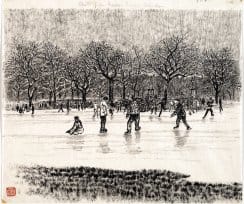
Whitehill and Chiang remained lifelong friends, and Whitehill was responsible for showing Chiang many of the sights in downtown Boston. In fact, members will recognize Whitehill’s name, among others, in the early pages of The Silent Traveller in Boston. In 1957 and 1959, the Athenæum exhibited Chiang’s drawings and watercolor paintings, which now reside in our Prints and Photographs department.
Chiang Yee (1903–1977), Skating in Boston Public Garden, ca. 1953. Brush and ink over graphite. Boston Athenaeum, purchased from the artist, 1959.
In 1975, Chiang returned to his homeland for the first time in 42 years. Having been unable to return to China due to World War II, the Chinese Civil War, and ensuing isolationism, Chiang was eager to be reunited with his family and witness the many changes that had taken place in his absence. He penned his observations in China Revisited: After Forty-Two Years, praising his country for its increased prosperity and education. Chiang died two years later in Beijing and is now buried near his hometown in Jiangxi Province.
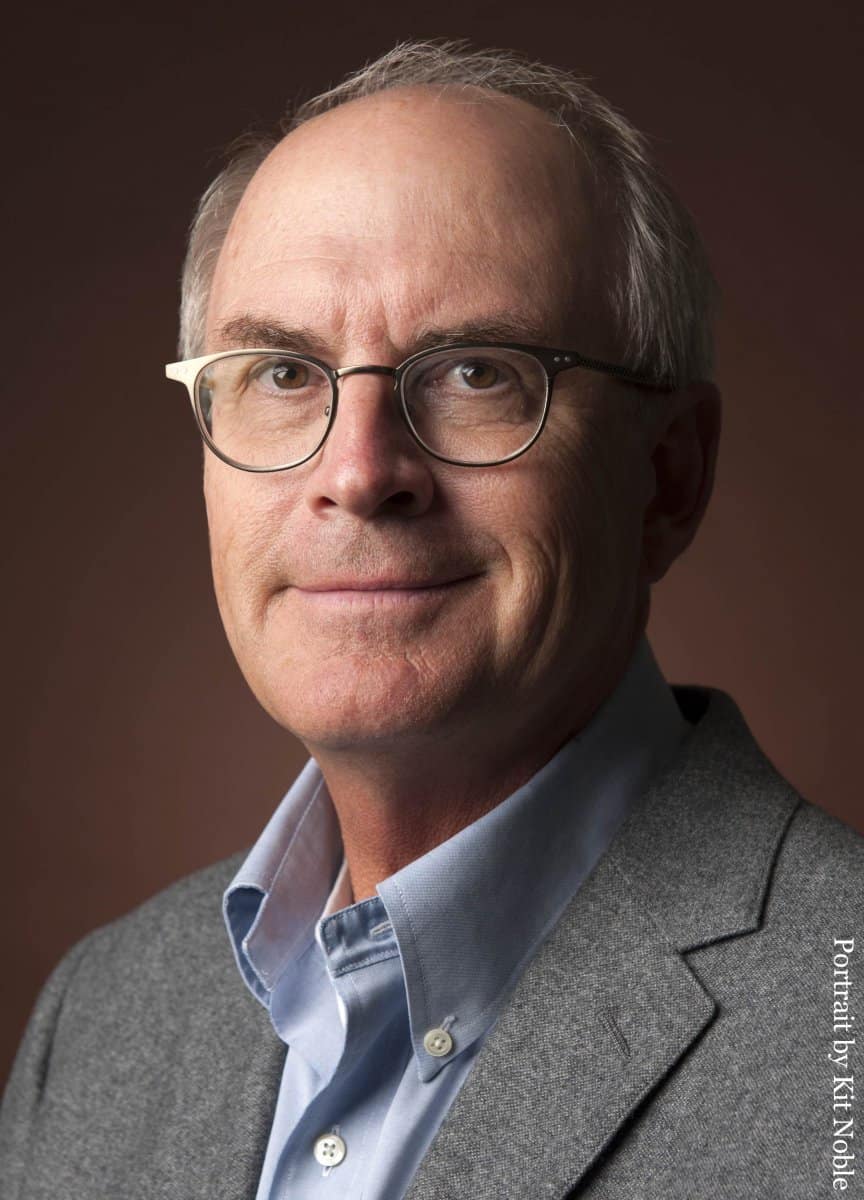
An English major who never enjoyed his history classes, Nathaniel Philbrick writes history meant to be enjoyed. A frequent New York Times bestselling author, he won the National Book Award for nonfiction for In the Heart of the Sea in 2000 and was the finalist for the Pulitzer Prize for History for Mayflower in 2007. Many of his books have become or are in the process of becoming feature films. His newest book, Valiant Ambition, is the second of three books about the Revolutionary War. Philbrick came to the Athenæum to speak about it on June 16.
Philbrick does not believe his own life story merits anyone’s attention. He likes to go sailing with family and that’s it. He watches “stupid” television. “I’m a writer,” he said. “Not a lot going on here.”
Born in Boston, Philbrick grew up in Pittsburgh, and earned degrees from Brown and Duke. While at Brown University he became its first Intercollegiate All-American sailor in 1978 and then won the Sunfish North American Championship. Long before In the Heart of the Sea and Sea of Glory, Philbrick edited the magazines Sailing World and Yaahting: A Parody. He moved to Nantucket with his wife Melissa and two kids in 1986 and has lived on the island ever since. His first book, Away Off Shore, grew out of his desire to understand his new home.
Though well known for his oceanic epics, Philbrick never considered himself a “sea writer.” “I’m just really interested in America,” he said. He said each book “organically evolves from the one before it” and he is fascinated by leadership: “The book about Benedict Arnold evolved after finishing Bunker Hill: I just had to see where George Washington was going to go to next in the Revolution, but wanted to pair him with someone who would take the narrative in interesting places [and] ended up with Benedict Arnold.” Philbrick, however, doesn’t ignore the connections to the sea if they come up: “I’m always interested in trying to cast a light on the maritime side of history that isn’t always thought of being sea—well, water, connected.”
Philbrick has always been fascinated with the dark side of human behavior. He told National Writers Series in 2013, “I love the details. Especially if someone is suffering from dehydration and starvation.” He also told New York Times Book Review this May that one of his admired writers is Stephen King: “I may write history, but all my books are horror stories of one kind or another.” And even if he were to try to write an upbeat tale, he doubts it will end well: “All my books seem to lead to betrayal and disaster and a lot of suffering.”
When researching a topic for a book, Philbrick records his first impressions and reactions in a notebook and goes back to them later. As he told the Paris Review in 2013, he has learned those responses ultimately shape his book: “I find that when I’m new to a topic, that’s when I’m catching the best details. It’s all new to me—it’s what the reader will respond to. Because you can so easily over-know a topic, and you lose the magic. It becomes interesting to you, but you’ve lost the connection to the reader.”
For Philbrick, his writing process would turn into a family affair before sending his work to his editor. He would read drafts aloud to his wife and after receiving her “pointed” notes, send his revised draft to his father and mother, a retired English professor and kindergarten teacher, respectively. He still does this with his wife and father, who both have been a part of his writing “since the beginning.” Philbrick views his writing as solitary work so another mind early on is very helpful: “It’s nice when you’re in the beginning of the early stages of the book to have readers you know well enough that they’ll tell you what they think and you’ll know where they’re coming from.”
Philbrick has been a member of the Athenæum since 2002 and a proprietor since 2005. The man who introduced him to the Athenæum happened to be the same close friend, John Drake Ross, who introduced Philbrick to Melissa when he was a teenager. Ross, then a proprietor, obtained his share through his mother, but eventually realized his own children were not interested in the Athenæum. When Ross asked his friend if he would be interested in his share, Philbrick said, “Yeah! I love the Athenæum!”
As a result of being “stuck like a barnacle to Nantucket,” Philbrick feels he does not have the opportunity to give the Boston Athenæum the time it deserves. He appreciates the people who contributed to the Athenæum’s history, as well as those who sustain it today. “It’s not only a wonderful literary refuge within the craziness of Boston,” he said about its appeal, “but it’s the people I’ve run into.” The Nantucket Atheneum, though unaffiliated, also had its present location built in 1847 and Philbrick thinks of it as the Athenæum’s “Nantucket outpost,” which has been important to his work. But even brief stays are hard to manage: “Every time I go in there, I don’t really want to leave.”
Foster, Cymbre. 2013. “An Evening with Nathaniel Philbrick: Event Recap.” National Writers Series. May 14. Accessed July 24, 2016. http://nationalwritersseries.org/programs/an-evening-with-nathaniel-philbrick/.
Philbrick, Nathaniel, interview by Alyssa True. 2016. August 2016 Athenæum Author Interview (July 25).
Shattuck, Ben. 2013. “Small Island: An Interview with Nathaniel Philbrick.” The Paris Review (blog). July 24. Accessed July 24, 2016. http://www.theparisreview.org/blog/2013/07/24/small-island-an-interview-with-nathaniel-philbrick/.
Sunday Book Review. 2016. “New York Times.” Nathaniel Philbrick: By the Book. May 26. Accessed July 24, 2016. http://www.nytimes.com/2016/05/29/books/review/nathaniel-philbrick-by-the-book.html?_r=1.
Tandem Literary. n.d. “Nat’s Bio.” Nathaniel Philbrick. Accessed July 19, 2016. http://www.nathanielphilbrick.com/wp-content/themes/philbrick/downloads/bio.pdf.
06.07.2016
Thomas Mickey
July 2016
Interview by Emily Levine
During long city summer days in Boston there are few places more beautiful than the Boston Public Garden. Thomas Mickey—scholar, author, retired professor, and active Master Gardener—says there is nothing more lovely and welcoming than a well-designed public garden “for anybody to go in and enjoy.” Mickey has lived on the east coast for almost 40 years and holds the title of Master Gardener in the state of New Hampshire. After earning a Ph.D. in Communications from the University of Iowa, Mickey moved east for a teaching job at the New England College in Henniker, NH; after ten years, he moved to Bridgewater State to teach communications, of which he is now Professor Emeritus.
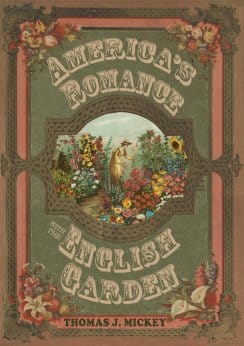
Purchasing a New Hampshire home sparked Mickey’s green thumb, and his research interests lie in the intersection of “history, marketing, and gardening.” Mickey won the Enid A. Haupt Fellowship from the Horticultural Services Division of the Smithsonian to research seed catalogs at Smithsonian archives in the District of Columbia. His studies formed the foundations of his book America’s Romance with the English Garden (2013). Mickey has authored several other books, including Best Garden Plants for New England, Deconstructing Public Relations, and Sociodrama: An Interpretive Theory forthe Practice of Public Relations.
I sat down for a conversation with Mickey to talk about his research, gardening, and the Athenæum.
Q: I understand you grew up in the Midwest.
A: Yes, in Milwaukee, I was born and raised there.
Q: Did your gardening thumb come as a consequence of living in the Midwest?
A: No, it just happened when I bought a house 30, 35 years ago and it needed some gardening. It just needed some landscaping outside, so I really started back then, I suppose. That is when I was teaching at New England College in Henniker, NH.
Q: Did your family garden?
A: My father did. My mother and father are both from farms, but my father did some gardening in our house in the backyard so I could see that as I was growing up.
Q: Farms? I have fond memories of Iowa, and I understand you spent some time there.
A: I went to the University of Iowa! I was a student there in the journalism school, that is where I got my Ph.D. I loved it. I loved all my years at Iowa. I love Iowa City. It was really a lot of fun.
Q: What brought you to the East Coast?
A: I got a job teaching at New England College in Henniker; I taught there for ten years and then I taught for almost 30 years at Bridgewater State University near Boston. That is what brought me out east, and I have lived here all these years.
Q: Did you always know you wanted to teach?
A: I did actually. I knew that I liked teaching; it is a lot of fun.
Q: Speaking of school, I understand you have the title of Master Gardener. What kind of schooling or manual labor does that require?
A: Oh yes, I am a Master Gardener of the State of New Hampshire. Master Gardening status is given by the University of New Hampshire Extension Service, so I took a year of classes with them… Every state has a program that is usually connected with the state university extension program. In Iowa, there is a big Master Gardener program too, I think. You have to pass all these tests, and every year you have to volunteer community service in gardening. You are trained not just to do gardening in your own garden, but to help in the community in some way. Master Gardener programs don’t want people to go for all of this training and then just go home, they want you to give back.
Q: I saw your blog that details your travels and interests, http://americangardening.net. Are there specific gardens you really like, or that have inspired you in your journeys?
A: The ones that stand out in my mind that are open for anybody to go in, the great public gardens. There are so many wonderful public gardens that we have all across the country. When I travel, I try to see those when I can. Those are the ones that have particular designs expressed in them that I enjoy. It gives you a feel for the city and for the area. When I was writing the book, I was invited to give a talk related to the content of the book in England. So I went to England with my wife and while we were there, I visited nine classic gardens that date to the 1700s. Old gardens, those are really exceptional! I was so happy I saw them. One of them, Stowerham, is on my blog, a real classic garden. The classic gardens often have what we would call a mansion attached to them. These gardens usually belonged to people who had a lot of money, so they not only had this extensive land to have amazing landscapes, they also had huge houses. They were often summer houses; they would be in London during the cold months, and have estates in the warm summer months.
Q: Could you tell me a bit about how you came to write your most recent book, America’s Romance with the English Garden?
A: I teach public relations writing and public relations campaign strategies in the communication department at Bridgewater. However, I am also interested in gardening and landscaping, so I wrote a proposal to the Smithsonian that I come to Washington to the horticultural resources that the Smithsonian has to study how the garden was promoted to America in the nineteenth century. My proposal was titled, “The Selling of the Garden in Nineteenth Century America.” The Smithsonian loved the idea, and they invited me down for a whole year. I traveled back and forth and really looked at the seed and nursery catalogs in the horticultural archives. I did not know going in that I was going to do a book. The book evolved after the year was over, and I went from there.
Q: It seems like the research out of your fellowship is a direct fusion of your gardening and marketing interests.
A: Correct! Most of the people who receive fellowships from the Smithsonian are from the departments of horticulture at universities. However, I was one of the rare individuals invited in from another field (communications and marketing), but I still possessed a strong knowledge of plants and gardening. Both fields combined well for a research project, and the Smithsonian loved it.
Q: When you were at the Smithsonian, did you have any individual objects you very much enjoyed? I noticed the cover of your book.
A: That is a catalog that I came across—actually that is a catalog cover. The image of the woman in the center at the flower beds is from another catalog. The artist put the images from the catalogs together to create the cover of the book. I thought the image of the woman was so powerful and so brilliant in its color. It illustrates so well the theme I was raising of marketing to an American audience.
Q: Could you tell me a bit about your personal gardening?
A: We live in a condo in Quincy, but our house in New Hampshire is the house we had before I took my job at Bridgewater State University, and this is where my big garden is. We had this house before so we just kept it, and this is where I do most of my gardening.
Q: Do you garden in Quincy too?
A: Just containers on the deck. I am precise about what I want in them, but my gardening ideas can get expressed in that way too even though space is limited.
Q: Are you putting in plants or flowers right now, or is it past that time? Tell me more!
A: I have a lot of things I am planting now because this is the time to plant annuals. Not quite seeds yet, it is too cold for that at night, still, so we will wait for warmer nights to put some seeds which grow quite well when the weather warms. We also are planting easy things to grow, like nasturtiums.
Q: Do you grow vegetables?
A: No, because I have too much shade. To do veggies, you have to have a lot of sun, otherwise all you get are leaves and no yummy fruit. I tried in the past, but I am happy with what I have. For many flowering ornamental plants you don’t really need total sun, just partial sun, which is what I have.
Q: If I was in a small city apartment and I wanted to get a plant or I wanted to start gardening and just had a patio, what would you suggest?
A: Well, you should do a container with ornamental flowering plants and ornament plants with colored leaves, like coleus. Coleus is a wonderful plant and there are hundreds of varieties. You can get short ones, big ones, all kinds. They’re really pretty. You have to experiment to see what’s going to work. Leaves are really an incredible beauty in themselves. They really are so powerful. You can contrast a purple leaf with a yellow plant, or a leaf that’s kind of gray-green or fuzzy next to a plant that has bright green leaves and a yellow flower. Striking combinations like that can really be quite charming.
Q: What is your relation to the Boston Athenæum?
A: I used to come every week when I was in the throes of the book, but now I come once a month or so. I still have to research articles for my blog. I am working on two new books as well, which I cannot reveal to you, but I am at the Athenæum to do research for topics on history, marketing, and gardening.
Q: Thank you so much for your time!
A: Happy to do it! I love the Athenæum. They are very helpful to me.
05.04.2016
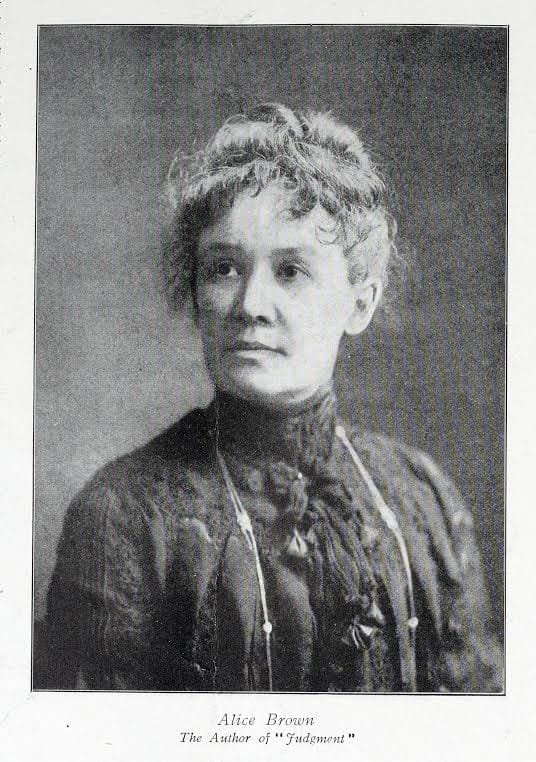
Alice Brown
June 2016
By Emily Levine
Known in her day as a “cornerstone in Boston’s most Bostonian life and lore,” after her death in 1948 Alice Brown’s vibrant regional writing faded from local and literary memory. However, a resurgence of interest in overlooked women authors of the nineteenth and twentieth centuries has prompted recent reprinting and reissues of numerous of Brown’s regional short story volumes, bringing her to the spotlight once again as a talented and central figure in New England local color writing.
Alice Brown was born in 1857 on a farm in Hampton Falls, New Hampshire, a small agricultural community about six miles from the sea that later acted as a template for the towns in her works. She attended Robinson Female Seminary in Exeter, where she displayed a talent for writing at a young age. After graduating in 1876 she taught there, “hating it more and more every minute.” Restless with her small town life, Alice moved to Boston in her early twenties to serve on the staff of The Christian Register, a bold move for a woman of her time. It was during her early years in Boston that Brown published her first novel Stratford by the Sea (1884), set in a small coastal community; it was this novel, with her rich descriptions and candid characters, that established Brown as a regional color writer.
Having begun a new editing job at Youth’s Companion, Brown began to draw attention from Boston’s literary elite. She made the acquaintance of Louise Imogen Guiney, a successful poet, and this became one of the most fruitful friendships of her personal and literary career. Guiney and Brown shared both a love of prose and a fondness for travel, and the two women spent ten weeks walking through the English countryside together in 1895. Upon their return, the friends founded the Women’s Rest Tour Association to provide reputable and reliable information to like-minded women about travel abroad. In 1896, Brown also published a series of essays about her travels with Guiney in her collection By Oak and Thorn. Guiney left to live in England in 1901, but the two stayed close friends until Guiney’s death in 1920. Brown wrote a tribute to her friend, Louise Imogen Guiney (1921), detailing and appreciating her friend’s life work and character.
Though remarkable for both her variety and volume of work, Brown was best known for her popular New England tales, mostly published from 1895 to 1910. Collected into volumes, her stories of idyllic New England life portray the traditional simplicity and bounteous goodness of country life. Tiverton Tales (1899), The Country Road (1906), Meadow Grass (1886), and Country Neighbors (1910) portray female protagonists in domestic spaces, with a leisurely pace, happy endings, and an unforced dialect. Some of the stories first saw print in Atlantic Monthly,Harper’s Monthly, and Harper’s Bazaar.
A great many other of Brown’s works were popular in her time. In 1914 she won the Winthrop Ames Prize in Drama for her play Children of the Earth, an award that carried a cash payout of $10,000. The Road to Castalay and Ellen Prior displayed Brown’s devotion to poetry. She also published a wide range of novels, ranging from her first book My Love and I (1896, published under the pseudonym Martin Redfield) to Willoughbys (1935). Other books include John Winterbourne’s Family (1910), The Prisoner (1916), Bromley Neighborhood (1917), and Dear Old Templeton (1927), which deal with darker themes of sexual repression and family strife.
Alice Brown’s later years were somewhat lonely—she never married—but she did enjoy a vibrant spiritual correspondence with Reverend Joseph M. Lelen of Falmouth, Kentucky for 18 years. They exchanged sentiments of faith and poems on occasion. Brown’s work fell to the wayside due to her mid-Victorian optimism and sentimentality as she aged into the 1930s. Brown died at Massachusetts General Hospital in 1948 at 91 years of age.
Brown was a dedicated member of the Athenæum during her time living in Boston, and also acted as a term president of the Boston Authors Club. Brown’s personal library, including autographed copies of books from her author friends, is housed at the Hampton Falls Free Library in Hampton Falls, New Hampshire. Some of her personal papers are available at the University of New Hampshire Library in Durham, and the rest of her personal material is kept at the Beinecke Rare Book and Manuscript Library at Yale University in New Haven.
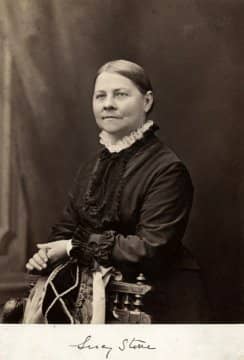
Too often the name Lucy Stone is overlooked in the history of the fight for women’s suffrage in the United States. But much is owed to this trailblazer, particularly in Massachusetts, for she achieved many firsts for women.
Born on August 13, 1818 to a farming family in West Brookfield, Stone was aware early on in life of the ways in which women were discriminated against. Although she was a brilliant and hardworking student, her desire to attend college was scoffed at by her traditional and domineering father. As she watched her older brothers earn a higher education (paid for by their father), 16-year-old Stone began teaching in the local schools, with the aim of saving enough to send herself to university. At the age of 25, she enrolled in Oberlin College—the first in the nation to accept both women and blacks. The latter was an attraction for Stone, who came from a family of ardent abolitionists. When she graduated four years later in 1847, she became the first woman from Massachusetts to earn a college degree.
After Oberlin, she followed in the footsteps of abolitionist William Lloyd Garrison, her hero, and began lecturing for the American Anti-Slavery Society. As one of the earliest female lecturers, Stone was controversial. Not only was this brazen woman speaking in public to mixed audiences, she was debating the hot button issues of slavery and women’s rights. The profession was a dangerous one and she was sometimes the target of verbal and physical assaults. Still, Stone (who was tiny in stature) easily commanded her audiences with her quiet but imposing manner—qualities that made her a highly respected teacher by her pupils. She was so successful, in fact, that she soon was earning as much as or more than her male counterparts.
In 1850, the first national women’s convention was held in Worcester, Massachusetts, due not in small part to Stone’s efforts and now well-known name. Although the 1848 Seneca Falls Convention is widely regarded as the beginning of the women’s movement, Stone considered the event in Worcester to be a greater milestone, as it was national rather than regional.
She was still causing controversy eight years later when she refused to pay property taxes, citing the same reason as America’s founding fathers: no taxation without representation. Unable to vote and unrepresented in Congress, Stone and many other women around the country protested, knowing their properties would be impounded.
In addition to her work as an abolitionist and suffragist, Stone is perhaps best known as the first woman to officially keep her maiden name after she married. Stone had never intended to take a husband’s name; indeed, she never expected to marry, preferring to dedicate her life to fighting for women’s rights. She particularly abhorred laws dictating that a woman’s property went to her husband. But in Henry Browne Blackwell she found an equal. At their wedding in 1855 the couple recited an oath of their own in addition to the traditional wedding vows: ”This act on our part implies no sanction of, nor promise of, voluntary obedience to such of the present laws of marriage as refuse to recognize the wife as an independent, rational being, while they confer upon the husband an injurious and unnatural superiority.” Blackwell supported the causes his wife fought for and helped her found Woman’s Journal, which printed speeches, debates, and columns on women’s suffrage. Run from its offices on Park Street in Boston, Woman’s Journal was the leading publication of the women’s movement. The nearby location allowed Stone and her daughter Alice to frequent the Boston Athenæum, where Alice in particular spent many hours.
Woman’s Journal was also the official publication of the American Woman Suffrage Association (AWSA). Stone left the National Woman Suffrage Association, founded by Susan B. Anthony and Elizabeth Cady Stanton, after disagreements arose over the Fifteenth Amendment. True to her abolitionist upbringing, Stone supported the amendment while Anthony and Stanton opposed it, resentful that it excluded women. Relationships between Stone and the other leaders of the movement remained strained afterward and the women continued to disagree about tactics for getting women the vote. In 1890, Stone’s daughter, Alice Stone Blackwell, united the two organizations as the National American Woman Suffrage Association. Under NAWSA, Woman’s Journal became The Woman Citizen, but reclaimed its former name in 1927. Publication ceased in 1931.
Lucy Stone did not live to see women earn the vote. She died at the age of 75 on October 19, 1893. Her ashes rest in Forest Hills Cemetery in Jamaica Plain and, although she does not sit with her suffragist sisters in the Portrait Monument at the Library of Congress in Washington, D.C., her likeness can be found in the Commonwealth Avenue Mall where she is accompanied by fellow women and activists Phillis Wheatley and Abigail Adams.