
11.29.2018

Snow

Picture Books

The Snow Queen by Hans Christian Andersen

(Children’s Library + PZ8 .A54 1993)

After the Snow Queen abducts her friend Kay, Gerda sets out on a perilous and magical journey to find him.

Big Snow by Jonathan Bean

(Children Picture Book + BEAN)

“An excited and frustrated boy watches hopefully as wintry weather develops slowly into a ‘big snow.'”—Provided by publisher.

The Hat by Jan Brett

(Children Picture Book BRETT)

When Lisa hangs her woolen clothes in the sun to air them out for winter, the hedgehog, to the amusement of the other animals, ends up wearing a stocking on his head.

The Snowman by Raymond Briggs

(Lg PZ7.B7646 Sn 1978)

When his snowman comes to life, a little boy invites him home and in return is taken on a flight high above the countryside.

Snow Is My Favorite And My Best by Lauren Child

(Children Picture Book + CHILD)

When the weatherman predicts snow, Lola absolutely cannot wait.

Wolf in the Snow by Matthew Cordell

(Children Picture Book CORDE)

When a wolf cub and little girl are lost in a snowstorm they must find their way home.

Chirri and Chirra: The Snowy Day by Kaya Doi

(Children Picture Book DOI)

Sheltering in a cavern, Chirri and Chirra enjoy sweet treats, a game of marbles, soaking in a hot spring, and a comfortable rest in an igloo that is just the right size.

Old Bear by Kevin Henkes

(Children Picture Book HENKE)

When Old Bear falls asleep for the winter, he has a dream that he is a cub again, enjoying each of the four seasons.

Houndsley and Catina and the Quiet Time by James Howe

(Children Picture Book HOWE)

Houndsley loves the quiet of the first snow of winter, but Catina does not enjoy being snowed in. What about all her plans for the day? With pretending, books, games, creativity, and some time to dream, Houndsley helps Catina let go of her worries and enjoy the snowy day.

Sally’s Snow Adventure by Stephen Huneck

(Children Picture Book + HUNEC)

Sally, a black Labrador retriever, becomes lost in the woods while on a winter vacation.

Terrible Storm by Carol Otis Hurst, illustrated by S.D. Schindler

(Children Picture Book + HURST)

A child’s two grandfathers relate their boyhood experiences of the “terrible blizzard of 1888,” during which each was stuck for three days doing what he disliked the most.

Snowflake Bentley by Jacqueline Briggs Martin

(Children’s Library + QC858.B46 M37 1998)

A biography of a self-taught scientist who photographed thousands of individual snowflakes in order to study their unique formations.

Red Sled by Lita Judge

(Children Picture Book + JUDGE)

At night, a host of woodland creatures plays with a child’s red sled.

The Snowy Day by Ezra Jack Keats

(Children Picture Book KEATS)

The adventures of Peter, a little boy in the city on a very snowy day. No book has captured the magic and sense of possibility of the first snowfall better than this book. With its universal appeal, the story has become a favorite with millions, as it reveals a child’s wonder at a new world, and the hope of capturing and keeping that wonder forever. —Publisher description.

The Snow Ghosts by Leo Landry

(Children Picture Book LANDR)

Snow ghosts live in the far north, and they love to play and have fun

The Red Book by Barbara Lehman

(Children Picture Book LEHMA)

A book without words in which friends who have never met meet.

First Snow by Peter McCarty

(Children Picture Book + MCCAR)

When Pedro comes from far away to visit his cousins, who are eager to introduce him to snow, all Pedro can think about at first is how much he dislikes cold.

If It’s Snowy and You Know It, Clap Your Paws! by Kim Norman

(Children Picture Book + NORMA)

Animals enjoy a variety of wintery activities in the snow.

Snow Globe Family by Jane O’Connor

(Children Picture Book OCONN)

Two families—a large one that lives in a house and the other a tiny one that lives in a snow globe, look forward to a big snowstorm.

Story of the Snow Children by Sibylle Olfers

(Children Picture Book OLFER)

“Poppy is gazing out of the window at the snow when suddenly she sees that the snowflakes are really Snow Children, dancing and whirling in the garden. Soon they whisk her away to the Snow Queen’s wintry kingdom.”—Back cover.

Snow Music by Lynne Rae Perkins

(Children Picture Book + PERKI)

When a dog gets loose from the house on a snowy day, his owner searches for him and experiences the sounds of various animals and things in the snow.

Blizzard by John Rocco

(Children Picture Book + ROCCO)

“After a massive blizzard, a boy becomes a hero when he manages to walk to the local store and bring supplies back to his neighborhood, which has been snowed in for days. Based on the author’s childhood experience.”—Provided by publisher.

Kitten Tale by Eric Rohmann

(Children Picture Book + ROHMA)

As four kittens who have never seen winter watch the seasons pass, three of them declare the reasons they will dislike snow when it arrives, while the fourth cannot wait to experience it for himself.

Winter’s Tale by Robert Sabuda

(Children Picture Book SABUD)

Simple text describes the animals and landscapes encountered on a particular winter’s day, in a book with pop-up illustrations and twinkling lights.

Snow Day by Komako Sakai

(Children Picture Book SAKAI)

A little rabbit enjoys having a day off from kindergarten and spending time with his mother during a snowstorm, but his father’s flight home is cancelled until the snow stops falling.

Before Morning by Joyce Sidman, illustrated by Beth Krommes

(Children Picture Book + SIDMA)

Just this once, schedules are swept aside as a too-busy world suddenly revels in the freedom and peace of the snow. The joy and wonder of a snowy day is brought to new life in this destined-to-be-a-classic picture book from Newbery Honor author, Joyce Sidman, and Caldecott winning artist, Beth Krommes.

Snow by Manya Stojik

(Children Picture Book + STOJI)

As snow approaches and begins to fall, Moose, Bear, Fox, and other forest creatures prepare for winter.

Something Is Going to Happen by Charlotte Zolotow

(Children’s Library + PZ7.Z77 Sq 1988)

One by one the members of a family awake one cold November morning to discover that during the night there has been a beautiful snowfall.

Chapter Books

The Lion, The Witch, and the Wardrobe by C.S. Lewis

(Children’s Library PZ7.L58474 Ch 1988 bk.1)

Four English school children find their way through the back of a wardrobe into the magic land of Narnia and assist Aslan, the golden lion, to triumph over the White Witch who has cursed the land with eternal winter.

Greenglass House by Kate Milford

(Children’s Library PZ7.M59948 Gr 2014)

At Greenglass House, a smuggler’s inn, twelve-year-old Milo, the innkeepers’ adopted son, plans to spend his winter holidays relaxing but soon guests are arriving with strange stories about the house, sending Milo and Meddy, the cook’s daughter, on an adventure.

East by Edith Pattou

(Children’s Library PZ8.P2815 Ea 2003)

A young woman journeys to a distant castle on the back of a great white bear who is the victim of a cruel enchantment.

Breadcrumbs by Anne Ursu

(Children’s Library PZ7.U692 Br 2011)

“Hazel and Jack are best friends until an accident with a magical mirror and a run-in with a villainous queen find Hazel on her own, entering an enchanted wood in the hopes of saving Jack’s life.”—Provided by publisher.

The Crowfield Curse by Pat Walsh

(Children’s Library PZ7.W16892 Cr 2010)

In 1347, when fourteen-year-old orphan William Paynel, an impoverished servant at Crowfield Abbey, goes into the forest to gather wood and finds a magical creature caught in a trap, he discovers he has the ability to see fays and becomes embroiled in a strange mystery involving Old Magic, a bitter feud, and ancient secrets.

Young Adult Books

Wintersmith by Terry Pratchett

(Young Adult PZ7.P8865 Win 2006)

When witch-in-training Tiffany Aching accidentally interrupts the Dance of the Seasons and awakens the interest of the elemental spirit of Winter, she requires the help of the six-inch-high, sword-wielding, sheep-stealing Wee Free Men to put the seasons aright.

The Golden Compass by Philip Pullman

(Young Adult PZ7.P968 Go 2006)

Accompanied by her daemon, Lyra Belacqua sets out to prevent her best friend and other kidnapped children from becoming the subject of gruesome experiments in the Far North.

11.28.2018

Lynne Byall Benson

December 2018

Interview by Kaelin Rasmussen

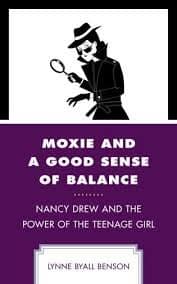
Lynne Byall Benson, part time resident of the fifth floor, has a new book coming out in December 2018, called Moxie and a Good Sense of Balance: Nancy Drew and the Power of the Teenage Girl. Nancy Drew has been around for more than 80 years and has changed a great deal—sometimes what was considered appropriate at the time—challenging the sphere of her gender. In her book, Lynne offers an analysis of this classic character as a proto-feminist role model for young women through the decades.

Q: Tell us a little about yourself.

Lynne Byall Benson: I was born in a suburb of Cleveland, Ohio—Lakewood, Ohio—grew up in a neighboring suburb, Rocky River. I was there most of my life. I went to the University of Kentucky for undergraduate school, got a bachelor’s degree in English, did a whole lot of things in between, and then eventually went back to school for a master’s and a PhD from Cornell University.

So in between I worked. I was a development officer at Cornell, I worked in the corporate sector, and right now I’m a professor in Women’s, Gender, and Sexuality studies at UMass Boston, and I also am an adjunct professor in the English department at Bunker Hill Community College.

Q: What made you decide to go back to school?

LBB: Well, I guess in the first place, we were in Ithaca, New York [laughs], and, you know, what else do you do! But at the time I was a development officer, I was Director of Alumni Affairs for the College of Human Ecology, and I was taking courses as I was working through the employee degree program. And then I got offered a fellowship, and I was able to quit my full time job and become a full time student. It’s something that I always wanted to do…it was always in the back of my mind, but I had this opportunity and I really had to take advantage of it. And it was wonderful. I loved every minute of it!

Q: How did you find the Athenæum?

LBB: When we moved to Boston, I was writing my dissertation. My research materials were at the Schlesinger Library, very accessible. However, once I started writing, my husband felt I needed a place to go, as opposed to just going upstairs to my office in our house. So, in 2000, he gave me a membership to the Athenæum, and eventually we joined as a family, just the two of us, and we’ve been active members ever since. We love the programs, and as I said I wrote my dissertation here, up on the fifth floor. I wish I could spend more time up there, but unfortunately I’m working now, so I don’t have the time that I’d had before.

Q: What appeals to you about the Athenæum?

LBB: I love the programs. My husband and I both love the programs…it’s just a wonderful place, it truly is one of the gems of Boston, but in my particular case, it was the energy up on the fifth floor. You know you’re not supposed to talk, you’re not supposed to use cell phones, it was the way to get away. Everybody up there is working very intently and very seriously, so that energy inspired me. Plus, I met a group of really cool women, and we were all working on different projects, and we would confer with each other in the members’ lounge. We’re still friends and in touch to this day, even though we don’t see each other very often…That was back when the Athenæum used to do teas on Wednesday afternoons, and I really miss that because it was a chance to get to know other people.

Q: What was the subject of your dissertation?

LBB: My dissertation was about the Deans of Women at the coeducational institutions of the progressive era, and my research materials were their conference proceedings. They had every single year, except for, I think, 1928 and 1932 at the Schlesinger, so I was very fortunate that everything that I needed was in one place…And [the staff] were wonderful, they were just fantastic.

Q: Why don’t we talk about your new book?

LBB: My book is Moxie and a Good Sense of Balance: Nancy Drew and the Power of the Teenage Girl. It’s essentially an analysis of Nancy Drew. I have felt for a long time that she can be portrayed as a feminist role model, but the Nancy Drew that I feel is the strongest proto-feminist role model is the Nancy Drew from when she was first created in 1929. That’s really what the book is about, and I also look at what was happening in society that contributed to her popularity. I really enjoyed writing it, it was a labor of love. It actually started out as a conference paper about eight years ago, at a girls’ studies conference at SUNY Cortland in upstate New York. I thought I’d done Nancy Drew, but then I kept going back to Nancy Drew and finding more and more ways to look at her. I refined my chapters, presented them as papers, got feedback…it’s a really long process to write a book as relatively short as this is! But I’m very happy with the result, and I hope other people will be, too. 

I also take a look at the 21st century version of Nancy Drew. I look at some modern female detectives, like Veronica Mars and Jessica Jones, and I think it’s really important to present not only Nancy Drew but these other women as role models, especially in the light of the Me Too movement. I think young women need feminist role models to look up to and get inspiration from.

Q: Nancy Drew spans a lot of decades!

Moxie and a Good Sense of Balance: Nancy Drew and the Power of the Teenage Girl

Benson’s new book, published in 2018.

LBB: She does, and I spent a lot of time reading Nancy Drew throughout the decades [laughs]. My mother introduced me to Nancy Drew when I was about nine years old, she gave me her copies. I should have followed up on this story that she and my grandmother used to always talk about. Mildred Wirt Benson, who was one of the Carolyn Keenes—Carolyn Keene is a pen name, as I’m sure most people know—her first husband was a reporter for the Associated Press, and they lived in Cleveland, in Lakewood, Ohio, where I was born and where my mother grew up. She and my grandmother always used to tell this story about how there was this lady that lived next door to them that was always on the typewriter, and they told me that it was Carolyn Keene! I should’ve just followed up on that to see if it was actually true, but it was fun to think about anyway. I’ll be disappointed if it’s not true. But Mildred Wirt Benson really did live and work in Cleveland, and I credit her with coming up with the Nancy Drew that I admire the most: intelligent, independent, gutsy, brave, but lady-like at the same time.

Q: Tell us a little bit more about your writing process, the struggles and joys of writing.

LBB: It really is hard to find time, especially because of my teaching schedule. I try to carve out little bits and pieces, but I do most of my writing in the summertime because my teaching load isn’t as heavy, and I have the time to come here and work. I actually wrote most of the Nancy Drew book upstairs on the fifth floor. It’s too hard to work at home because there’s always procrastination—oh, I have to do the laundry, oh, I have to make the beds, oh, I have to walk the dog, I have to get a cup of tea—so to look upon writing as your job, you get here (to the Athenæum) and it’s your mission. But it’s a struggle to find the time. I think once you get in the groove, you know, there’s nothing like it. I really enjoy it. Once I get going.

Q: Any new projects you’re working on that you’d like to share with us?

LBB: I have a project that’s been simmering for a while. When I was Director of Alumni Affairs for the College of Human Ecology, it had been the former College of Home Economics at Cornell, and it was one of the first colleges of home economics in the land grant system. I’ve been very much interested in the development of home economics as an academic field for opportunities for women, and I actually wrote my master’s thesis about the history of home economics at Cornell. What I found is that in the curriculum of home economics, home economics majors had to spend time when they were seniors in a practice house or a practice apartment. There were maybe five or six students with a faculty advisor, and they had to demonstrate their ability to put together a household budget, stay within that budget, clean the house properly, essentially demonstrate that they knew the “household arts” as we tend to think of home economics. In the 1920s, at least at Cornell, introduced into that scenario was a baby. A real baby! From the 1920s to the 1950s, the directors of the college had arrangements with the social service agencies nearby, would sign a contract, and they would have a baby in this practice home for the semester. Each student had to take a turn being mother of the week and taking care of this child. To me, it’s a fascinating story, and I want to tell the story. Not only at Cornell, but this became part of the home economics program at other land grants. I want to do a little digging around and tell the story, without any judgment because when I tell this to people they are absolutely horrified at the idea, but on the other hand, at least in the case of Cornell, during the time when these children were in these apartments, part of that time was during the Depression and many people couldn’t afford to keep their children because they couldn’t afford to feed them properly. Once these children, if they were orphans, came through the Cornell program, they were well-nourished and on their way to being well-adjusted, so they were highly sought after by adoptive parents. It strikes people now as being really, really strange, but back then I don’t think it was considered all that unusual. I think the faculty involved really felt they were doing a service for the benefit of the kids. I’ve just started having conversations with publishers, so we’ll see what happens.

I do love to write, and again, my challenge is just finding the time to do it, but I also love the research. I did some of my research in secondary sources in women’s education here, downstairs in the basement where they have the Cutter women section. I really loved digging around there. I was in the Children’s Library a lot with Nancy Drew, too. I think you really have to have a passion for looking and seeking archival material, and I love to do it, that is one of my joys. And also, of course, finishing the project!

11.01.2018

Read Aloud Favorites

November is Picture Book Month! Celebrate with selections from this list of the Children’s Library’s favorite picture books to read aloud.

Picture Books

It’s Only Stanley by Jon Agee

(Children Picture Book + AGEE)

Very strange noises that keep awakening the Wimbledon family one night have an even stranger source.

Giraffes Can’t Dance by Giles Andreae, illustrated by Guy Parker-Rees

(Children Picture Book Lg ANDRE)

Gerald the giraffe is too clumsy to dance with all the other animals at the Jungle Dance, until he finds the right music.

Please, Mr. Panda by Steve Antony

(Children Picture Book + ANTON)

Mr. Panda has a plate of doughnuts to share, but most of the other animals forget to say “Please.”

Ada Twist, Scientist by Andrea Beaty, illustrated by David Roberts

(Children Picture Book + BEATY)

Ada Twist is a very curious girl who shows perseverance by asking questions and performing experiments to find things out and understand the world.

Leave Me Alone by Vera Brosgol

(Children Picture Book + BROSG)

Grandmother wants so badly to be left alone to finish the knitting for her grandchildren that she leaves her tiny home and her big family to journey to the moon and beyond to find peace and quiet to finish her knitting.

Goodnight Moon by Margaret Wise Brown

(Children Picture Book BROWN)

A little bunny bids goodnight to all the objects in his room before falling asleep.

The Very Hungry Caterpillar by Eric Carle

(Children Picture Book CARLE)

Follows the progress of a hungry little caterpillar as he eats his way through a varied and very large quantity of food until, full at last, he forms a cocoon around himself and goes to sleep.

Jabari Jumps by Gaia Cornwall

(Children Picture Book + CORNW)

“Jabari is definitely ready to jump off the diving board. He’s finished his swimming lessons and passed his swim test, and he’s a great jumper, so he’s not scared at all. “Looks easy,” says Jabari, watching the other kids take their turns. But when his dad squeezes his hand, Jabari squeezes back. He needs to figure out what kind of special jump to do anyway, and he should probably do some stretches before climbing up onto the diving board. In a sweetly appealing tale of overcoming your fears, newcomer Gaia Cornwall captures a moment between a patient and encouraging father and a determined little boy you can’t help but root for” — Amazon.com.

Dragon Was Terrible by Kelly DiPucchio, illustrated by Greg Pizzoli

(Children Picture Book DIPUC)

When a dragon has a temper tantrum, no one can tame him, except for a little boy with a good book.

Monkey and Me by Emily Gravett

(Children Picture Book + GRAVE)

Excited about their trip to the zoo, a young girl and her stuffed monkey delight in mimicking all the animals they see, such as a hopping kangaroo and stomping elephant, during their wonderful outing together.

Chrysanthemum by Kevin Henkes

(Children Picture Book + HENKE)

Chrysanthemum loves her name, until she starts going to school and the other children make fun of it.

Real Cowboys by Kate Hoefler

(Children Picture Book HOEFL)

Real cowboys are gentle, patient, and creative as they move hundreds of cattle, make camp, and dream under the stars.

I Want My Hat Back by Jon Klassen

(Children Picture Book + KLASS)

A bear almost gives up his search for his missing hat until he remembers something important.

Drawn Together by Minh Le; illustrated by Dan Santat

(+ Children Picture Book LEMIN)

A boy and his grandfather cross a language and cultural barrier using their shared love of art, storytelling, and fantasy.

Pete The Cat: I Love My White Shoes by David Litwin, illustrated by James Dean

(Children Picture Book + LITWI)

As he walks down the street, Pete the cat sings about his brand new white shoes as they change from red to blue to brown to wet.

Chicka Chicka Boom Boom by Bill Martin, illustrated by Lois Ehlert

(Children Picture Book + MARTI)

An alphabet rhyme/chant that relates what happens when the whole alphabet tries to climb a coconut tree.

The Mighty Lalouche by Matthew Olshan

(Children Picture Book + OLSHA)

In Paris, France, more than a hundred years ago, a small man named Lalouche is let go from his job as a mail carrier and discovers that he has great skill as a fighter.

Looking for a Moose by Phyllis Root

(Children Picture Book ROOT)

Four children set off into the woods to find a moose.

Dragons Love Tacos by Adam Rubin, illustrated by Daniel Salmieri

(+ Children Picture Book RUBIN)

Dragons love tacos. And if you have plenty of tacos, nothing could possibly go wrong at your party. Right?

The Adventures of Beekle: The Unimaginary Friend by Dan Santat

(Children Picture Book + SANTA)

An imaginary friend waits a long time to be imagined by a child and given a special name, and finally does the unimaginable–he sets out on a quest to find his perfect match in the real world.

Harriet Gets Carried Away by Jessie Sima

(+ Children Picture Book SIMAJ)

While shopping with her two dads for supplies for her birthday party, Harriet, who is wearing a penguin costume, is carried away by a waddle of penguins and must hatch a plan in order to get herself back to the store in the city.

Sebastian and the Balloon by Phillip C. Stead

(Children Picture Book + STEAD)

“When Sebastian launches himself on a journey in a hot air balloon made entirely of Grandma’s afghans and patchwork quilts, his boring day turns into the adventure of a lifetime”– Provided by publisher.

Interrupting Chicken by David Ezra Stein

(Children Picture Book STEIN)

Little Red Chicken wants Papa to read her a bedtime story, but interrupts him almost as soon as he begins each tale.

How To Hide a Lion by Helen Stephens

(Children Picture Book + STEPH)

Iris understands that grown-ups are afraid of lions, but when she finds one in her playhouse she knows he is kind so she keeps him hidden from her parents for as long as possible.

Knuffle Bunny: A Cautionary Tale by Mo Willems

(Children Picture Book WILLE)

After Trixie and daddy leave the laundromat, something very important turns up missing.

10.03.2018

Monsters

Picture Books

The Serpent Came to Gloucester by M.T. Anderson; illustrated by Bagram Ibatoulline

(Children Picture Book Lg ANDER)

Rhyming text tells of a sea serpent that plays off the coast of Massachusetts the summer of 1817, and is hunted upon its return the next year. Includes a page of facts upon which the story is based.

Monster Needs His Sleep by Paul Czajak; illustrated by Wendy Grieb

(Children Picture Book + CZAJA)

Monster needs to go to sleep but keeps finding things to stay awake for until, finally, he admits that he is afraid of the dark and gets help with his bedtime problem.

Go Away, Big Green Monster! by Ed Emberley

(Children Picture Book + EMBER)

Die-cut pages through which bits of a monster are revealed are designed to help a child control nighttime fears of monsters.

The Dangerous Alphabet by Neil Gaiman; illustrated by Gris Grimly

(Children Picture Book GAIMA)

As two children and their pet gazelle sneak out of the house in search of treasure, they come across a world beneath the city that is inhabited with monsters and pirates.

Greedy Greeny by Jack Gantos & Nicole Rubel

(Children Picture Book GANTO)

A little monster, having disobeyed his mother by eating the watermelon intended for the family’s dessert, suffers for his greed in a subsequent dream.

Friends by Mies van Hout

(Children Picture Book + HOUT)

Little monsters become friends, laughing and playing, but also teasing, arguing and making up in this book about relationships.

The Very Worst Monster by Pat Hutchins

(Children Picture Book HUTCH)

Hazel sets out to prove that she, not her baby brother, is the worst monster anywhere.

Jeremy Draws a Monster by Peter McCarty

(Children Picture Book + MCCAR)

A young boy who spends most of his time alone in his bedroom makes new friends after the monster in his drawing becomes a monstrous nuisance.

The Legend of the Jersey Devil by Trinka Hakes Noble; illustrated by Gerald Kelley

(Children Picture Book + NOBLE)

Relates the origins of the Jersey Devil, a monstrous creature that has reportedly haunted the Pine Barrens region of New Jersey since 1735 menacing townspeople, worrying livestock, and causing all manner of ills.

The Patterson Puppies and the Midnight Monster Party by Leslie Patricelli

(Children Picture Book PATRI)

Puppy siblings Andy, Penelope, and Jack help their sister Petra overcome her fear of a nighttime monster.

Mommy? by Maurice Sendak; scenario by Arthur Yorinks; paper engineering by Matthew Reinhart

(Children Picture Book SENDA)

In this almost wordless story with only two words: mommy and baby, a very young child stumbles into a house to find his mother; he finds, instead, a collection of monsters, including a vampire, mummy, and werewolf before he finds her.

Where the Wild Things Are by Maurice Sendak

(Children Picture Book SENDA)

A naughty little boy, sent to bed without his supper, sails to the land of the wild things where he becomes their king.

Gullible’s Troubles by Margaret Shannon

(Children Picture Book + SHANN)

Although Gullible Guineapig believes everything his aunt, uncle, and cousin tell him, they dismiss his warning about what is in the basement.

Big Pumpkin by Erica Silverman; illustrated by S.D. Schindler

(Children Picture Book SILVE)

A witch trying to pick a big pumpkin on Halloween discovers the value of cooperation when she gets help from a series of monsters.

Rotten Island by William Steig

(Children Picture Book + STEIG)

Rotten Island has always been a paradise for nasty creatures, until one awful day a beautiful flower begins to grow, threatening to spoil the island forever.

Leonardo the Terrible Monster by Mo Willems

(Children Picture Book Lg WILLE)

Leonardo is a terrible monster—he can’t seem to frighten anyone. When he discovers the perfect nervous little boy, will he scare the lunch out of him? Or will he think of something better?

The Big Ugly Monster and the Little Stone Rabbit by Chris Wormell

(Children Picture Book + WORME)

A monster who is shunned for his ugliness finds relief from loneliness when he befriends an inanimate rabbit he carved from stone.

Simon’s Book by Henrik Drescher

(Children’s + PZ7.D78383 Si 1983)

Simon flees from a friendly monster with the aid of some drawing pens and a bottle of ink.

I’m Coming to Get You by Tony Ross

(Children’s + PZ7.R71992 Im)

After eating all the planets in outer space, a horrible monster gets a big surprise when it comes to Earth and tries to capture a little boy.

Chapter Books

The Luck Uglies by Paul Durham; illustrations by Pétur Antonsson

(Children’s PZ7.D9337 Luc 2014)

Eleven-year-old Rye O’Chanter and her two friends delve into the secret lore of their village when mysterious creatures of legend reappear on the night of the Black Moon, leading them to the notorious secret society, the Luck Uglies.

The Princess in Black by Shannon Hale & Dean Hale; illustrated by LeUyen Pham

(Children’s PZ7.H1385 Pr 2015)

“Who says princesses don’t wear black? When trouble raises its blue monster head, Princess Magnolia ditches her flouncy dresses and becomes the Princess in Black!”—Provided by publisher

How to Catch a Bogle by Catherine Jinks; illustrated by Sarah Watts

(Children’s PZ7.J5754 Ho 2013)

In 1870s London, a young orphan girl becomes the apprentice to a man who traps monsters for a living.

The Emerald Atlas by John Stephens

(Children’s PZ7.S83218 Eme 2011)

Kate, Michael, and Emma have passed from one orphanage to another in the ten years since their parents disappeared to protect them, but now they learn that they have special powers, a prophesied quest to find a magical book, and a fearsome enemy.

Young Adult

Bull by David Elliott

(Young Adult PZ7.E4685 Bu 2017)

“Much as Lin-Manuel Miranda did in Hamilton, David Elliott turns a classic on its head in form and approach, updating the timeless story of Theseus and the Minotaur for a new generation. A rough, rowdy, and darkly comedic young adult retelling in verse, Bull will have readers re-evaluating one of history’s most infamous monsters.”—Provided by publisher.

A Monster Calls by Patrick Ness; inspired by an idea from Siobhan Dowd; illustrations by Jim Kay

(Young Adult PZ7.N4954 Mno 2011)

Thirteen-year-old Conor awakens one night to find a monster outside his bedroom window, but not the one from the recurring nightmare that began when his mother became ill–an ancient, wild creature that wants him to face truth and loss.

A Hat Full of Sky by Terry Pratchett

(Young Adult PZ7.P8865 Hat 2004)

Tiffany Aching, a young witch-in-training, learns about magic and responsibility as she battles a disembodied monster with the assistance of the six-inch-high Wee Free Men and Mistress Weatherwax, the greatest witch in the world.

Nimona by Noelle Stevenson

(Young Adult PZ7.S8475 Ni 2015)

“Nimona is an impulsive young shape-shifter with a knack for villainy. Lord Ballister Blackheart is a villain with a vendetta. As sidekick and supervillain, Nimona and Lord Blackheart are about to wreak some serious havoc. Their mission: prove to the kingdom that Sir Ambrosius Goldenloin and his buddies at the Institution of Law Enforcement and Heroics aren’t the heroes everyone thinks they are.”—Provided by publisher

10.01.2018

Dan Breen

October 2018

Interview by Mary Warnement

Dan Breen was born in Framingham, Massachusetts but grew up in Atlanta, Georgia. He went to the University of Wisconsin-Madison for his undergraduate studies, and he holds a law degree from the University of Georgia and a doctorate in American history from Boston College. He has taught law at Brandeis University since 1998 and became a full time instructor in the Legal Studies program in 2015. We talked about his lifelong passion for history, his love of Boston, legal definitions for the word “chicken,” the fun of coining new words, and unguilty pleasures. Dan will speak in November about the Athenæum’s first librarian William Smith Shaw and his connection to an important legal case. Read more to hear how Dan found his way to the Boston Athenæum.

Q: How did you choose Wisconsin-Madison?

DAN BREEN: I first went to Wake Forest but decided I wanted to go somewhere completely different, somewhere I had no experience with and that was UW Madison. I knew I wanted to major in history and I knew they had a good program. My first day up there was right before my first day of class, I’d never been up to Wisconsin. But I never regretted it, I just loved it there.

Q: There’s a lot more snow in Wisconsin than Georgia.

DB: And I was not used to it, of course. So, I would be on campus, and I would duck into buildings whenever I could. It took me forever to get to class because I was going building to building to building on the way, just to warm up.

Q: You didn’t even have a winter coat when you got there?

DB: Yes, well, my mother made sure not only that I had a winter coat but also long johns. I think I was the only one in Wisconsin wearing long johns. Everyone was like, what the hell are you doing? Like, this isn’t Minnesota!

Q: And you chose to study history.

DB: I knew at an early age. Even when I was in elementary school, I would always try to check out the kids’ books on history. My family had a subscription to the Literary Guild, which may still be around, I don’t really know, but they would always get books every month, and there would be history books, and I would sneak a read while they were looking at their own books.

Q: What did your parents do?

DB: My father was a lawyer. My mother had a few odd jobs here and there, but she mainly stayed at home.

Q: Were you one of her odd jobs?

DB: Hah! That’s right. She was always reading something, they both were readers; and I always wondered what they were doing.

Q: You were an only child?

DB: No, my sister and my brother were more or less the same way. My brother got a doctorate in mathematics. He works at the American Mathematical Society in Providence, which luckily is not that far away. My sister ended up working in a library down in Georgia.

Q: And did your parents stay in Georgia?

DB: They did, and eventually they went to Florida.

Q:  Georgia wasn’t hot enough?

DB: No! They went to Florida and to me it’s unbearable. Right outside of Tampa, where it’s in the 90s all the time. Strangely enough, it’s never been 100 degrees in Tampa which my father never ceases telling me. Still, I was especially happy that they didn’t need me to mow the lawn. They have a service to do it. If I had to mow the lawn I don’t think I’d be looking forward to those visits.

Q: After getting your BA in history from Wisconsin, you returned to Georgia for the JD.

DB: Then I practiced law in Atlanta, and I decided to get a doctorate to become a full time academic because much like Shaw, the founding librarian of the Athenæum, I didn’t take much to the practice of law. I really didn’t like it very much.

Q: But isn’t there a bit of history in practicing law? Discovering precedents?

DB: There’s a lot of history involved in it. And that really is what I took to a great deal because behind every case there’s a story. Usually somebody who’s in trouble for some reason, and there’s nothing uninteresting about that. I would spend a lot of time reading the case I was supposed to, but then I’d spend time browsing these other case reports that I found more interesting. Clients probably liked that I couldn’t bill those hours, but of course the firm didn’t. I loved the academic aspects of the law, and when I went to Boston College, I wrote my dissertation on a judge I came to admire.

Q: I saw his name in your dissertation subject, the pragmatic jurisprudence of Henry J. Friendly. What a name for a judge.

DB: Yes, his family name in German was Freundlich, but that became Friendly.

Q: What made you write about him?

DB: In law school, a lot of the cases I really liked were written by him. He had a real flair and a very keen intelligence. Looking for a dissertation topic, I needed something that no one had ever written on, with a lot of sources, and I found that he had plumped all of his boxes of stuff at Harvard Law School. Nobody had really gone through it; it was all there waiting for me. Day after day after day, I went to the law library and the very helpful staff there in special collections would bring out these boxes of very badly organized material that I went through. The case that I especially liked, that I’d first read in law school, was a famous contracts case when Friendly had to decide whether a chicken was really a chicken.

Q: So, what’s the German word for chicken?

DB: Huhn.

Q: Isn’t that the word for dog?

DB: Huhn, not Hund.

Q: I was thinking hähnchen meant chicken. Let’s look it up….there are several different words. Maybe one’s a young chicken.

DB: There, it says cockerel, a male chicken.

Q: You never know where conversations in the Athenæum will take you.

DB: We’re taking the proper spirit for approaching legal cases. Friendly really should have been named to the Supreme Court, but unfortunately the only window he could have been appointed was during Nixon’s presidency, when he needed to recommend a southerner. Friendly was from New York.

Q: Friendly must have attended Harvard Law because he gave his papers to them?

DB: Yes, he never talked about it, but he had the highest GPA in Harvard Law School’s history. He surpassed Louis Brandeis, whose law clerk he was. The two of them enormously respected each other.

Q: Brandeis University must love you knowing so much about their namesake.

DB: Well, I don’t know how much they know about my knowledge of him, but I do teach a class at Brandeis on Louis Brandeis, and as far as I know, it’s the only class anywhere just on him.

Q: Did Brandeis write much other than legal briefs?

DB: Louis Brandeis did not; he had it in him to write a book but he never quite did. He wrote essays on all sorts of topics. Henry Friendly also wrote many articles and many of them are in a Brandeisian vein, but many of them are not. It’s good to sort of tease out the influence.

Q: Brandeisian, that’s a good word, too.

DB: I think I’m the only one who pronounces it that way. If you go to campus they’ll say Brandeizian.

Q: Brandeizian. I think your way sounds better.

DB: Yeah, I think my way’s better, too.

Q: I’ll try to coin that. Of course I’ll include it in this interview and post it online…

DB: Find a way every single day to use that word at the library…It will spread. For example, this is a very Brandeisian cup of tea.

Q: Yes! Done. I’m assuming Brandeis went to Harvard Law as well.

DB: Yeah, Brandeis is interesting. He did go to Harvard Law School but he had never gotten an undergraduate degree because his high school education in Germany was so great he didn’t really need one. My own father attended Suffolk. Like me, he was a transfer student but he transferred from the University of Maine. He was a city kid who grew up in Lynn. He had gotten accepted to the University of Miami down in Coral Gables but at the last minute he decided he would go to Maine.

Q: Which is quite different, as different as Wisconsin from Georgia.

DB: Yes. He met my mother who grew up in Maine.

Q: Even after he left for Suffolk he stayed in touch with her?

DB: They were married when he was a junior but she had graduated so he went to Suffolk to finish his degree. Much to my grandfather’s unhappiness. He didn’t think it was a good idea to get married so young to somebody without a degree. They lived in the West End in a place that was pretty dilapidated and depended upon my great aunt and uncle to bring them food from time to time.

Q: So, your father got a law degree, then moved to Georgia. You got a law degree, and found your way back to the cold weather.

DB: There’s just something about Boston, and now my wife and I could never leave.

Q: Did you meet her in Boston?

DB: I met her in Atlanta. She was going to university and I was out, practicing law. We had met down there, but then we didn’t see each other again, until she moved up here and went to BU as a graduate student. We met again up here by happenstance and that’s when we began dating. She’s a fellow mostly-southerner, from South Carolina, and she also loves Boston. We like the cultural and historical attractions here. It’s an old city with a federal tradition; it’s cutting edge as far as technology and young people go.

Q: How did you find the Athenæum?

DB: For some reason, I had never come in here when I was studying at BC in the late nineties and early aughts. But it turned out that my brother’s friend from college had a father who was an artist and he had an exhibition here in 2005. The name of the artist is Dee. We’d just come to see the exhibition, and, like everybody, I was overwhelmed by the beauty of it. I couldn’t believe that I had never been in. I spent two years thinking I should join, I should join, and kept talking about it, never thinking it was the right time to join, and by 2007 when I was researching my current interest, I decided I had another reason to join which was to access the special collections. That’s when we joined. I think it was 2007.

Q: I can remember you coming into the special collections room day after day.

DB: I was researching this famous murder case. The case of Thomas Oliver Selfridge who was charged with manslaughter for cutting down the son of a political opponent on State Street. There’s my interest in law as well as Boston history.

Q: Sounds like quite a salacious kind of story.

DB: It is a salacious kind of story! And that eventually produced the article that’s coming out in the North End Historical Association Review in November.

Q: And is that what you’re going to be speaking about here at the Athenæum?

DB: I’m going to be speaking about William Shaw, who was involved in another way to all of these events. He was a Federalist, a friend of Thomas Oliver Selfridge, who was charged with manslaughter. One of his great enemies, who was an enemy to all Federalists in Boston, was this newspaper editor named Benjamin Austin. It was Benjamin Austin’s son who was killed by Selfridge.

Q: Oh wow. Was Shaw involved in the murder trial at all?

DB: No, in effect, by then he had abandoned the practice of law. I’ll talk about why I don’t think he would’ve been a terribly good lawyer. He had studied law, eventually got a wonderfully plush job as a clerk for the district court, where he didn’t really have to do anything, and he devoted his time to building up the Athenæum. He was at the beginning of his work as a clerk when the murder trial began. The lawyers Selfridge hired to represent him were paragons of the Boston Bar, like the great Christopher Gore, who would eventually become governor.

Q: So he had connections. Did they secure his acquittal?

DB: They prevailed, yes. It was not a very close vote, although it was a sensational and very interesting trial. The defense was that Selfridge could reasonably feel that his life was in danger. The man approached, threatening him with a cane and under the reasonable assumption that he was in fear of his life, he opened fire which became the “stand your ground” defense, which is very controversial, especially in Florida. That’s why that case is really important these days.

Q: Absolutely. The chicken one is probably more intriguing, but this one carries a little more weight.

DB: One of the great things about the Athenæum is that you preserve the newspapers from the early nineteenth century where all the commentary was about this case.

Q: I imagine it was depicted very different in Austin’s own newspaper.

DB: Very different! There were seven newspapers at that time, five were Federalist, two were Republican. In the Republican papers Selfridge is depicted as a monster who was out for blood the moment he stepped out into the street, even before Austin attacked him with a cane. They talk about this recent graduate from Harvard with so much potential. The Federalist papers said he was defending himself when some guy with a cane came after him. If I were just looking at these articles online I would miss a lot. There’s just something about browsing here that is a treasure, a wonderful, wonderful resource.

Q: Seeing the context of where it is on the page also matters because you get the experience of what the original reader would have had instead of just the article pulled out of context. And it’s great that you can see it here without just seeing it on microfilm which allows you to experience it as it was originally.

DB: Yes, and there’s real flavor because your eyes stray off to see things that you otherwise wouldn’t if you were just looking at it online.

Q: The murder was in…

DB: 1806. The day was often referred to as Black Monday. August 4. I mean, it happened in broad daylight right on State Street and it entered Boston lore. It’s not much talked about today, but it should be.

Q: Speaking of what should be, do you enounter frustrations while researching?

DB:  One of the frustrating things is, Selfridge left hardly any letters behind. Probably he instructed his wife to burn them, he died young. He stayed in Boston but wasn’t really quite the same again after all this. He never prospered.

Q: Have you read the Shaw papers here in our collection?

DB: I have. I’ve actually gone through them pretty thoroughly. There are some really funny things in there that I’ll be talking about in November. He was quite a character. A bit cantankerous and forgetful at times.

Q: I look at the Gilbert Stuart portrait of him and think, “was he having a bad day?”

DB: My understanding is that he really didn’t want a portrait of himself. His friends more or less insisted they raise the money for Stuart to do it, and I think he’s looking as though he didn’t want to be sitting for a portrait.

Q: It’s nice to bring these people to life because you walk by that portrait every day and may pay no attention to it whatsoever.

DB: I’ve got some ideas about Shaw that I think make him especially relevant today. I think the thing that Shaw liked about the idea of the reading room that became the Athenæum is what I like about the Athenæum, and that’s the experience coming across those newspapers and things unexpected that you never expected to see—the sheer beauty of this space makes you want to come here and spend time here and that makes you come across things you never otherwise would if you were in a big academic library. It’s very complete but there’s not anything especially lovely about it. You go get what you need and then you go. But here, you browse and you find things purely by luck, like John Norwich’s history of the Byzantine Empire. I looked through it just browsing and checked it out and I’ve been devouring it all summer. I just love it. And if I hadn’t done that, if I hadn’t just been browsing that day, I never would have known there was an emperor Michael the Drunkard, so I’ve been reading about Michael the Drunkard, and I never would have known there was a Theophylact the Unbearable if I hadn’t been here in this beautiful place.

Q: One of the joys of working here is helping people find things they aren’t necessarily looking for. It’s one of the great pleasures.

DB: Yeah, and that’s the thing that’s always appealed to me. That’s why I would waste so much time at my law firm reading all of these cases that I shouldn’t read. All I could think was: they’re not going to like this. But here, it’s just an unguilty pleasure.

09.19.2018

Staff Book Suggestions Autumn 2018

Zoe Burnett

I Am Murdered by Bruce Chadwick

(Library of Congress NEW HV6555.U62 R42 2009)

Do you enjoy Colonial American history? Do true crime procedurals have you turning pages? If either of these niche interests fits your reading list, then Bruce Chadwick’s I Am Murdered; George Wythe, Thomas Jefferson, and the Killing That Shocked a New Nation will keep you company in this season’s weary days. Wythe was a signer of the Declaration of Independence, delegate to the Constitutional Convention, and mentor of Virginia’s most prominent sons, including Thomas Jefferson and Chief Justice John Marshall. Despite his lofty position and professional success as a judge on the Virginia Court of Chancery, Wythe was revered by all who knew him for his fortitude of character and gentleness of manner. Not once does Chadwick list a bad word spoken against Wythe, who maintained his office up until his unexpected, grisly end at the age of eighty. Indeed, the extreme generosity shown to his alleged and likely murderer, his reprobate grand-nephew George Wythe Sweeney, is one of the many ways in which Chadwick illustrates why and how Wythe was revered by his contemporaries. 

Chadwick’s text reads much like a true crime special, first describing the murder to grab the reader’s attention, then examining the people and places surrounding the event. His approach is meticulous, providing the reader with the background and motives of each man tasked with confirming or denying Sweeney’s guilt. In doing so, Chadwick gives us a look at the shining new republic’s scurrilous underbelly. Williamsburg and Richmond’s socioeconomic classes did not exactly become integrated as these cities grew in population and diversity, but the wealthy, educated elite often brushed more than elbows with the cities’ lower elements. Members of the democratized gentry frequented alehouses, gambling dens, and “houses of ill repute,” creating a cocktail of debt and danger that plagued Virginia society and ensnared Sweeney. 

The span of research Chadwick conducted for I Am Murdered is evident, yet like all procedurals, it takes some time to reach the actual murder after its initial preview. Plentiful anecdotes are interspersed with comprehensive biographies of the investigation’s key players, and some of Chadwick’s descriptions can border on the repetitive or excessive. Information is provided that seems more suitable for footnotes, sometimes cluttering the text with protracted lists. However, just as the reader may become distracted, Chadwick nimbly transitions to the next subject and recaptures our attention. When the narrative finally arrives at the autopsy and trial’s gritty details that true crime lovers relish, he turns on the documentary flair with a multitude of rhetorical questions. These are duly answered as he describes the trial’s frustrating outcome. A verdict more than two hundred years old is difficult to spoil, and unfortunately the conclusion of I Am Murdered is still relevant to American readers. Aggressive ignorance and willful blindness remain great enemies of truth in our country. Until these silk masks are pried from the eyes of those in power, the guilty will continue to be acquitted despite crowds of pointing, marginalized fingers.

Maria Daniels

Get In Trouble by Kelly Link

(Library of Congress PZ4.L7575 Ge 2015)

Raise your brain a notch with this Pulitzer Prize finalist story collection from Massachusetts resident Kelly Link, famous for opening portals into wildly imaginative, sinister, dazzling, and delightful worlds. If you’ve ever wondered what happens in summer houses when the residents are away, or considered the logical—or surreal—escalations of celebrity culture, this book is for you.

The Signal Flame by Andrew Krivák

(Library of Congress PZ4.K9361 Si 2017 ​​)

Readers with a taste for the lyrical will devour this moving novel by a Somerville writer and National Book Award finalist. Set in rural Pennsylvania in the early 1970s, the story unearths the most wrenching emotions of the Vietnam era in a family still grieving the aftermath of the Second World War. Heartache, loss, and hope unfold in a harsh and beautiful landscape.

Daria Hafner

The Black Prince by Michael K. Jones

(Library of Congress NEW DA234 .J66 2017)

Michael K. Jones takes on the myths and history surrounding the medieval warrior known as the Black Prince, the eldest son of King Edward III of England and Prince of Wales. Jones provides a detailed examination of the life of Edward, Prince of Wales and Aquitaine during the fourteenth century, focusing on his military prowess, religious convictions, and contributions to the early stages of the Hundred Years War between England and France. Although he uses a wide range of historical documents, Jones narrates The Black Prince in a way that makes it accessible to both scholars and lay-readers alike. I highly recommend this book to medieval history lovers and those who are interested in learning more about chivalry in fourteenth-century Europe.

Andrew Hahn

The Prodigal Tongue by Lynne Murphy

(Library of Congress NEW PE2808 .M87 2018)

Though this is an autumn list I decided to offer a fall suggestion. In this well researched book, Murphy presents the intertwining, converging, and diverging of American and British English. For those interested in words, and particularly for those with bookmarks to the OED, this book avoids the bellicose dismissals of the English found on the other side of the Atlantic, whichever side that may be, and instead offers a more nuanced and historical view.

Carolle Morini

Small Country by Gaël Faye, translated from French by Sarah Ardizzone

(Library of Congress NEW PZ4.F281 Sm 2018​​)

One of the best books I’ve read in 2018. Very powerful and beautifully written. Burundi, 1992. The main character is a ten-year-old boy named Gabriel who lives with his French father, Rwandan mother, and little sister Ana, as well as with a close group of friends. As they go about their lives it is soon drastically disturbed when Burundi and neighboring Rwanda are brutally hit by war and genocide. 

Kaelin Rasmussen

Blake or, The Huts of America: A Corrected Edition by Martin R. Delany; edited and with an introduction by Jerome McGann
(Library of Congress NEW​ PZ3.D3726 Bl 2017​)

Martin R. Delany’s extraordinary speculative novel Blake (originally published serially about 1859–1862) imagines the antebellum South poised on the edge of a revolution. The story follows Henry Blake, who, after his wife is sold away, escapes from a southern plantation and travels in the U.S., Canada, Africa, and Cuba on a mission to reunite his family and to unite blacks of the Atlantic region in the struggle for freedom. In direct opposition to his fictional contemporary Uncle Tom, Blake advocates violent rebellion rather than resignation as a response to the outrage of slavery, and he rejects outright the slaveholders’ false Christian piety. Blake’s journey lays the foundation for a massive, coordinated uprising in the American South. Traveling on to Cuba in search of his wife, Blake encounters slavery under the Spanish rule, and resolves to overthrow it. Martin R. Delany (1812–1885) was a free African American abolitionist and advocate for emigration. He traveled the South observing slavery and would later become an officer in the Union Army. Blake stands as his only work of fiction, and (fair warning!) it is incomplete, the final chapters being lost. It is a surprising and powerful work, less a novel than a summation of Delany’s revolutionary ideas and his empathy for the oppressed. Jerome McGann’s 2017 edition offers the first correct printing of the work and an authoritative introduction.

Mary Warnement

East West Street: On the Origins of “Genocide” and “Crimes Against Humanity” by Philippe Sands

(Library of Congress KZ7180 .S26 2016)

Autumn seems an appropriate time to return to serious subjects, and East West Street certainly qualifies. Most reviews have commented with surprise that a book by a lawyer specializing in international law—with a focus on mass murder—could be so enjoyable. He humanizes his subject by including his own family’s past, coincidentally linked to the place where the two men lived who independently developed the terms “genocide” and “crimes against humanity.”

Sands connected with others who had family stories to tell, most notably Niklas Frank and Horst von Wachter, both sons of Nazis who have reacted quite differently to their fathers’ deeds. Sands treats both with a sensitivity one doesn’t expect from a lawyer. In fact, he and Niklas became friends, and Sands opens the book by describing their visit to Nuremberg together. I was at first shocked to read Niklas refer to the courtroom where his father was sentenced to death as “a happy room, for me, and for the world” (5). That story doesn’t continue till page 221. Sands then tells the story of the city, his family, and the atrocities suffered by both. He outlines his research as well as shares his thoughts and doubts with a light touch.

Sands was close to his grandfather Leon and yet knew so little of his life. How many of us ever know our parents or grandparents as youngsters? He asks hard questions about their behavior. Why didn’t they leave together? Was his grandmother having an affair? Was his grandfather gay? Many would ignore the evidence or write to titillate, but Sands writes with both respect and honesty.

He mentions exchanging memories and ideas with a woman on a train: “It was an intimate journey, a moment of acknowledgment and remembrance, and we never exchanged names”(41). It’s often easier to share with a stranger; one has fewer expectations, no worry about disappointment or judgment to stay one’s tongue.

If this interests you but you’re not quite ready to invest in 425 pages about genocide and crimes against humanity, try Sand’s briefer essay in Pushkin Press’s republication of Wittlin’s early twentieth-century description of Lviv/Lvov/Lemberg. The city’s frequent name changes evoke all that happened there in the past 150 years.

08.09.2018

Nicole Collins

August/September 2018

Interview by Dani Crickman

LGBTQ activist, music aficionado, and journalist Nicole Collins found her way to the Athenæum by way of an interest in Latin and has been volunteering in Reader Services since August 2016. Born in Morristown, New Jersey, and raised in the suburbs of Chicago, Nicole moved to Boston in 2016 and graduated from Brookline High School in 2018. She will attend Carleton College in Northfield, Minnesota.

In our interview, Nicole spoke with her characteristic blend of amiability and ironic humor about the pleasures and pitfalls of journalistic writing.

Q: What sort of writing do you do?

NICOLE COLLINS: I write for The Rainbow Times, which is a Salem-based LGBTQ newspaper. I was grateful to find them because when I started there, I was struggling to come out to people as trans. I went by Nick and had a thick goatee and it was difficult to come out to anybody. The Rainbow Times was one of the first groups of people I came out to, and they were super welcoming and that was awesome. I’ve been writing for them as an intern since January, and I’ve written a couple articles each month. 

I also write for Sound of Boston, which is the biggest music blog in Boston. I’ve always been passionate about music, but only recently, since April, have I been listening to music to critique it and think about it critically. I decided, why not combine music and journalism? And it’s one of my favorite things I do. 

Q: What are the most exciting stories you’ve covered, or things you’ve gotten to do as a journalist?

NC: For The Rainbow Times, one of the most exciting things was covering “Gays Against Guns at the March for Our Lives.” It was timely and it got the go-ahead to be a much longer article. The people I interviewed for it were responsive. Those are the most fun articles, when people actually respond to me and say “let’s get this article going.”

Another was the first story I covered. My first day at The Rainbow Times, the first murder of a trans woman in the US in 2018 was reported in Massachusetts. It was an important article and super urgent, so I put off a lot of homework to write it, but it was worth it. It was a respectful and meaningful article. I think it was one of the best ones out there, too, because The Rainbow Times writes longer articles rather than short briefs like The New York Times writes, and we got quotations from friends and family whereas The New York Times got statements. I was proud of that.

I’ve only done a few things for Sound of Boston so far. One of the best things about it is that they get you concert tickets if they get the OK from the producer or label. I recently got to go see the Punch Brothers, one of my favorite bands. I went to the desk and said, “I’m a journalist,” and they gave me these special press passes, and it was the coolest thing. It was fun to be given the leeway to write pretentiously about music and get to go to a concert for free. 

Q: Do you think pretention is inherent to writing?

NC: I think so. Talking to other people about music, they’ll describe it as “catchy” and “good,” but you can’t write like that in a publication. In order to get anywhere with a music review, you have to say pretentious things, like the music is “inspired” or “curious” or “benevolent.” I hate that, but it’s the way you have to go. It’s better once you embrace it. I write much better and more quickly now that I don’t think twice about whether something sounds pretentious. At least a little pretentiousness is required to write meaningful stuff.

Q: What do you see yourself writing in the future?

NC: More journalism. I hope to continue writing articles because I love it. And I’d love someday to work a fast-paced Reuters-type job where you go in 9 to 5 and you’re constantly writing little briefs. That sounds awesome to me. Writing for Rolling Stone is one of my career goals. I hate publications that assign numerical ratings to music. It’s sort of like clickbait in a way, when they give a numerical score. You can’t quantify how good music is like that. But for Rolling Stone, you write about the good parts of the music, give a summary of what’s going on, and then you leave it so people can decide for themselves whether they like it. 

Q: How would you describe your approach as a journalist?

NC: I’ve been told I’m way too positive when I do music reviews. I think that’s a good thing, though—that’s one of the better things to have wrong with your reviews. My approach is essentially being honest but being positive; it’s possible to be both. People are too negative nowadays, and I think there is always a good way to focus on the positive.

And with regard to other journalism: do your research. There’s too much fake news out there. And be respectful, especially when someone dies. News is too fast these days.  

I’m glad that I’m familiar enough with it now that I can look at what I’m doing objectively and say “this is bad about journalism, this is good about journalism, and this is what I can do to improve,” instead of being too intimidated to change anything.

Q: What do you find most satisfying about journalism?

NC: At first it was just seeing my name in the byline. That’s what a lot of people say. I was talking to this other journalist who is 15 years in and he said “Whenever I see my byline, it’s exciting.” I don’t really find that that exciting anymore. It hasn’t even been a year, so maybe that’s an issue.

There’s a point when you’re writing an article when you realize that you know what you’re doing and this article is going to come together. You start working on the article and you’re completely intimidated because you’re thinking, “I need to get this done, I need to get this done, I’m super stressed,” and then you write maybe a paragraph or two and it starts to come together and it’s, “I’ve got it, this is going to come together,” and you write it and it comes together. It all goes easily from there.


08.04.2018

Cats

Picturebooks

Michael and the Cats by Barbara Abercrombie, illus. by Mark Graham

(Children Picture Book ABERC)

On a visit to his aunt and uncle, Michael is delighted by their two cats but must learn the proper way to make friends with them.

City Cat by Kate Banks

(Children Picture Book BANKS)

An easy-to-read book about a globe-trotting cat that crosses paths with a vacationing family in the great cities of Europe. Includes facts about the cities.

Little Beauty by Anthony Browne

(Children Picture Book Lg BROWN)

When a gorilla who knows sign language tells his keepers that he is lonely, they bring him a very special friend.

Cunning Cat Tales by Laura Cecil, illus. by Emma Chichester Clark

(Children + PZ8.C295 Cu 2001)

Clever tales including Puss In Boots, The White Cat, and Sir Pussycat.

Cat Secrets by Jef Czekaj

(Children Picture Book CZEKA)

Important secrets about how best to live a cat’s life will be revealed only to those who can prove that they are genuine cats.

Rotten Ralph by Jack Gantos

(Children Picture Book GANTO)

Ralph, a very, very, nasty cat, finally sees the error of his ways—or does he?

The Night World by Mordicai Gerstein

(Children Picture Book + GERST)

Sylvie the cat persuades her boy to go into the darkness very late at night, where they’re greeted by the shadows of roses and other flowers, and by nocturnal animals who whisper, “It’s almost here.”

Stack the Cats by Susie Ghahremani

(Children Picture Book GHAHR)

Cats of all shapes and sizes scamper, yawn, and stretch across the pages of this playful counting book. And every now and then, some of them pile into the purrfect cat stack!

Kitten’s First Full Moon by Kevin Henkes

(Children Picture Book + HENKE)

When Kitten mistakes the full moon for a bowl of milk, she ends up tired, wet, and hungry trying to reach it.

Cat, You Better Come Home by Garrison Keillor, paintings by Steven Johnson and Lou Fancher

(Children + PZ8.3.K27 Cat 1995)

Dissatisfied with her life, Puff the cat leaves home and becomes a rich and glamorous model, but eventually returns having found out that it’s better to be who you are.

Pete The Cat: I Love My White Shoes by Eric Litwin, illus. by James Dean

(Children Picture Book + LITWI)

As he walks down the street, Pete the cat sings about his brand new white shoes as they change from red to blue to brown to wet.

The Tale of Kitty-In-Boots by Beatrix Potter, illus. by Quentin Blake

(Children PIcture Book + POTTE)

A young black cat gets more of an adventure than she bargained for when she goes from predator to prey on a hunting trip. With appearances from Mrs. Tiggy-winkle and Peter Rabbit.

Posy by Linda Newbery, illus. by Catherine Rayner

(Children Picture Book + NEWBE)

Posy the kitten has lots of adventures catching spiders, swiping crayons, tangling yarn, and cuddling.

A Kitten Tale by Eric Rohmann

(Children Picture Book + ROHMA)

As four kittens who have never seen winter watch the seasons pass, three of them declare the reasons they will dislike snow when it arrives, while the fourth cannot wait to experience it for himself.

There Are Cats in This Book by Viviane Schwarz

(Children Picture Book + SCHWAR)

The reader is invited to lift the flaps and follow the cats as they play with yarn, boxes, pillows, and fish.

Ginger by Charlotte Voake

(Children Picture Book VOAKE)

When Ginger the cat gets fed up with dealing with her owner’s new kitten, it takes drastic measures to make the two of them friends.

They All Saw A Cat by Brendan Wenzel

(Children Picture Book WENZE)

In simple, rhythmic prose and stylized pictures, a cat walks through the world, and all the other creatures see and acknowledge the cat.

Mr. Wuffles! By David Wiesner

(Children Picture Book WIESN)

“Mr. Wuffles ignores all his cat toys but one, which turns out to be a spaceship piloted by small green aliens. When Mr. Wuffles plays rough with the little ship, the aliens must venture into the cat’s territory to make emergency repairs.”—Provided by publisher

The Daydreamer by Ian McEwan, illus. by Anthony Browne

(Children PZ7.M153 Day 1994)

An imaginative ten-year-old boy, who is best understood by his family, recounts some of the adventures he has while daydreaming.

Easy Readers

Three Stories You Can Read To Your Cat by Sara Swan Miller

Children Picture Book MILLE

A cat hears three stories about a dull rainy day, a yummy bug, and a good day of destruction in the house.

Ballet Cat: The Totally Secret Secret by Bob Shea

Children Picture Book SHEA

While Ballet Cat and Sparkles the Pony are trying to decide what to play, they each share an important secret.

Chapter Books

The Underneath by Kathi Appelt

(Children PZ7.A6455 Un 2008)

An old hound that has been chained up at his hateful owner’s run-down shack, and two kittens born underneath the house, endure separation, danger, and many other tribulations in their quest to be reunited and free.

The Cheshire Cheese Cat: A Dickens of a Tale by Carmen Agra Deedy

(Children PZ7.D3525 Ch 2011)

A community of mice and a cheese-loving cat form an unlikely alliance at London’s Cheshire Cheese, an inn where Charles Dickens finds inspiration and Queen Victoria makes an unexpected appearance.

The Cats of Tanglewood Forest by Charles de Lint

(Children PZ7.D383857 Cat 2013)

Twelve-year-old Lillian, an orphan who loves roaming the woods looking for fairies when her chores are done, is bitten by a deadly snake and saved through the magical forest creatures.

Catwings by Ursula K. LeGuin

(Children PZ7.L5215 Cat 1988)

Four young cats with wings leave the city slums in search of a safe place to live, finally meeting two children with kind hands.

Gooseberry Park by Cynthia Rylant

(Children PZ7.R982 Go 1995)

When a storm separates Stumpy the squirrel from her newborn babies, her animal friends come to the rescue.

Tabitha by A.N Wilson and Sarah Fox-Davies

(Children PZ7.W686 Tab 1988)

Five episodes in the lives of Pufftail, father of many cats, his favorite daughter Tabitha the gray tabby, and the other cats of their neighborhood.

Whittington by Alan W. Armstrong

(Children PZ8.1.A75 Wh 2005)

Whittington, a feline descendant of Dick Whittington’s famous cat of English folklore, appears at a rundown barnyard plagued by rats and restores harmony while telling his ancestor’s story.

The Incredible Journey by Sheila Burnford

(Children PZ10.3.B935 In)

A Siamese cat, an old bull terrier, and a young Labrador retriever travel together 250 miles through the Canadian wilderness to find their family.

Poetry

Cats are Cats by Nancy Larrick, illus. by Ed Young

(Children + PS595.C38 I3 1988)

A collection of thirty-six poems about all kinds of cats, from old grumbling cats to proud cats who sit tall, by poets including Eve Merriam, Jane Yolen, John Ciardi, and T. S. Eliot.

Young Adult

The Amazing Maurice and His Educated Rodents by Terry Pratchett

(Young Adult PZ7.P8865 Am 2001)

A talking cat, intelligent rats, and a strange boy cooperate in a Pied Piper scam until they try to con the wrong town and are confronted by a deadly evil rat king.

Non-Fiction

Dogs and Cats by Steve Jenkins

(Children + SF426.5 .J46 2007)

Are you a cat lover? A dog person? Either way, this book is for you! Read about how your favorite companion came to be a pet and how its body works. Then, flip the book over and find out about the other kind.

07.28.2018

Dogs

Picturebooks

Norman, Speak! by Caroline Adderson and Qin Leng

\(Children Picture Book ADDER)

After a family adopts a dog from a local shelter, they cannot understand why he doesn’t respond to commands, until a chance encounter in the dog park reveals that their new dog only understands Chinese.

It’s Only Stanley by Jon Agee

(Children Picture Book + AGEE)

Very strange noises that keep awakening the Wimbledon family one night have an even stranger source.

A Stone for Sascha by Aaron Becker

(Children Picture Book BECKE)

A young girl, still reeling from her dog’s death, finds solace while picking up stones on the beach during her family’s vacation.

Madeline’s Rescue by Ludwig Bemelmans

(Children Picture Book Lg BEMEL)

A hound rescues a schoolgirl from the Seine, becomes a beloved school pet, is chased away by the trustees, and returns with a surprise.

Doggies: A Counting and Barking Book by Sandra Boynton

(Children Picture Book BOYNT [Board Book])

Dogs of all shapes and sizes bark from one to ten.

Good Dog, Carl by Alexandra Day

(Children Picture Book DAY)

Carl leads his infant mistress on a wild adventure—the instant after her mother has left the house.

Boot and Shoe by Marla Frazee

(Children Picture Book + FRAZE)

Boot and Shoe are dogs that live in the same house, eat from the same bowl, and sleep in the same bed but spend their days on separate porches until a squirrel mixes things up.

Lassie, Come-Home: An Adaptation of Eric Knight’s Classic Story by Susan Hill

(Children Picture Book + HILL)

After losing his job, Joe’s father has no choice but to sell Joe’s beloved collie, Lassie, to a wealthy duke, but when the duke takes her to the far north of Scotland, Lassie undertakes a 1000-mile journey to be reunited with her boy.

Sally Goes to the Farm by Stephen Huneck

(Children Picture Book Lg HUNEC)

Sally, a black Labrador retriever, goes to a farm where she enjoys various activities.

Good Boy, Fergus! by David Shannon

(Children Picture Book + SHANN)

Except for his bath, Fergus experiences the perfect doggy day, from chasing cats and motorcycles to being scratched on his favorite tickle spot.

Harry: The Dirty Dog by Gene Zion

(Children Picture Book + ZION)

When a white dog with black spots runs away from home, he gets so dirty his family doesn’t recognize him as a black dog with white spots.

Martha Speaks by Susan Meddaugh

(Children + PZ7.M51273 Mar 1992)

Problems arise when Martha, the family dog, learns to speak after eating alphabet soup.

Dog Breath by Dav Pilkey

(Children + PZ7.P6314 Do 1994)

Hally, the Tosis family dog, has such bad breath that Mr. and Mrs. Tosis plan to give her away, until she proves to be an invaluable watchdog.

Chapter Books and Easy Readers

The Good Dog by Avi

(Children PZ10.3.A965 Go 2001)

McKinley, a malamute, is torn between the domestic world of his human family and the wild world of Lupin, a wolf that is trying to recruit dogs to replenish the dwindling wolf pack.

Biscuit in the Garden by Alyssa Satin Capucilli

(Children Picture Book CAPUC)

Biscuit the puppy is eager to see the plants and make friends with the animals in the garden.

Because of Winn-Dixie by Kate DiCamillo

(Children PZ7.D5455 Be 2000)

Ten-year-old India Opal Buloni describes her first summer in the town of Naomi, Florida, and all the good things that happen to her because of her big ugly dog Winn-Dixie.

Ginger Pye by Eleanor Estes

(Children PZ7.E749 Gi 2000)

The disappearance of a new puppy named Ginger and the appearance of a mysterious man in a mustard yellow hat bring excitement into the lives of the Pye children.

Stone Fox by John Reynolds Gardiner

(Children PZ7.G173 St 1980)

Little Willie hopes to pay the back taxes on his grandfather’s farm with the purse from a dog sled race he enters.

Old Yeller by Fred Gipson

(Children PZ7.G4393 Ol)

At first, Travis couldn’t stand the sight of Old Yeller. The stray dog was ugly, and a thieving rascal, too. But he sure was clever, and a smart dog could be a big help on the wild Texas frontier, especially with Papa away on a long cattle drive up to Abilene. Strong and courageous, Old Yeller proved that he could protect Travis’s family from any sort of danger. But can Travis do the same for Old Yeller?

Survivors: A Hidden Enemy by Erin Hunter

(Children PZ7.H916625 Emp 2012)

“In the aftermath of the Big Growl that destroyed his city, a Lone Dog named Lucky must find a way to work with other dogs in order to survive in this frightening new world.”—Provided by publisher.

Survivors: The Empty City by Erin Hunter

(Children PZ7.H916625 Hid 2013)

“Lucky and the rest of the Leashed Dogs have settled in the forest–but a vicious Pack has claimed the land, and will stop at nothing to ensure that it is theirs alone.”—Provided by publisher.

Shiloh by Phyllis Reynolds Naylor

(Children PZ7.N24 Sh 1991)

When he finds a lost beagle in the hills behind his West Virginia home, Marty tries to hide it from his family and the dog’s real owner, a mean-spirited man known to shoot deer out of season and to mistreat his dogs.

The Hundred and One Dalmatians: Or, the Great Dog Robbery by Dodie Smith

(Children + PZ7.S6447 Hu 2017)

“Famously adapted by Walt Disney in 1961, Dodie Smith’s classic tale of a great dog robbery was inspired when a friend idly remarked that Smith’s own Dalmatian, also called Pongo, would make a lovely fur coat. While the film may have captured the spirit of the story, it lacks the style and moments of charm and humour that can only be found in Smith’s inventive novel: the vivacious antics of Nanny Cook and Nanny Butler, the reason why Cruella, as one feisty pup discovers, tastes of pepper, and the mystery behind the identity of the hundred and oneth Dalmatian.”—Provided by publisher.

Graphic Novels

Laika by Nick Abadzis

(Children PZ7.A125 Lai 2007)

This is the journey of Laika, the abandoned puppy destined to become Earth’s first space traveler. With the blending of fact and fiction, this story intertwines three compelling lives.

Apocalypse Bow Wow by James Proimos III, illus. by James Proimos Jr.

(Children PZ7.7.P76 Apo 2015)

Apollo and Brownie are unaware that the apocalypse is at hand, but when their owners do not return and they run out of food and water, the dogs venture into the world, where they team up with a police dog, a flea that quotes Sun Tzu’s The art of war, and others in an attempt to survive.

Poetry

Love That Dog by Sharon Creech

(Children PZ7.C8615 Lo 2001)

A young student, who comes to love poetry through a personal understanding of what different famous poems mean to him, surprises himself by writing his own inspired poem.

Non-Fiction

Dogs and Cats by Steve Jenkins

(Children + SF426.5 .J46 2007)

Are you a cat lover? A dog person? Either way, this book is for you! Read about how your favorite companion came to be a pet and how its body works. Then, flip the book over and find out about the other kind.

Hachiko: The True Story of a Loyal Dog by Pamela S. Turner, illus. by Yan Nascimbene

(Children SF426.5 .T87 2004)

Relates the true story of a dog who accompanied his master to and from a Tokyo train station for a year and, after his master died, continued to wait for him there every day for many years.

07.05.2018

Arda Cataltepe

July 2018

Interview by Nicole Collins and Dani Crickman

Arda Cataltepe, a rising senior at Weston High School, won first place in the 2018 Massachusetts State National History Day competition and placed as a finalist in the national competition in the individual senior website category for his project “The Room Where It Happens: The Compromise of 1790.” At the state competition, Arda was also awarded the Boston Athenæum Prize for exceptional use of primary sources. This award introduced him to the Athenæum, where he has been able to use the collections to continue his research on this topic.

Arda’s additional research has included looking at primary source materials from the Henry Knox collection: “I was able to look at a book from 1790, published by the US government, of all the Acts for two years. And I thought that was just really cool. It was easy to do and it was a great experience.” Arda also made use of secondary source materials that were difficult to find elsewhere.

Q: Can you describe your project?

ARDA CATALTEPE: The theme this year was “conflict and compromise.” I decided to talk about the Compromise of 1790, which was the dinner party between Hamilton, Jefferson, and Madison. I like US history a lot, and I was into Hamilton: The Musical and I’d read Alexander Hamilton by Ron Chernow. When I saw this year’s theme, I knew this was going to be the perfect opportunity to focus on a subject I was already interested in. I did the project as an independent study with my AP US History teacher.

Q: Have you done any projects like this in the past?

AC: In ninth grade, I had to do a National History Day (NHD) project in the individual website category as part of Honors World History. That was my introduction to NHD. The theme that year was “exploration, encounter, and exchange,” and my project focused on the negative consequences of the Congo Free State ruled by King Leopold II. I talked about how it created horrible conditions for the native population and how the Europeans’ mindset of racial superiority contributed to those atrocities.

Q: What were the struggles working on this project?

AC: One of the struggles was the word limit: 1200 words. When I did the project in ninth grade, it was more for the class, less for NHD. The teachers didn’t really give the class a word limit, so we all wrote a lot. I was in the same mindset when I approached the project this time, and after I was done typing everything up, I looked at it and it was three times the word limit. It was tough to cut it down because I had a lot to say about this topic. But I was able to do it by using more quotations from primary sources, which didn’t count toward the word count.

Another struggle was reconciling the different interpretations of this topic. One journal article that I read argued that the Compromise of 1790 didn’t actually influence the end result of the Residence Act that put the capital in DC, and the Funding Act that put into practice Hamilton’s plan for the federal government to assume state debt. That article undermined my initial argument, so I had to dig in, find a lot of sources, and see what evidence they gave. Eventually I concluded that the compromise was very influential, but that was a tricky spot when I was conducting my research.

Q: What were the highlights?

AC: One of the most significant highlights of the project was getting to interview Professor Kenneth R. Bowling of The George Washington University about the Compromise of 1790. He authored numerous sources that I used in my project and helped settle any doubts in my mind about the compromise’s importance.

Other significant highlights were putting everything together and creating the website, incorporating music from Hamilton, and looking at primary sources, especially at the Athenæum. And how much I learned about the deal and all its nuances. I really think I know a lot about this topic because of all the research I’ve done. It’s not the most well-known topic and it’s not taught in school.

Q: What draws you to the subject?

AC: I think this period of US History—post ratification of the Constitution—is compelling: the political interactions between the founders, the issues of that time, how they molded the new government. It was a critical juncture in US History. There was no precedent for anything that was happening, and I found how the founders dealt with these issues very interesting. The Compromise of 1790 is at the center of that. It resolved some of the most contentious issues at that time, and set the nation’s course from there.

Q: Is this something you’d like to pursue as a career?

AC: I could see myself majoring in US history. I have a lot of interests, so I’m not really sure in terms of a career. In college, I’ll look to take classes and see where it goes from there.

Q: Any plans for similar projects in the future?

AC: We’ll see. I don’t know what the topic is for next year, but if it’s something I can relate to this area then I might do another NHD project.