
07.03.2018

And Kindness For All

A list of books about immigrants, refugees, and empathy. For more, see the March 2017 list Immigrants and Refugees.

Picture Books

Two White Rabbits by Jairo Buitrago, illus. by Rafael Yockteng

(Children Picture Book BUITR)

“In this moving and timely story, a young child describes what it is like to be a migrant as she and her father travel north toward the US border. They travel mostly on the roof of a train known as The Beast, but the little girl doesn’t know where they are going. She counts the animals by the road, the clouds in the sky, the stars. Sometimes she sees soldiers. She sleeps, dreaming that she is always on the move, although sometimes they are forced to stop and her father has to earn more money before they can continue their journey. As many thousands of people, especially children, in Mexico and Central America continue to make the arduous journey to the US border in search of a better life, this is an important book that shows a young migrant’s perspective.” — Provided by publisher.

Walk With Me by Jairo Buitrago, illus. by Rafael Yockteng

(Children Picture Book BUITR)

A little girl imagines a lion taking the place of her father who no longer lives with her family, an animal that keeps her safe on her travels from school to home.

The Name Jar by Yangsook Choi

(Children Picture Book + CHOI)

After Unhei moves from Korea to the United States, her new classmates help her decide what her name should be.

The Matchbox Diary by Paul Fleischman, illus. by Bagram Ibatoulline

(Children Picture Book + FLEIS)

Follow a girl’s perusal of her great-grandfather’s collection of matchboxes and small curios that document his poignant immigration journey from Italy to a new country.

Watch the Stars Come Out by Riki Levinson, illus. by Diane Goode

(Children + PZ7.L5796 Wat 1985)

Grandma tells about her mama’s journey to America by boat, years ago.

Tomás and the Library Lady by Pat Mora, illus. by Raúl Colón

(Children Picture Book + MORA)

While helping his family in their work as migrant laborers far from their home, Tomás finds an entire world to explore in the books at the local public library.

Just in Case by Yuyi Morales

(Children Picture Book + MORAL)

As Señor Calavera prepares for Grandma Beetle’s birthday he finds an alphabetical assortment of unusual presents, but with the help of Zelmiro the Ghost, he finds the best gift of all.

A Different Pond by Bao Phi, illus. by Thi Bui

(Children Picture Book + PHI)

“As a young boy, Bao Phi awoke early, hours before his father’s long workday began, to fish on the shores of a small pond in Minneapolis. Unlike many other anglers, Bao and his father fished for food, not recreation. Between hope-filled casts, Bao’s father told him about a different pond in their homeland of Vietnam.” — Provided by publisher

The Journey by Francesca Sanna

(Children Picture Book SANNA)

What is it like to have to leave everything behind and travel many miles to somewhere unfamiliar and strange? A mother and her two children set out on such a journey; one filled with fear of the unknown, but also great hope. Based on the author’s interactions with people forced to seek a new home, and told from the perspective of a young child.

The Princess and the Warrior by Duncan Tonatiuh

(Children Picture Book TONAT)

“Award-winning author Duncan Tonatiuh reimagines one of Mexico’s cherished legends. Princess Izta had many wealthy suitors but dismissed them all. When a mere warrior, Popoca, promised to be true to her and stay always by her side, Izta fell in love. The emperor promised Popoca if he could defeat their enemy Jaguar Claw, then Popoca and Izta could wed. When Popoca was near to defeating Jaguar Claw, his opponent sent a messenger to Izta saying Popoca was dead. Izta fell into a deep sleep and, upon his return, even Popoca could not wake her. As promised Popoca stayed by her side.” — Provided by publisher

Each Kindness by Jacqueline Woodson, illus. By E.B. Lewis

(Children Picture Book + WOODS)

When Ms. Albert teaches a lesson on kindness, Chloe realizes that she and her friends have been wrong in making fun of new student Maya’s shabby clothes and refusing to play with her.

Teacup by Rebecca Young, illus. By Matt Ottley

(Children Picture Book + YOUNG)

A boy must leave his home and find another. He brings with him a teacup full of earth from the place where he grew up, and sets off to sea.

Chapter Books

Lucky Broken Girl by Ruth Behar

(Children PZ 7.B3978 Lu 2018)

In 1960s New York, fifth-grader Ruthie, a Cuban-Jewish immigrant, must rely on books, art, her family, and friends in her multicultural neighborhood when an accident puts her in a body cast.

The Epic Fail of Arturo Zamora by Pablo Cartaya

(Children PZ7.C218 Ep 2018)

Arturo’s Miami summer is marked by the arrival of poetry enthusiast Carmen, who helps him use the power of protest to fight the plans of a land developer who wants to demolish his Abuela’s restaurant.

Lulu and the Dog from the Sea by Hilary McKay

(Children PZ7.M191 Lud 2013)

Seven-year-old Lulu and her cousin think their vacation house is the most perfect place ever until they find a trouble-prone, stray dog living on the beach.

The First Rule of Punk by Celia C. Pérez

(Children PZ7.P42 Fi 2017)

Twelve-year-old María Luisa O’Neill-Morales (who really prefers to be called Malú) reluctantly moves with her Mexican-American mother to Chicago and starts seventh grade with a bang—violating the dress code with her punk rock aesthetic and spurning the middle school’s most popular girl in favor of starting a band with a group of like-minded weirdos.

Esperenza Rising by Pam Muñoz Ryan

(Children PZ7.R9553 Es 2000)

Esperanza and her mother are forced to leave their life of wealth and privilege in Mexico to go work in the labor camps of Southern California, where they must adapt to the harsh circumstances facing Mexican farm workers on the eve of the Great Depression.

Young Adult Novels

A Land of Permanent Goodbyes by Atia Abawi

(Young Adult PZ7.A1255 La 2018)

After their home in Syria is bombed, Tareq, his father, and his younger sister seek refuge, first with extended family in Raqqa, a stronghold for the militant group, Daesh, and then abroad.

The House on Mango Street by Sandra Cisneros

(Young Adult PZ7.C5255 Ho 2001)

The House on Mango Street tells the story of Esperanza Cordero, whose neighborhood is one of harsh realities and harsh beauty. Esperanza doesn’t want to belong–not to her run-down neighborhood, and not to the low expectations the world has for her. Esperanza’s story is that of a young girl coming into her power, and inventing for herself what she will become.” — Provided by publisher

Refugee by Alan Gratz

(Young Adult PZ7.G77 Re 2017)

” … three kids go on harrowing journeys in search of refuge. All will face unimaginable dangers — from drownings to bombings to betrayals. But there is always the hope of tomorrow. And although Josef, Isabel, and Mahmoud are separated by continents and decades, shocking connections will tie their stories together in the end.” — Provided by publisher

Aristotle and Dante Discover the Secrets of the Universe by Benjamin Alire Sáenz

(Young Adult PZ7.S1273 Ar 2012)

“Fifteen-year-old Ari Mendoza is an angry loner with a brother in prison, but when he meets Dante and they become friends, Ari starts to ask questions about himself, his parents, and his family that he has never asked before.” — Provided by publisher

The Inexplicable Logic of my Life by Benjamin Alire Sáenz

(Young Adult PZ7.S1273 In 2017)

Sal used to know his place with his adoptive gay father, their loving Mexican American family, and his best friend, Samantha. But it’s senior year, and suddenly Sal is throwing punches, questioning everything, and realizing he no longer knows himself. If Sal’s not who he thought he was, who is he?

I Am Not Your Perfect Mexican Daughter by Erika L. Sánchez

(Young Adult PZ7.S1975 Iam 2017)

“Perfect Mexican daughters do not go away to college. And they do not move out of their parents’ house after high school graduation. Perfect Mexican daughters never abandon their family.But Julia is not your perfect Mexican daughter. That was Olga’s role. Then a tragic accident on the busiest street in Chicago leaves Olga dead and Julia left behind to reassemble the shattered pieces of her family. And no one seems to acknowledge that Julia is broken, too. Instead, her mother seems to channel her grief into pointing out every possible way Julia has failed. But it’s not long before Julia discovers that Olga might not have been as perfect as everyone thought.” — Provided by publisher

Graphic Novels

The Arrival by Shaun Tan

(Children Lg PZ7.T16123 Ar 2006)

In this wordless graphic novel, a man leaves his homeland and sets off for a new country, where he must build a new life for himself and his family.

Non-Fiction

Her Right Foot by Dave Eggers, illus. by Shawn Harris

(Children E 159.E39 2017)

In this honest look at the literal foundation of our country, Dave Eggers and Shawn Harris investigate a seemingly small trait of America’s most emblematic statue. What they find is about more than history, more than art. What they find in the Statue of Liberty’s right foot is the message of acceptance that is essential to an entire country’s creation.

Bravo!: Poems About Amazing Hispanics by Margarita Engle, illus. by Rafael López

(Children + E 184.S75 2017)

“Bold, graphic portraits and beautiful poems present famous and lesser-known Latinos from varied backgrounds who have faced life’s challenges in creative ways.” — Provided by publisher

Stormy Seas: Stories of Young Boat Refugees by Mary Beth Leatherdale and Eleanor Shakespeare

(Children + HV 640.L355 2017)

“A desperate last hope for safety and freedom. The plight of refugees risking their lives at sea has, unfortunately, made the headlines all too often in the past few years. This book presents five true stories, from 1939 to today, about young people who lived through the harrowing experience of setting sail in search of asylum: Ruth and her family board the St. Louis to escape Nazism; Phu sets out alone from war-torn Vietnam; José tries to reach the United States from Cuba; Najeeba flees Afghanistan and the Taliban; and after losing his family, Mohamed abandons his village on the Ivory Coast in search of a new life.” — Provided by publisher

This Land is Our Land: A History of American Immigration by Linda Barrett Osborne

(Children + E 184.A1 O83 2016)

“This book explores the way government policy and popular responses to immigrant groups evolved throughout U.S. history and the fundamental ways in which immigration forms an essential part of the American identity. The book also recounts the experiences of three centuries of immigrants in their own words.” — Provided by publisher

Malala’s Magic Pencil by Malala Yousafzai, illus. by Kerascoet

(Children Picture Book + YOUSA)

“As a child in Pakistan, Malala made a wish for a magic pencil. She would use it to make everyone happy, to erase the smell of garbage from her city, to sleep an extra hour in the morning. But as she grew older, Malala saw that there were more important things to wish for. She saw a world that needed fixing. And even if she never found a magic pencil, Malala realized that she could still work hard every day to make her wishes come true.” —Provided by publisher
06.13.2018

Staff Book Suggestions Summer 2018

Daria Hafner

One Goal: A Coach, a Team, and the Game That Brought a Divided Town Together by Amy Bass

(Library of Congress NEW GV944 .U6 B37 2018)

This is a wonderful book for those who have been inspired by the recent events of the World Cup or who simply have a love of the game. Lewiston, Maine, the home of Bates College and a former mill town once mainly comprised of the descendants of French-Canadian immigrants, has become home to a large community of refugees fleeing Somalia. While many residents opened their arms to the refugee community, the influx has not been without controversy. Amy Bass describes the changes in the Lewiston community and the challenges faced by the new and old residents alike. Focusing on the Lewiston High School boys’ soccer team, Bass discusses how the team helped to unite a divided community. I found this to be a very topical read and I highly recommend it to soccer fans and those looking for a positive dialogue about the American refugee experience.

Evan Knight

Going to Meet the Man by James Baldwin

(Library of Congress  PZ4.B18 Goi​)

I thought I’d re-read Sonny’s Blues. Why not the other stories too? Hot days in Harlem. Young people facing all sorts of challenges—from within, in the streets, or at home. The challenges are portrayed vividly and seem like very real, tangible, awful monsters. The stakes are serious. Some are swallowed up by violence, drugs, inner turmoil; some find reprieve, at least for a time. I think Baldwin’s really good at locating pain and describing anguish, usually so hidden and hard to put into words.

Eleanor of Aquitane by Amy Kelly

(Library of Congress  DA209.E6 K45 1950​​)

This meticulously-researched historical narrative is interesting. Together, with Eleanor as our lens, we learn about the philosophical “scene” of 12th Century Paris; the Second Crusade with her husband Louis, the King of (Ile de) France; the power struggle for England, after her divorce and re-marriage to Henry Plantagenet; many other regional power struggles; court intrigues and courtly romance; and personal rivalries. We travel through Paris, Constantinople, Antioch, Poitiers, Limoges, Tours, Angers, Canterbury, Westminster, and more. Trying to understand those parts of world in the 12th century are the best parts of this book, and the author sets exciting scenes that are as historically accurate as can be. Some downsides: the prose gets very purple at times, and the narrative can lose Eleanor, focusing on the politicking of characters in her family, i.e., Henry Plantagenet and their sons.

Carolle Morini

The Summer Book by Tove Jansson

(Library of Congress PZ3.J27 Su 2008​​)

The​ twenty-two vignettes​ are the perfect size to read while waiting for the train​. This novel tells the story of Sophia, a six-year-old girl ​and her​ grandmother as they spend the summer on an​ island in the Gulf of Finland. They discuss things that matter to young and old alike: life, death, God and love​ while discovering and rediscovering the island and all its inhabitants and visitors.

Emma Newcombe

The Boys in the Boat by Daniel James Brown

(Library of Congress GV791 .B844 2013​​)

Brown recounts the fascinating, at times nail-biting, true story of the University of Washington’s 1936 crew team and its rise to fame in the 1936 Berlin Olympics. Brown weaves the personal lives of individual team members together with the complex politics of a world teetering on the edge of the Second World War. Whether you are a fan of sports, history, or narratives of personal triumph, this is a book worth picking up.

Hannah Ovaska

Speak: The Graphic Novel by Laurie Halse Anderson

(Children’s PZ7.A54385 Sp 2018)

Speak: The Graphic Novel will bring you on a visual storytelling journey about some of the most painful and stigmatized topics today, including sexual violence. Emily Carroll’s illustrations are captivatingly dark and breathe new life into Anderson’s story. If you’ve been interested in reading a graphic novel, I suggest you start with this one!

Kaelin Rasmussen

Their Eyes Were Watching God by Zora Neale Hurston

(Library of Congress PZ3.H9457 Th 1990)

Barracoon: The Story of the Last “Black Cargo” by Zora Neale Hurston; edited by Deborah G. Plant; foreword by Alice Walker

(Library of Congress NEW E444.L49 H87 2018)

Both of these books evoked, for me, a sense of the intensely hot Southern summer.

Their Eyes Were Watching God is one of the great classics of African American literature. It is a beautifully written story of a young African American girl in the South growing up and coming into her own as the arbiter of her own destiny, and it is also one of the first novels (if not the first) to tell an African American love story, written by an African American woman. I was interested to learn that later in her life Hurston’s popularity as a luminary of the Harlem Renaissance waned, and she and her works were all but forgotten until the 1970s (more than a decade after her death), when the author Alice Walker wrote an article crediting Hurston as a foremother of African American women’s writing. The BA’s copy also contains an excellent critical essay by Henry Louis Gates, Jr. Their Eyes Were Watching God has been on my list for years, and I am sorry now that I waited so long to experience it!

Barracoon was completed in 1931, but never published until this year. It is an oral history transcribed by Zora Neale Hurston but told by Cudjo Lewis, born Oluale Kossola, the last surviving victim of the Atlantic slave trade. As a young man in a West African village, Kossola was kidnapped and sold into slavery. He and other men and women from the same area were held in cages called “barracoons” while they waited to cross the Atlantic. They were smuggled into Alabama in 1860 (it had been illegal since 1807). After emancipation, they remained together and established their own community near Mobile, keeping with them the memory of Africa. Hurston interviewed Kossola over a period of several years, visiting him and encouraging him to tell his story during hot summer afternoons. She describes his joy that someone wanted to hear about his life in Africa, and his sadness as he recounted the hardships of his life. Alice Walker’s foreword, and editor Deborah G. Plant’s essay and supplementary materials situate this extraordinary work in its context: as one of only a handful of first-person narratives of survivors of the Middle Passage. Kossola never learned to read or write, but Hurston has told us his story in his voice. Though most often remembered as a novelist, she was a passionate and empathetic anthropologist and folklorist who believed that African American cultural heritage was the greatest source of cultural wealth in this country.

Michelle Slater

Red Rising by Pierce Brown

(Library of Congress PZ4.B8793 Re 2014)

Not exactly relating to summer—but set on mars, Red Rising makes for a great summer read. This breakout novel is the first of a continuing series, which you will want to keep reading. Red Rising is an introduction into the intricate world that Pierce Brown develops, building on current technology and sociopolitical events to imagine a colonized solar system and the future of civilization. The reader’s understanding of the world builds at the same pace as the main character, Darrow, discovers it himself; delving into the future-history, technology, and social systems that set the stage for Darrow’s story to unfold. This series does not disappoint, and Red Rising is only the jumping off point. Enjoy!

Mary Warnement

The Seabird’s Cry: The Lives and Loves of Puffins, Gannets and Other Ocean Voyagers by Adam Nicolson

(Library of Congress NEW QL678.52 .N53 2017)

Nicolson’s title was inspired by a Seamus Heaney poem:

What came first, the seabird’s cry or the soul

imagined in the dawn cold when it cried?

Nicolson has written an intelligent description, combining summaries scientific and literary often birds, accompanied by personal observation, photos, and paintings. Each chapter opens with a painting of each of the birds by Kate Boxer. The Athenæum holds the British edition whose cover features the painting of the puffin with his orange webbed feet and cheeks, calling to my mind Penguin books for children, but Nicolson explained (67) the puffin’s “life stands outside the cuteness in which we want to envelope it.” Just the reminder I needed.

Nicolson opens with an anecdote that draws in the reader, all our assumptions, and welcomes us to listen. He relays how he was asked his favorite seabird and received this reaction, “Ah yes, they’re delicious roast, aren’t they?” Nicolson sees the bird’s beauty but also recognizes their brutality, and there are some brutal stories that seem straight out of mythology rather than scientific observation. Infanticide, siblicide, cannabalism.

“The aim of this book, using tradition and science as a kind of twin pronged tuning fork, is to bring together some of those modern revelations with the older understanding that seabirds are somehow symbolic of the state of ocean and world” (15).

His last chapter outlines the sad facts of what seems a drastic decline in seabird populations. What number did he share? Over 140,000 bird species have gone extinct? But his last chapter ends hopefully, and not just with his comment that “no doubt, in our present catastrophe,” there will be survivors. On the Shiants, his own remote island getaway off the coast of Scotland that his father bought and where he seems to have developed and honed his interest in seabirds, there is resiliency in seabird life and if humans take action to counter the damage humans have done, then perhaps there is hope.

Hannah Weisman

An American Marriage: A Novel by Tayari Jone

(Library of Congress NEW PZ4.J7948 Am 2018)

Tayari Jones explores the strength and limits of human relationships in a carefully constructed novel told from the perspective of three protagonists: Roy, a young entrepreneur who is wrongfully convicted of rape and sentenced to 12 years in prison in Louisiana; Celestial, a young Atlanta-based artist who is married to Roy; and Andre, Celestial’s childhood friend on whom she leans during Roy’s incarceration. Jones deftly sheds light on the impact of mass incarceration of black men in the United States through a touching story of three well-crafted, complex characters.

06.06.2018

Portal Fantasy and Time Travel

Picture Books

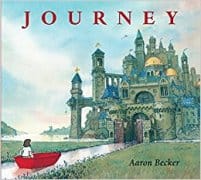
Journey by Aaron Becker

(Children Picture Book BECKE)

In this first book of a planned trilogy, a lonely young girl, using a red marker, draws a door on her bedroom wall and through it enters another world, where she experiences many adventures, including being captured by an evil emperor.

Quest by Aaron Becker

(Children Picture Book BECKE)

The sudden and magical appearance of a king startles two friends in a city park. The king pushes a map and some strange objects at them, but before he can explain, the king is captured by hostile forces and whisked back into his enchanted world. Just like that, the two friends are caught up in a mad dash to rescue the mysterious monarch. They embark on a quest to unlock the puzzle of the map and, they hope, save the king and his people from darkness.

Return by Aaron Becker

(Children Picture Book BECK)

“Welcome the much-anticipated finale of Caldecott Honoree Aaron Becker’s wordless trilogy—a spectacular, emotionally satisfying story that brings its adventurer home. Failing to get the attention of her busy father, a lonely girl turns back to a fantastic world for friendship and adventure. It’s her third journey into the enticing realm of kings and emperors, castles and canals, exotic creatures and enchanting landscapes. This time, it will take something truly powerful to persuade her to return home, as a gripping backstory is revealed that will hold readers in its thrall. Caldecott Honor winner Aaron Becker delivers a suspenseful and moving climax to his wordless trilogy, an epic that began with the award-winning Journey and continued with the celebrated follow-up Quest.” — Provided by publisher.

Chapter Books

The Trolley to Yesterday by John Bellairs

(Children PZ7.B413 Tr 1998)

Johnny Dixon and Professor Childermass discover a trolley which transports them back to Constantinople in 1453 as the Turks are invading the Byzantine Empire.

An Angel for May by Melvin Burgess

(PZ7.B9166 An 2013)

Faced with his parents’ divorce, Tam is unhappy, but when he’s given a way out, will he take it? Even if it means being stuck in the past forever?

Alice’s Adventures in Wonderland by Lewis Carroll

(Children PZ7.C2361 Al 1969)

The Reluctant Assassin by Eoin Colfer

(Children PZ7.C677475 Re 2013)

In Victorian London, Albert Garrick, an assassin-for-hire, and his reluctant young apprentice, Riley, are transported via wormhole to modern London, where Riley teams up with a young FBI agent to stop Garrick from returning to his own time and using his newly acquired scientific knowledge and power to change the world forever.

The Mirror of Fire and Dreaming by Chitra Banerjee Divakaruni

(Children PZ7.D6295 Mi 2005)

As twelve-year-old Anand continues his studies to become a full-fledged member of The Brotherhood of the Conch, he journeys back to Mogul times, where he encounters powerful sorcerers, spoiled princes, noble warriors, and evil jinns.

Hatching Magic by Ann Downer

(PZ7.D767 Ha 2003)

When a thirteenth-century wizard confronts twenty-first century Boston while seeking his pet dragon, he is followed by a rival wizard and a very unhappy demon, but eleven-year-old Theodora Oglethorpe may hold the secret to setting everything right.

The Neverending Story by Michael Ende; translated by Ralph Manheim; illustrated by Roswitha Quadflieg

(Children PZ7.E66 Ne)

Inkheart Cornelia Funke; translated from the German by Anthea Bell

(Children PZ7.F935 In 2003)

Twelve-year-old Meggie learns that her father, who repairs and binds books for a living, can “read” fictional characters to life when one of those characters abducts them and tries to force him into service.

Coraline by Neil Gaiman

(Children PZ7.G125 Co 2002)

Looking for excitement, Coraline ventures through a mysterious door into a world that is similar, yet disturbingly different from her own, where she must challenge a gruesome entity in order to save herself, her parents, and the souls of three others.

The Phantom Tollbooth by Norton Juster; illustrated by Jules Feiffer

(Children PZ7.J98 Ph)

A journey through a land where Milo learns the importance of words and numbers provides a cure for his boredom.

Elidor by Alan Garner

(Children PZ7.G18417 El)

Three brothers and a sister take the responsibility of possession of a length of iron railing, a keystone, two pieces of wood, and a cracked cup which symbolize the power of a spear, a sword, a stone, and a cauldron to generate light for the Kingdom of Elidor

A Wrinkle in Time by Madeleine L’Engle

(Children PZ7.L5385 Wr)

The Lion, the Witch, and the Wardrobe by C. S. Lewis

(Children PZ7.L58474 Ch 1988 bk.1)

Four English school children find their way through the back of a wardrobe into the magic land of Narnia and assist Aslan, the golden lion, to triumph over the White Witch who has cursed the land with eternal winter.

Bridge to Terabithia by Katherine Paterson; illustrated by Donna Diamond

(Children PZ7.P273 Br)

The life of a ten-year-old boy in rural Virginia expands when he becomes friends with a newcomer who subsequently meets an untimely death trying to reach their hideaway, Terabithia, during a storm.

Starcross: A Stirring Adventure of Spies, Time Travel, and Curious Hats by Philip Reeve; illustrated by David Wyatt

(Children PZ7.R25576 Sta 2007)

Young Arthur Mumby, his sister Myrtle, and their mother accept an invitation to take a holiday at an up-and-coming resort in the asteroid belt, where they become involved in a dastardly plot involving spies, time travel, and mind-altering clothing.

When You Reach Me by Rebecca Stead

(PZ7.S80857 Wh 2009)

As her mother prepares to be a contestant on the 1980s television game show, “The $20,000 Pyramid,” a twelve-year-old New York City girl tries to make sense of a series of mysterious notes received from an anonymous source that seems to defy the laws of time and space.

The Girl Who Circumnavigated Fairyland in a Ship of Her Own Making by Catherynne M. Valente; with illustrations by Ana Juan

(Children PZ7.V232 Gir 2011)

Twelve-year-old September’s ordinary life in Omaha turns to adventure when a Green Wind takes her to Fairyland to retrieve a talisman the new and fickle Marquess wants from the enchanted woods.

Tanglewreck by Jeanette Winterson

(Children PZ7.W7677 Tan 2006)

Eleven-year-old Silver sets out to find the Timekeeper—a clock that controls time—and to protect it from falling into the hands of two people who want to use the device for their own nefarious ends.

The Wizard of Oz by L. Frank Baum

(Children PZ8.B327 Wh 1956)

Young Adult

London Calling by Edward Bloor

(Children PZ7.B6236 Lo 2006)

Seventh-grader Martin Conway believes that his life is monotonous and dull until the night the antique radio he uses as a night-light transports him to the bombing of London in 1940.

Ripped: A Jack the Ripper Time-travel Thriller by Shelly Dickson Carr

(Children PZ7.C2177 Ri 2012)

“Katie Lennox wishes her parents were still alive. Having to leave Boston to live with Grandma Cleaves in London was hard, but she’s making new friends, working on her British accent and even learning some Cockney rhyming slang. London’s cool and actually feels like home in some ways, like she’s been here before, belongs here. When a museum visit with her cousin and his cute friend turns funky, Katie finds herself in a long, uncomfortable dress, wearing a ridiculous hat, wondering what happened to her jeans and high-top sneakers? And where’s her iPhone?… It’s London, 1888. Smart and gutsy, Katie knows she’s here to stop Jack the Ripper. The serial killer didn’t just slash his victims’ throats; he butchered the women. Katie has read about the Ripper, knows the names of his victims and where and when they were killed. She’s watched her fair share of CSI. Can Katie save their lives?”—from Amazon.com.

Obsidian Mirror by Catherine Fisher

(Children PZ7.F4995 Ob 2013)

When his father disappears while experimenting with a black mirror that is a portal to both the past and the future, Jake encounters obstacles when he tries to use the mirror to find his father.

Half World by Hiromi Goto; illustrated by Jillian Tamaki

(Children PZ7.G6936 Hal 2010)

“Melanie Tamaki is an outsider. She is unpopular at school. At home, where she and her loving but neglectful mother live in poverty, she has had to learn to take care of herself. Melanie is just barely coping. Everything changes on the day she returns home to find her mother is missing, lured back to

Half World by a nightmare creature calling himself Mr. Glues kin. Soon Melanie has embarked on an epic and darkly fantastical journey to Half World to save her mother. What she does not yet realize is that the state of the universe is at stake…” —P. [4] of cover.

Found by Margaret Peterson Haddix

(Children PZ7.H1164 Fo 2008)

When thirteen-year-olds Jonah and Chip, who are both adopted, learn they were discovered on a plane that appeared out of nowhere, full of babies with no adults on board, they realize that they have uncovered a mystery involving time travel and two opposing forces, each trying to repair the fabric of time.

05.10.2018

Robert Fieseler

June 2018

Interview by Graham Skinner

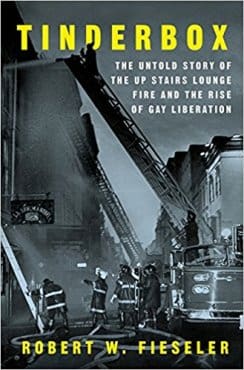
This month’s Athenæum Author is local writer Robert Fieseler. In May, he and I sat down to talk about his life, the Athenæum, and his book Tinderbox: The Untold Story of the Up Stairs Lounge Fire and the Rise of Gay Liberation (Released: June 5, 2018).

Q: Where were you born? Raised?

ROBERT FIESELER: I was born in Chicago and raised in Naperville, IL, a middle-class suburb located about thirty miles southwest of the city. Throughout the ’80s and ’90s, aka my childhood, Naperville was basically the heart of conservative Christendom—ten minutes from Wheaton College, a social incubator that gave the nation Billy Graham, Dennis Hastert and Michael Gerson (the Bush II speechwriter who coined the term “Axis of Evil”). Demographically, the town was about 90 percent white and overwhelmingly Republican, although it was going through a long and somewhat fraught process of diversification and “purple-ization.” Naperville also boasted award-winning public libraries and enviable public schools, but I didn’t know enough at the time to appreciate them or take advantage.

I was a defiant sort of B student with an attitude who resisted a lot of the middle-class myth-making and self-congratulation. A lot of my anger stemmed from being closeted gay in a place where there were no role models, and homosexuality was mostly lumped in with the rest of the moral vices, those unsayable behaviors that people engaged in privately but publicly condemned. In my public high school, we were encouraged by “motivational speakers,” a.k.a. Christian ministers holding forth at mandatory student assemblies, to take virginity pledges so that our future marriages wouldn’t fail because they were unsanctified in God’s eyes. Because I was closeted, and the idea of faking my way through heterosexual intercourse was terrifying to me, I gladly took the pledge, which bought me time and cloaked in morality my abstaining from a behavior that I never desired to begin with. In a prior generation, a scared boy like myself may have attempted to join the priesthood for the same purpose… I look back now and am grateful for my upbringing, but I also see how I was held back by it. All dreams worth having tended to be hedged and clipped in that environment into some sort of “backup plan.”

The only way to make it out interesting is if you resisted the tendency towards homogenization, preparation for a white collar career, or agreed to be called a freak. Growing up, I didn’t have the bravery to be a freak, so I walked a careful line of sneering at the system while meeting expectations in big gestures, like being the lead in the high school musical or a first chair trumpet in band. Yet, since you’re only an artist when the entire world has told you that you are not, I think the way that I clashed with my hometown played some role in making me what I am.

Q: Invading your private life more, what is your educational and work experience?

RF: I was a public school kid from pre-K straight through undergrad. I had some of my best teachers when I was young, including a second-grade teacher named Mrs. Pederson who “published” my first book at Maplebrook Elementary (by published, I mean stapled together my construction paper drawings) and a fifth-grade teacher named Karen Randolph. Mrs. Randolph was the first person who ever told me that I should write a novel because she was sure I had something to say. I graduated decently but not impressively high from my class at Naperville Central High School in 1999 and went to the University of Michigan, Ann Arbor, where I majored in English and studied a lot of history. In retrospect, a Big Ten school was the utterly wrong choice for me. I completely vanished among the crowd, but I was still living to satisfy other people’s expectations at that point.

Honestly, I don’t remember a ton from my undergrad years, which were consumed by a painful “coming out” journey. I woke up every morning and put on the invisible mask of my heterosexual persona. It was exhausting in that nobody really knew me. My grades became lackluster, and some weeks I barely even made it to class. I tried to be as “bro” as I could. I joined a fraternity as a dare to myself. Eventually, I became vice president of that brotherhood, a really excellent group of guys, and kind of had a breakdown because I was lying to everyone and just couldn’t sustain the act. I remember my fraternity brothers being so sweet to me. They kept asking what was wrong. I’m sure they would have opened their arms to make room for me in their worlds and reaccepted me into the fold, but at the time I couldn’t even say the words “I’m gay” to myself. And I needed to move on or…well, move on or die inside a falsehood that was strangling me.

My third year at Michigan was lonely, but I did find the one program I got anything out of at that school: the New England Literature Program, called NELP for short. It’s a spring-term writing course at a camp on Lake Sebago in Maine. You temporarily live there among an intentional community of writers and read New England authors: Thoreau, Hawthorne, Emerson, Dickinson, etc. You also keep a journal and contemplate bigger life questions. The whole process isolates the mind and allows for introspection into who you are and what you really want. I came out of the closet at NELP. It saved my life. It started my life. It was as if from age 6 to age 21, I’d been imprisoned in a tower inside my brain by some sort of evil oppressor, and here I was returned to the control room of that six-year-old boy who once smiled so much in pictures. I had been such a happy little kid. I can only describe the experience as euphoric.

Q: What about grad school?

RF: After a long break from school and a corporate career, I changed gears and enrolled in the part-time program of the Columbia University Graduate School of Journalism in 2011. This was the first time I probably ever applied myself to my education, and it couldn’t have happened at a better time or in a better setting. My classmates were brilliant, and most are now incredibly successful. The value of such a network is incalculable. I also met my Dumbledore there, or if you prefer my Aristotle, my mentor professor, who I still speak to regularly.

I graduated pretty high in my class at Columbia in 2013. When you graduate with high honors at the Columbia J-School, you qualify for awards or to be valedictorian, which is what happened in my case. I graduated co-valedictorian that year, which I’m sure continues to serve as a bragging point for my Midwest parents at barbeques. I’m joking, but also not really. Following that incredible turn of events, which felt like a personal version of Gryffindor winning the House Cup in the first Harry Potter, I had a small but significant window where I could do something cool with what had just happened to me. A couple of opportunities developed, and one was a book project, which would involve writing about a gay rights tragedy down in New Orleans. It was for a publisher that was eager to explore the idea and an editor that would be amazing to work with, and so I left a corporate career to pursue the book.

Q: Tell me about Tinderbox.

RF: Tinderbox is a work of history about the Up Stairs Lounge fire, which was the largest mass murder of gay Americans in U.S. history until the 2016 massacre at Pulse in Orlando. After Pulse, actually, the Up Stairs Lounge became revived in national memory and cited as an historic antecedent, a past exemplar of violence striking the gay community that I believe helped the public grieve and process the shock of the Pulse murders in a way that was immediate. Somehow, photos and stories of the Up Stairs Lounge fire helped people recognize that an extraordinarily terrible event had occurred in Orlando, which needed to be memorialized nationwide. And was.

It’s interesting, because neither of those things happened after the Up Stairs Lounge fire in New Orleans—an intentional arson fire at a gay bar that claimed 32 lives on the night of June 24, 1973. The Up Stairs Lounge, in 1973, was neither treated as a significant event nor was it memorialized by a nation all too eager to move on. Move on, rather than acknowledge and mourn “gay deaths” at a time when homosexuality carried great stigma.

The book asks three primary questions:1. What set the stage for this tragedy?2. What transpired on that night to end so many lives?3. How did this disaster, ignored as early as its one-year anniversary, develop a legacy? 

Attempting to answer these questions has been the greatest honor of my life.

Q: Here we are at the Athenæum. How did you find out about us?

RF: My partner, come fiancé and now husband, was accepted to the School of the Museum of Fine Arts in Boston with a scholarship in 2014. They really wanted him. At the time, we were living in Brooklyn, and of course I said we’re moving, you have to go for this. I was still in the midst of researching the book in New Orleans, and so my life became divided pretty distinctly along a new geography: New Orleans was devoted to interviewing and archival digging, and Boston was now devoted to writing and advancing what was then a book “proposal”—hopefully, to the stage where the publisher offered me a book contract.

First, I tried writing the proposal in my apartment and…cabin fever is real, man! As many walks as you take, the walls start creeping in. It can really get lonely and listless. For years in my twenties, I went to a corporate office every morning and absolutely despised the routine. When I left that world, I thought, “I’m never doing this again!” But then I started to see the benefits of exercising your mind in a place that’s physically separate from where you eat dinner, laugh and sleep.

I tried the Boston Public Library. I liked it, but I couldn’t have a coffee with me. That was a problem! Also, I couldn’t bring my dog to work when I felt like it, and I’d find myself missing Chompers, my little terrier, throughout the day. The subject I was wrestling with every time I put on my mental armor to enter the arena and do battle with my book was quite serious. I was imagining my way into an arson. The Up Stairs Lounge fire was, in fact, a notoriously unsolved crime, and many of men killed within that bar existed in a deeply closeted society.

There was a range of injustices that my brain had to attempt to wrangle into narrative form, and…either as a psychological or spiritual relief, you just want to have nice things around you as consolation. Books, coffee, bright windows, smart people, dogs. You want to be in an environment that can support or sometimes counter your darkest interrogations. So, I did research involving cooperative workspaces. They all seemed very expensive and “tech bro” orientated. “Tech bros” tend to be very sweet. Many are strong LGBT+ allies, but I couldn’t see myself engaging with them regularly on a literary level.

My proposal went to contract, meaning that the book received a green light from a publisher, around the time I heard about the Boston Athenæum. I initially bristled because the Athenæum is a private membership library, and I’m the nephew of a famous blue-collar historian in Pittsburgh. I thought the public library is good enough for me, if it’s good enough for the general public, but then I came here once. I was like, “Oh! I could bring my…oh it has such conducive energy.” Every little corner looks like the Restricted Section in Harry Potter, or a more intimate version of the Bodleian Library at Oxford, or the place at Trinity College where you can see the Book of Kells. The Athenæum is one of those great castles of the mind, those iconic structures. I felt I could get some work done in this building. So, I applied knowing full well I was probably going to write the book here, which I did.

Q: You already touched on this a bit, but what do you like about the Athenæum​?

RF: You get to interact with brilliant people every day. Passionate writers, critical readers, deep thinkers. A certain cadre of ink-stained wretches, which of course I say lovingly. Most say hi or nod whenever you walk into a room. They’re happy to see you each morning. One member, whom I met while nervously scoping out spaces on the fifth floor, suggested I try a special corner of floor three, and she was right. That nook became my favorite place to create. And there are always other members working on fascinating projects. They’re fun to talk with, whether it be someone who’s super literary (seeming to read a book a day), or working on their master’s degree, or grooving on a new book proposal or an advertising campaign.

It’s indescribably encouraging to hear about their research and, in turn, be able to share some progress of what I’m doing. I mean, I can only talk about my book so much to friends and family before they’re like, “ENOUGH!” A lot of writing occurs in isolation, and so you can feel a bit disconnected from daily life if you don’t find compatriots. Fortunately, I found a collective boost from working side by side like-minded folks at the Athenæum. It’s beautiful here, a facility that not many other cities would be able to maintain. It’s one of those quirky institutions that you just couldn’t replicate, part of the lineage of what makes Boston so special and so important.

Fieseler's new book, Tinderbox.

Fieseler’s new book, Tinderbox.

Q: What were the great struggles of working on Tinderbox?

RF: I mean, you’re not supposed to talk about this as a nonfiction writer or as a journalist, but I’ve decided I’m going to. It’s such a gift to be able to do what I do for a living, to be able to tell these vital stories. But there’s also a price to whatever story you tell in that you take on the consequences of what you learn. A former Columbia J-School professor of mine called it, “Collecting ghosts from your characters.” Those who do not face those ghosts, as writers and journalists, tend to fall off a mental cliff. They become alcoholics or have terrible divorces or worse. It’s important that the reality of “ancillary trauma” for writers, of the psychological transfer from subject to author, story to storyteller, be acknowledged in public so that writers and journalists can seek the appropriate help and speak more nakedly about this phenomenon.

When you’re interviewing people who’ve experienced severe trauma—in the case of my book, a sudden and catastrophic fire in close quarters that consumed human beings—there’s an incalculable amount of anxiety and pain. A lot of that pain remains unsettled or unacknowledged in present time. As a consequence, some may literally or proverbially slam the door in your face when you come asking questions. Some sources, you’ll go years dancing around with emails and texts before they’re ready to sit down and talk because they’re frightened of their memories. And when you’re writing nonfiction, it’s critical that you do get important voices to sit down and relate their experiences.

As a queer person working on this specific topic, I naturally empathized with the sources I met, gay men who had lived through the fire in the 1970s. Early on, I had to develop a sense of “inner check” against those natural sympathies, so that I did not end up writing a piece of activism when I set out to write a piece of history. So I did not imitate Michael Moore when I wished to be more like Errol Morris. It took a lot of restraint and balancing and rebalancing on the page to make sure that what I presented was fair and true to the context of a period in which something occurred. I had to frequently go back and ask myself, “Wait, what would be considered moral in this situation? What was common sense? Who would I likely be in this crowd?” Those are tough questions to answer honestly, as a gay man who remembers how the closet and homophobia functioned in his own life. But I also didn’t want to go too far and equivocate something that wouldn’t have actually been acceptable in, say, 1973.

Then, because the book is about a gruesome fire, I had to face this inevitable nightfall of imagining myself inside scenarios of gore and gruesomeness, cruelty and inaction, things a healthy brain avoids because it conflicts with one’s ability to smile in the mirror or kiss your husband as he leaves in the morning or have a happy day. At the end—and this surprised me—but even letting go of this story was very difficult. I got so used to living with the lightness and darkness of “homosexuality in the early 1970s” that handing over the final manuscript and walking away from the book involved tears.

Q: What were the great joys?

RF: There were many. The true privilege of this book, for me, was being able to enter a lost gay world, and not in a nostalgic way. I got to meet many of the men who had lived in a manner erased by time and capital-H History and the AIDS crisis, who lived hard lives even before a fire struck their favorite bar on the night of June 24, 1973. Open-eyed, through a wealth of primary source documentation, I got to see what early gay culture was like—when “gay” was a new word and the Gay Liberation movement was in its baby stage and much of homosexual culture celebrated its blue collar and hyper-masculine origins.

It was as if someone had sat me in a time machine and transported me to the beginnings of queer culture as it spilled into the open. I spent the first act of my book exploring these unique and idiosyncratic, nuanced and surprising lives, and I came to admire these men deeply because they made a choice to be themselves at a time when it really meant something, when no one celebrated their being different and being homosexual had vast consequences. I had so many beautiful interviews with something like fifty to eighty gay men that changed my life and reframed my default picture of human nature. I would never, ever take back those moments.

Q: Any projects on the horizon you’re able to talk about here?

RF: Oh God, I’m supposed to be working on my second book proposal. But I’m what they call a “monotasker.” I don’t know how anyone juggles a second project while launching another book. There will be four or five smaller stories about Up Stairs Lounge history that go along with Pride Month and the 45th anniversary of the fire, which occurs June 24, 2018.

I also have a novella-length nonfiction story that’s not related to the Up Stairs Lounge, which was accepted a year and a half ago, and I have to finish. I can’t talk precisely about the second book, but it relates to the diversification of the suburbs. I’m utterly consumed with the way that Northern segregation operated in middle-class white communities and the way that “nice” whites fought integration into the late 1960s. I also want to write about women’s reproductive rights at some point, but I don’t have a project yet.

04.27.2018

Lesego Malepe

May 2018

By Mary Warnement

“Where I come from, names have meaning,” Lesego Malepe explained to me during our conversation in my office. Lesego means, “a blessing,” and I wager anyone who has met her would feel it is an apt name. She knew from early on it was a beautiful name, chosen by her parents because after three sons, a daughter had finally arrived. Her neighborhood friends also used Setswana names, although when she first went to school she was surprised to learn her playmates answered the teacher’s roll call of other names—English names—and they seemed surprised she did not have a special, official name for while at school. Later she accosted her mother, “Why don’t I have a school name in English like other children?” Avoiding her daughter’s irritated question, her mother advised she ask Ntate, her father, which she did when he returned from work. He was patient, explaining that since she was Setswana-speaking it made sense she have a Setswana name. She accepted his explanation but doubts lingered. “Everybody in class has a special school name, an English name.” Her father expanded, “You are special, not like other kids; you are blessed, as your name suggests.” But wanting to be like others, she continued to argue until her father found a compromise, “You find me a white kid named Lesego, or another Setswana name, and then maybe I’ll give you her white name as a middle name.” Lesego replied, “Ntate, you know white children don’t have Setswana names.” “That’s right,” her father said, “So why would you want to adopt a foreign name?” As Lesego walked away her father added, “Ngwanake, (my child), when you are older, you will thank me.” Lesego relaxed and relented. By the time she was in high school, she knew Ntate had been right, and she is forever grateful to her parents for giving her this name.

Lesego was born in Pretoria, South Africa, the fourth of five children. All her siblings were brothers. Her parents prayed for a girl after the first three (much older) brothers. She and her younger brother Kabelo (“a gift”) were very close; one uncle declared the pair “a gang.” She recalls bicycling recklessly with Kabelo until someone told their mother, who took the bikes away. When she was four years old, Lesego’s family and community were forcibly removed from Kilnerton in Pretoria and their houses and businesses confiscated without compensation to make way for whites. The community was moved to a new black township, Mamelodi, which is where she grew up.

The youth center at her church was a gathering place, but her childhood’s real home away from home was the library, where the librarian imparted to her not just a love of books but of libraries themselves. The township of Mamelodi (within Pretoria) offered the benefits of a qualified librarian who would have books ready for children when they walked in the door. He recommended Hemingway, and Steinbeck’s Of Mice and Men, books beloved to her to this dayA dedicated professional, he kept the library open later than its advertised hours so that teenagers would have a safe place to congregate. At the time, she did not appreciate how extraordinary his gift was. Mamelodi shielded her and her peers from the worst of white South Africa, something the parents appreciated while they went to work and shop in the wider—or whiter—world. 

Lesego’s mother Hilda Mhlabasi taught fourth and fifth grades, and father Adam Tsele Malepe was an academic who taught Setswana at the University of South Africa, where Lesego could attend tuition free. Of course, like most teens becoming adults, being seen with her father was anathema, but his job allowed her to graduate free of student loans. She majored in political science, a subject she chose in an attempt to understand current events in her country. Her young, idealistic self could not comprehend the incarceration of young people like her brother, who at 18 years old was sentenced to life in Robben Island. The head of the political science department was a decent, kind, and professional man who set a tolerant tone in the all-white department where she thrived. Lesego applied for a Fulbright, and her professor supported her application with enthusiasm.

In 1978, she used her Fulbright Scholarship to attend Boston University with its African Studies Center (ASC), where she completed a Ph.D. in political science with her dissertation Convergence versus Divergence: Political Change in South Africa. Her other choice was Berkeley, but she chose Boston because its location on the east coast of North America made travel home easier than if she lived in California. Title VI funds the ASC as a National Resource Center at BU to promote language and area studies. “I had the time of my life at BU and can’t think of a thing I would change. It was smooth from beginning to end, but there’s no end, I will always be connected to BU.”

Lesego flourished in that community of scholarship and sociability. While at BU, she learned about the Boston Athenæum from others and found another congenial place to write, study, and think. BU holds an excellent collection of materials related to her scholarship, and she tends to go there for academic research. Over the years, she has written op-eds for various newspaper including the San Francisco Chronicle, the Baltimore Sun, and USA Today. She taught political science at Wheaton College in Norton, MA, before turning to creative writing full-time. She has always incorporated fiction into her teaching and found that literature allows students to connect emotion to facts in a way that a textbook cannot. The Athenæum has become “my creative place,” a space conducive to writing fiction, in particular short stories. “The whole building is charming, and the staff is helpful and professional. The atmosphere is just right.” Her favorite spots include the fifth-floor terrace (which opened last month after what seems a very late-coming spring), the second floor, and the third floor. Growing up in a large family means she was acclimated to background noise, and she therefore enjoys the ambient sounds surrounding her on the quiet (as opposed to silent) floors. She also loves writing on trains and regrets that flying to Washington, DC is now cheaper as well as faster.

Working in the Athenæum, she translated into English a prize-winning Setswana novel, Not My Brother’s Keeper by Sabata-Mpho Mokae. She has also completed a translation of a Setswana youth novella by the same author who teaches creative writing at the Sol Plaatje University in Kimberley, South Africa. She has started a collection of personal essays and a memoir about her father. Winnie Madikizela-Mandela died recently, and though Lesego has not done many op-ed pieces since her recent focus on writing and translating fiction, she wanted to take on this challenge. Journalism requires a rapid response, so when she came home late to find the message, she knew would have to compose a 700-word essay quickly, that night. When we chatted, she told me that Nelson Mandela’s well-known name was not his given one; he received an English name at school. His given name was Rolihlahla, which literally translates as “pulling the branch of a tree” but colloquially means “a troublemaker.” I see why Lesego says names have meaning where she comes from. She received a repeat invitation from the Turkey Land Cove Foundation to its artists’ retreat on Martha’s Vineyard this spring, which allows her to focus solely on her writing in yet another lovely setting.

And yet Lesego did much of this work on the fifth-floor terrace. She enjoys seeing her fellow members, and though she herself prefers moving around the building and settling in various spots, she finds comfort in observing her friends’ routines. “The right people, in their usual spaces.” If she plans to travel, she knows to alert the regulars so that they do not worry at her absence. She loves that different times and days also offer different vibes. Those who come on Saturdays differ from the weekday group—then she likes to work on the second floor, near the reference librarian Elizabeth O’Meara. On Wednesday evenings, she knows she’ll find certain people on the third floor. The Athenæum community provides a window into human dynamics that Lesego enjoys watching and joining. Home is still South Africa but also Boston.

Selected Works

Matters of Life and Death (2005)Reclaiming Home: Diary of a Journal through Post-Apartheid South Africa (2018)

04.26.2018

Rats and Mice

Picture Books

The Maid and the Mouse and the Odd-Shaped House: A Story in Rhyme by Paul O. Zelinsky

(Children + PZ8.3.Z34 Mai)

An oddly-shaped house takes on the appearance of a cat as the maid and mouse who live there make various changes in it.

The Lion and the Mouse by Jenny Broom; illustrated by Nahta Nój

(Children + PZ8.2.B6678 Li 2014)

“How can a humble little mouse save a great and mighty lion? Find out in this fresh retelling of one of Aesop’s most popular fables. Interactive artwork makes you the storyteller! Release the mouse from the lion’s claws and free the lion from his net simply by turning the page.” —Cover.

The Highway Rat by Julia Donaldson

(Children Picture Book + DONAL)

A very bad rat rides his horse along the highway stealing travelers’ food, from a rabbit’s clover to a spider’s flies, until clever Duck introduces him to her “sister.”

The Story of a Little Mouse Trapped in a Book by Monique Félix

(Children Picture Book FÉLIX)

A mouse trapped inside the pages of a book chews his way out and escapes to the countryside on a paper airplane.

The Further Adventures of the Little Mouse Trapped in a Book by Monique Félix

(Children Picture Book FÉLIX)

A mouse trapped inside the pages of a book chews his way out to an ocean and sails away in a paper boat.

The Tooth Mouse by Susan Hood; illustrated by Janice Nadeau

(Children Picture Book + HOOD)

Introduces readers to the Tooth Mouse, France’s version of the tooth fairy, and to Sophie, a sweet young mouse who must prove she is brave, honest and wise enough to take over this important job.

Matthew’s Dream by Leo Lionni

(Children Picture Book + LIONN)

A visit to an art museum inspires a young mouse to become a painter.

Nicolas, Where Have You Been? by Leo Lionni

(Children Picture Book + LIONN)

Mishap turns to adventure as a young mouse learns that all birds aren’t the enemies he thought they were.

The Mouse Mansion by Karina Schaapman

(Children Picture Book Lg SCHAA)

Best friends Sam and Julia love spending their days exploring the many rooms and secret hiding places of the Mouse Mansion, where they live with their families.

Tiny’s Big Adventure by Martin Waddell; illustrated by John Lawrence

(Children Picture Book Lg WADDE)

Katy Mouse teaches her younger brother, Tiny, the names of some of the things they see, including a boot, a snail, and a pheasant, when they go to the cornfield to play games.

Naked Mole Rat Gets Dressed by Mo Willems

(Children Picture Book WILLE)

Wilbur, a naked mole rat who likes to wear clothes, is forced to go before the wise community elder, who surprises the other naked mole rats with his pronouncement.

Seven Blind Mice by Ed Young

(Children Picture Book + YOUNG)

Retells in verse the Indian fable of the blind men discovering different parts of an elephant and arguing about its appearance. The illustrations depict the blind arguers as mice.

Beginning Readers

Little Rat Rides by Monika Bang-Campbell; illustrated by Molly Bang

(Children Picture Book BANGC)

Little Rat overcomes her fear and learns to ride a horse, just like her daddy did when he was young.

Little Rat Sets Sail by Monika Bang-Campbell; illustrated by Molly Bang

(Children Picture Book BANGC)

With a little courage and a lot of practice, Little Rat overcomes her fear of sailing.

Chapter Books

The Tale of Despereaux: Being the Story of a Mouse, a Princess, Some Soup, and a Spool of Thread by Kate DiCamillo; illustrated by Timothy Basil Ering

(Children PZ7.D5455 Ta 2003)

The adventures of Despereaux Tilling, a small mouse of unusual talents, the princess that he loves, the servant girl who longs to be a princess, and a devious rat determined to bring them all to ruin.

The Orphan and the Mouse by Martha Freeman; illustrated by David McPhail

(Children PZ7.F87496 Or 2014)

In 1949 Philadephia, Mary Mouse and an orphan named Caro embark on an adventure when they team up to expose criminals and make the Cherry Street Orphanage a safe haven for mice.

The Mouse and his Child by Russell Hoban; illustrated by David Small

(Children PZ7.H637 Mr 2001)

Two discarded toy mice survive perilous adventures in a hostile world before finding security and happiness with old friends and new.

Redwall by Brian Jacques; illustrated by Gary Chalk

(Children PZ7.J15317 Re 1986)

When the peaceful life of ancient Redwall Abbey is shattered by the arrival of the evil rat Cluny and his villainous hordes, Matthias, a young mouse, determines to find the legendary sword of Martin the Warrior which, he is convinced, will help Redwall’s inhabitants destroy the enemy.

Emmy and the Incredible Shrinking Rat by Lynne Jonell; illustrated by Jonathan Bean

(Children PZ7.J675 Em 2007)

When Emmy discovers that she and her formerly loving parents are being drugged by their evil nanny with rodent potions that can change people in frightening ways, she and some new friends must try everything possible to return things to normal.

Bless this Mouse by Lois Lowry; illustrated by Eric Rohmann.

(Children PZ7.L9673 Bl 2011)

Mouse Mistress Hildegarde musters all her ingenuity to keep a large colony of church mice safe from the exterminator and to see that they make it through the dangerous Blessing of the Animals.

The Infamous Ratsos by Kara LaReau; illustrated by Matt Myers

(Children PZ7.L323 In 2016)

Rat brothers Louie and Ralphie Ratso try to prove they can be as rough and tough as their father in the Big City, but every time they try to show how tough they are, they end up accidentally doing good deeds instead.

Ratscalibur by Josh Lieb; illustrated by Tom Lintern

(Children PZ7.L65755 Ra 2015)

“When Joey is bitten by a rat, he goes from aspiring seventh-grader to three-inch tall rodent, and unwittingly unlocks the sword Ratscalibur.” —Provided by publisher.

The Mouse of Amherst by Elizabeth Spires; illustrated by Claire Nivola

(Children PZ7.S7547 Mo 1999)

When she moves into Emily Dickinson’s bedroom, Emmaline the mouse discovers her own propensity for poetry.

Mrs. Frisby and the Rats of Nimh by Robert C. O’Brien; illustrated by Zena Bernstein

(Children PZ10.3.O19 Mi)

Having no one to help her with her problems, a widowed mouse visits the rats whose former imprisonment in a laboratory made them wise and long lived.

I Was a Rat! by Philip Pullman

(Children PZ7.P968 Iw 2002)

A little boy turns life in London upside down when he appears at the house of a lonely old couple and insists he was a rat.

The Rescuers by Margery Sharp; illustrated by Garth Williams

(Children PZ7.S5315 Res 1959)

Two enterprising mice live up to the motto of the Rescue Aid Society, “We help anyone … anywhere,” when they rescue a kidnapped orphan.

Nightshade City by Hilary Wagner; illustrations by Omar Rayyan

(Children PZ7.W12417 Nig 2010)

Eleven years after the cruel Killdeer took over the Catacombs far beneath the human’s Trillium City, Juniper Belancourt, assisted by Vincent and Victor Nightshade, leads a maverick band of rats to escape and establish their own city.

Stuart Little by E.B. White; illustrated by Garth Williams

(Children PZ7.W58277 St 1999)

The adventures of the debonair mouse, Stuart Little, as he sets out in the world to seek out his dearest friend, a little bird who stayed a few days in his family’s garden.

Mouse House by Rumer Godden; illustrated by Adrienne Adams

(Children PZ10.3.G545 Mm)

There is never any room for Bonnie, the baby mouse, in the flower pot, so she goes looking for a new mouse house.

Young Adult

Half World by Hiromi Goto; illustrated by Jillian Tamaki

(Young Adult PZ7.G6936 Hal 2010)

“Melanie Tamaki is an outsider. She is unpopular at school. At home, where she and her loving but neglectful mother live in poverty, she has had to learn to take care of herself. Melanie is just barely coping. Everything changes on the day she returns home to find her mother is missing, lured back to Half World by a nightmare creature calling himself Mr. Glueskin. Soon Melanie has embarked on an epic and darkly fantastical journey to Half World to save her mother. What she does not yet realize is that the state of the universe is at stake…” —Cover.

The Amazing Maurice and His Educated Rodents by Terry Pratchett

(Young Adult PZ7.P8865 Am 2001)

A talking cat, intelligent rats, and a strange boy cooperate in a Pied Piper scam until they try to con the wrong town and are confronted by a deadly evil rat king.

Informational Books

Oh, Rats!: The Story of Rats and People by Albert Marrin; illustrated by C.B. Mordan

(Children QL737.R666 M28 2006)

Get ready to look at rats in a whole new way. These intelligent, compassionate creatures are greatly misunderstood.

04.25.2018

Donald Kelley

April 2018

By Danny Norton

Donald Castell Kelley was born April 29, 1928, to Dorothy and Joseph Kelly in Boston, Massachusetts. Kelley studied at the Museum School of Fine Arts, Boston, where he trained in painting as a distinguished pupil. While there, he won the Bartlett Traveling Scholarship, which allowed him to study abroad, thus inspiring a lifelong passion. He also traveled courtesy of the US government during the Korean conflict, although he probably found little time to appreciate the local culture and art. He gained considerable experience during his travels and returned to earn a formal education from the Yale University School of Art and Architecture. He graduated in 1960 with a master’s degree in fine art.

In 1967, Kelley began his curatorial career as gallery director at the Boston Athenæum. Here, he revitalized interest in the library’s long legacy of displaying art. He organized an impressive array of frequent displays, some of which became traveling exhibitions in partnership with other institutions. The annual report recounts some of Kelley’s efforts with colleague Jack Jackson.

“In October they crowded the exhibition room with the Evelyn Coker Collection of Valentines, in honor of the fiftieth anniversary of Miss Coker’s joining the staff of the Athenæum. By an imaginative use of garlands and festoons of blue crepe paper they turned the whole room into the simulation of an enormous Valentine.”

Kelley also wrote a catalog on a collection that has since grown to become one of the Athenæum’s renowned signature collections. Artists of the Book was a traveling exhibition sponsored by the New England Foundation for the Arts and shown at the Athenæum in the summer of 1988. Kelley published other catalogs for Athenæum exhibitions, but he was also an artist in his own right. His studies had concentrated on painting, but he took up printmaking in later life. The Athenæum holds several works by him, and his work appears in the Boston Public Library, the Museum of Fine Arts, Boston, and many private collections. Local galleries continue to carry his works, and Galatea Fine Art includes an artist’s statement:

“Empathy lies at the heart of my figure drawings; I try to communicate directly through feeling. For example, when I am drawing or painting a representation of the body, I imagine myself within that body.”

In 1993, Kelley retired from the Boston Athenæum. He died March 16, 2018, in Chelsea Massachusetts.

03.29.2018

Birds

Picture Books

Raven: A Trickster Tale from the Pacific Northwest by Gerald McDermott

(Children + E99.N77 M33 1993)

Raven, the trickster, wants to give people the gift of light. But can he find out where Sky Chief keeps it? And if he does, will he be able to escape without being discovered? His dream seems impossible, but if anyone can find a way to bring light to the world, wise and clever Raven can!

Peck, Peck, Peck by Lucy Cousins

(Children Picture Book + COUSI)

Pecking his way through the door of a house, an intrepid little woodpecker busily raps on a rhyming sequence of indoor objects, from a hat and a mat and a racket and jacket to a teddy bear and a book called Jane Eyre.

The Lion and the Bird by Marianne Dubuc; translated from the French by Claudia Z. Bedrick

(Children Picture Book DUBUC)

“A lion finds a wounded bird in his garden and decides to care for it through the winter. When spring arrives, the bird’s flock returns. The bird goes off with its flock. Lion is sad. But autumn brings a wonderful surprise.” —Provided by publisher.

Bird Songs by Betsy Franco; illustrated by Steve Jenkins

(Children Picture Book + FRANC)

Throughout the day and into the night various birds sing their songs, beginning with the woodpecker who taps a pole ten times and counting down to the hummingbird who calls once.

Birds by Kevin Henkes; illustrated by Laura Dronzek

(Children Picture Book + HENKE)

Fascinated by the colors, shapes, sounds, and movements of the many different birds she sees through her window, a little girl is happy to discover that she and they have something in common.

Puffin Peter by Petr Horáček

(Children Picture Book + HORAC)

When his best friend is lost in a terrible storm, an intrepid young puffin teams up with a big blue whale to mount a rescue mission and discovers that while many other birds match his friend’s description, none are quite the same.

Flight School by Lita Judge

(Children Picture Book + JUDGE)

Little Penguin, who has the “soul of an eagle,” enrolls in flight school.

Little Owl’s Night by Divya Srinivasan

(Children Picture Book + SRINI)

Little Owl enjoys a lovely night in the forest visiting his friend the raccoon, listening to the frogs croak and the crickets chirp, and watching the fog that hovers overhead.

Chapter Books

Arabel’s Raven by Joan Aiken; illustrated by Quentin Blake

(Children PZ7.A2695 Ar)

The injured raven Arabel’s father brings home can say only “Kaark” and “Nevermore” but he still manages to make great changes in the family’s life.

Summer and Bird by Katherine Catmull

(Children PZ7.C2697 Sum 2012)

In the world of Down, young sisters Summer and Bird are separated and go in very different directions as they seek their missing parents, try to vanquish the evil Puppeteer, lead the talking birds back to their Green Home, and discover the identity of the true bird queen.

Hoot by Carl Hiaasen

(Children PZ7.H52 Ho 2002)

Roy, who is new to his small Florida community, becomes involved in another boy’s attempt to save a colony of burrowing owls from a proposed construction site.

Wringer by Jerri Spinelli

(Children PZ7.S7546 Wr 1997)

As Palmer comes of age, he must either accept the violence of being a wringer at his town’s annual Pigeon Day or find the courage to oppose it.

The Trumpet of the Swan by E. B. White

(Children PZ7.W58277 Tr)

Knowing how to read and write is not enough for Louis, a voiceless Trumpeter Swan; his determination to learn to play a stolen trumpet takes him far from his wilderness home.

Young Adult

The Raven Boys by Maggie Stiefvater

(Children PZ7.S855625 Rav 2012)

Though she is from a family of clairvoyants, Blue Sargent’s only gift seems to be that she makes other people’s talents stronger, and when she meets Gansey, one of the Raven Boys from the expensive Aglionby Academy, she discovers that he has talents of his own — and that together their talents are a dangerous mix.

Informational Books

The Boy Who Drew Birds: A Story of John James Audubon by Jacqueline Davies; illustrated by Melissa Sweet

(Children + CT275.A93 D38 2004)

As a boy, John James Audubon loved to watch birds. In 1804, at the age of eighteen, he moved from his home in France to Pennsylvania. There he took a particular interest in peewee flycatchers. While observing these birds, John James became determined to answer a pair of two-thousand-year-old questions: Where do small birds go in the winter, and do they return to the same nest in the spring?

It’s a Hummingbird’s Life by Irene Kelly

(QL696.A558 K45 2003)

An intimate view of the fascinating world of the hummingbird—a tiny bird that, from morning to night, spring to winter, works nonstop.

Pale Male: Citizen Hawk of New York City by Janet Schulman; illustrated by Meilo So

(Children + QL696.F32 S38 2008)

A red tail hawk and his mate build their nest near the top of a Fifth Avenue apartment building and bird watchers gather hoping to see the chicks in the nest.

The Race to Save the Lord God Bird by Phillip Hoose

(Children QL696.P56 H66 2004)

Tells the story of the ivory-billed woodpecker’s extinction in the United States, describing the encounters between this species and humans, and discussing what these encounters have taught us about preserving endangered creatures.

Kakapo Rescue: Saving the World’s Strangest Parrot by Sy Montgomery; photographs by Nic Bishop

(QL696.P7 M79 2010)

On remote Codfish Island off the southern coast of New Zealand live the last 91 kakapo parrots on earth. Originally this bird numbered in the millions before humans brought predators to the islands. Now on the isolated island refuge, a team of scientists is trying to restore the kakapo population.

03.12.2018

Staff Book Suggestions Spring 2018

Noé Alvarez

Selected Stories by William Trevor

(Library of Congress PZ4.T8163 Sel 2010)

William Trevor was arguably one of the best short-story writers that ever lived. His stories inhabit the lives of ordinary and unremarkable people—protagonists who are at once disturbed, complex, and full of feeling. His language is precise, his settings are quiet, and his tone is empathetic. Read Trevor’s Selected Stories. It opens the mind, fosters introspection, and demands the strictest attention to detail. 

Hanna Bertoldi

The Draining Lake by Arnaldur Indriðason; translated from Icelandic by Bernard Scudder.

(Library of Congress PZ4.A7525 Dr 2008)

I came across this book while I was planning my trip to Iceland. After finishing The Draining Lake, it is easy to see why it was recommended in my tour book. Indriðason cleverly uses Iceland’s history, landscape, and culture to craft a well-thought-out murder mystery. The title refers to an Icelandic lake, Kleifarvatn, which curiously began draining in 2000. In the novel, the falling water level reveals a body previously hidden on the bottom of the lake. I simultaneously learned about the rugged and isolated country while racing to finish this Nordic noir.

Pat Boulos

The Kinsey Millhone mystery series by Sue Grafton​

(Library of Congress PZ4.G7374 Ai/Bi et al)

After seeing the announcement of her death and the tribute display of some of her books on the second floor, I realized I have never read Sue Grafton—although I am addicted to mystery series. I have now completed “A” is for Alibi (PZ4.G7374 Ai ) and am halfway through “B” is for Burglar (PZ4.G7374 Bi 1985). Grafton was a great writer—period. I was immediately taken in by her great attention to detailed description that takes you right into a scene, and makes you “know” the character she’s describing. I’m sure I will continue picking these books up to read periodically. I highly recommend them.

Adam Derington

The Plantagenets: The Kings Who Made England by Dan Jones

(Library of Congress DA225 .J66 2012)

Dan Jones is a premier popular history writer and his history on the Plantagenets has quickly become one of my favorite go-to historical recommendations for those who wish to read history but don’t want to slog through academic texts. Jones artfully weaves history, anecdote, and narrative that compels any reader to keep the pages turning. The book follows the stories of the (in)famous Plantagenet Kings of England and recounts the tales of how their actions, personalities, and familial conflict forged the nation of England and profoundly affected the entire history of Western Europe. From their rise through force of arms and marriage to their bloody end on Bosworth Field, The Plantagenets: the Kings Who Made England remains a fun, easy, and informative read for anyone interested in historical non-fiction.

Adriene Galindo

Swing Time by Zadie Smith

(Library of Congress PZ4.S66 Sw 2016)

If you liked the tale of two women’s friendship in Elena Ferrante’s Neapolitan series, and have been looking for something similar, you may find it in Zadie Smith’s Swing Time. Smith tells the story of two friends—one rebellious and wild, the other jealous of her friend’s talent—growing up in the housing estates of London. As the women’s friendship becomes more fraught, so does each character become more disillusioned in her pursuit of success and happiness.

Rachel Lanza

The Woman in the Dunes by Kōbō Abe

(Library of Congress PZ4.A13 Wo​)

The Sisyphean tale of an insect collector who gets trapped in a pit of quick sand by a conniving village. It is here that he meets a woman who spends her life digging the sand that is constantly on the verge of entrapping her. This claustrophobic novel left me thirsting for warmer days that are hopefully not spent in an endless cycle of existential banality.​

Carolle Morini

The Locusts Have No King by Dawn Powell

(Library of Congress PZ3.P868 Lo 1999​​)

New York society satire by Dawn Powell. A classic novel with a sharp eye and wit on the literary world with every type of publisher. The main character, Frederick Olliver, is a historian and writer, having an affair with a married, beautiful, and successful playwright, Lyle Gaynor. Olliver’s new book makes it to the bestseller lists just as Lyle’s Broadway career is falling apart. First published in 1948, this book shows NYC, careers of women and men, and the loneliness and hopes they all have after the war. 

Danny Norton

Call Me by Your Name by André Aciman

(Library of Congress PZ4.A1753 Cal 2007​​)

Not my usual fare, but the recent film and surrounding chatter inspired me to take part. What I found was something relevant, reverent, rending, relatable, risqué, and recommended (if not downright required). Read this book! 

Elizabeth O’Meara

Sing, Unburied, Sing by Jesmyn Ward

(Library of Congress PZ4.W265 Si 2017)

I loved this book, which was the 2017 National Book Award’s winner. It’s a compelling book dealing with racism, family, death, grief, violence, love—and ghosts. Her writing is beautiful and lyrical and the portraits she created evoked such emotion that I couldn’t put the book down. I consumed it so fast I want to reread it.

Hannah Ovaska

Spook by Mary Roach​

(Library of Congress BL535 .R63 2005)

Explore the endless possibilities of life after death with the cheeky, intelligent, and endearing Mary Roach. In this book, Roach explores the lore and theories behind reincarnation, the soul, ghosts, mediums, near-death experiences, and more. Like her other books, Roach interviews an array of individuals, including scientists, and gathers her findings to present well-rounded, scientific arguments to explain these spooky phenomena. This book will keep you guessing and will introduce you to science you’ve never heard of before.

Kaelin Rasmussen

Kindred by Octavia E. Butler​

(Library of Congress NEW PZ4 .B98666 Ki 2003)

Spring is a good season to fulfill literary resolutions, and  ​Kindred has been on my list for a long time! First published in 1979, it’s considered a classic of science fiction, as well as of African American literature. Octavia E. Butler was an extraordinary writer, and an African American woman who wrote in what was a very male genre. Not only did she win multiple Hugo and Nebula awards, science fiction’s highest honors, but she was also the first science fiction writer to win a MacArthur Fellowship.

In my opinion, Kindred, her most popular book, should be required reading. (See this recent NPR story on Butler, which talks about Kindred‘s significance.) The premise is relatively simple, not really science fiction, but in the author’s own words, “a kind of grim fantasy”: Dana, a modern-day African American woman and an aspiring writer, finds herself drawn through time, pulled back by some connection to her ancestors living in the antebellum plantation South. There she comes to know first-hand the evils of slavery, and the roots of racism and hatred that have so long impacted the experience of African Americans in this country. Beautifully written, with not a word wasted, and thoroughly researched, it is a difficult, necessary book full of uneasy truths. Also not for the squeamish. It made an impact on me, and I think others will feel the same.

Anthea Reilly

All For Nothing by Walter Kempowski

(Library of Congress PZ4.K326 Al 2015)

Memorable novel about a family and various characters that come to stay while the German Army is in retreat and the Red Army is approaching. This book is part of the NYRB classic book club. I receive 12 books a year and so far each selection has been an excellent read.

Mary Warnement

Go, Went, Gone by Jenny Erpenbeck

(Library of Congress NEW PZ4 .E719 Go 2017)

“Where can a person go when he doesn’t know where to go?” Erpenbeck places this sentence and this sentence alone on page 266 and repeats it, alone, on the facing page 267 in case we missed it. That question is at the heart of this novel about Richard, a widower and retired scholar. Richard was born in the chaos of post-war Berlin and knew only his mother, not his father. He lived in the east and taught Classics. He now lives on a lake in the northern suburbs of Berlin and as he gropes for a new life post-retirement, he discovers the refugees in Oranienplatz. An agreement with the Berlin Senate results in their removal to a nursing home near his home, and Richard begins to spend time with them. He seeks out their stories and we learn much about them, but this novel is about Richard. We first hear his wife’s name on p. 69 (I think) and bits appear here and there—as they appear in our thoughts. The author saves the most information on that for the last two pages. This is a snapshot, nothing is wrapped up in a bow, as in life. I heard Erpenbeck speak, and she claimed Richard represented her; she grew up in the East and loves Latin and Greek. She described how after the fall of the wall, she emigrated without ever packing her bags. Everything changed but the street layout. That personal experience and her family’s twentieth-century history in Germany informed her reaction to what happened when refugees flooded Germany in 2015. This book takes place over several seasons, but I consider it appropriate for spring. Erpenbeck’s sensitive consideration gives me hope, and hope is spring’s primary emotion.

Hannah Weisman

Cop Town by Karin Slaughter​

(Library of Congress Acquisitions dept.)

This book should be classified as a controlled substance because it can lead directly to being addicted to Karin Slaughter’s work. Slaughter’s character development and ability to tell stories from multiple characters’ perspectives makes her work engaging, suspenseful, and fun to read.

03.01.2018

Mysteries

Picture Books

7 Ate 9: The Untold Story by Tara Lazar; illustrated by Ross MacDonald

(Children Picture Book LAZAR)

When 7 is accused of eating 9, worried 6 hires a detective to investigate.

Hermelin the Detective Mouse by Mini Grey

(Children Picture Book + GREY)

A mouse with typewriting skills secretly helps the people of Offley Street find lost items, and eventually saves the day.

Beginning Readers

A Ghost Named Fred by Nathaniel Benchley

(Children Picture Book BENCH)

A small boy finds shelter from the rain in an old house and meets a ghost named Fred.

The Case of the Baffled Bear by Cynthia Rylant; illustrated by G. Brian Kraus

(Children Picture Book RYLAN)

Bunny and Jack, animal detectives, take a break from playing cards to look for Bernard Bear’s missing messenger whistle.

Chapter Books

Clue of the Linoleum Lederhosen by M.T. Anderson

(Children PZ7.A54395 Clu 2006)

Looking forward to a vacation, Katie, Lily, and Jasper attach their flying Gyroscopic Sky Suite to the Moose Tongue Lodge and Resort, where they mingle with other child heroes found in books, and where they become embroiled in a mystery involving lederhosen-clothed quintuplets and a screaming ventriloquist.

Chasing Vermeer by Blue Balliett; illustrated by Brett Helquist

(Children PZ7.B2128 Ch 2004)

When seemingly unrelated and strange events start to happen and a precious Vermeer painting disappears, eleven-year-olds Petra and Calder combine their talents to solve an international art scandal.

Mystery of the Burnt Cottage: The First Adventures of the Five Find-Outers and Dog by Enid Blyton

(Children PZ7.B629 My)

“Who could have set fire to Mr Hick’s Cottage? There are plenty of suspects: the cook, Mrs Minns, young Mr Peeks and even a tramp. But it’s the clues—a grey suspicious footprint and some grey cloth—that point the kids in the right direction. The Mystery series follows the adventures of ‘The Five Find Outers’—Pip, Bets, Larry, Daisy and Fatty, as they solve the most unusual crime cases with the help of their dog Buster.” — Provided by the publisher.

The Mystery of Meerkat Hill by Alexander McCall Smith

(Children PZ7.M1255 Mym 2013)

“Precious Ramotswe has two new friends at school and they have the funniest and most resourceful pet you can imagine. But they are upset that their family’s most valuable possession, their cow, has gone missing. Precious has a plan to find the missing animal but she needs the help of another in her search. Will she succeed and what obstacles will she face on her path?” — http://www.fantasticfiction.co.uk

Masterpiece by Elise Broach; illustrated by Kelly Murphy

(Children PZ7.B78083 Mas 2008)

After Marvin, a beetle, makes a miniature drawing as an eleventh birthday gift for James, a human with whom he shares a house, the two new friends work together to help recover a Durer drawing stolen from the Metropolitan Museum of Art.

Shakespeare’s Secret by Elise Broach

(Children PZ7.B78083 Sh 2007)

Named after a character in a Shakespeare play, misfit sixth-grader Hero becomes interested in exploring this unusual connection because of a valuable diamond supposedly hidden in her new house, an intriguing neighbor, and the unexpected attention of the most popular boy in school.

The Unknowns: A Mystery by Benedict Carey

(Children PZ7.C2122 Un 2009)

When people start vanishing from a godforsaken trailer park next to the Folsom Energy Plant, two eleven-year-olds investigate using mathematical clues that were hastily planted by their friend Mrs. Clarke before she disappeared.

The Curse of the Ancient Mask and Other Case Files by Simon Cheshire; illustrated by R.W. Alley.

(Children PZ7.C415 Cur 2009)

Saxby Smart is no ordinary ten-year-old. He’s the best detective in the world, or at least the best one who also happens to be in elementary school.

Under the Egg by Laura Marx Fitzgerald

(Children PZ7.F567 Un 2014)

Her grandfather’s dying words lead thirteen-year-old Theodora Tenpenny to a valuable, hidden painting she fears may be stolen, but it is her search for answers in her Greenwich Village neighborhood that brings a real treasure.

Harriet the Spy by Louise Fitzhugh

(Children PZ7.F569 Ha 2014)

Eleven-year-old Harriet keeps notes on her classmates and neighbors in a secret notebook, but when some of the students read the notebook, they seek revenge.

Edgar Allen Poe’s Tales of Mystery and Madness by Edgar Allan Poe; illustrated by Gris Grimly

(PZ7.P75152 Ed 2004)

A sweet little cat drives a man to insanity and murder. The grim death known as the plague roams a masquerade ball dressed in red. A dwarf seeks his final revenge on his captors. A sister calls to her beloved twin from beyond the grave. The original tales have been ever so slightly dismembered—but, of course, Poe understood dismemberment very well. And he would shriek in ghoulish delight at Gris Grimly’s gruesomely delectable illustrations that adorn every page. So prepare yourself. And keep the lights on.

The Case of the Missing Marquess: An Enola Holmes Mystery by Nancy Springer

(Children PZ7.S76846 Cas 2006)

Enola Holmes, much younger sister of detective Sherlock Holmes, must travel to London in disguise to unravel the disappearance of her missing mother.

Young Adult

The London Eye Mystery by Siobhan Dowd

(Children PZ7.D7656 Lo 2008)

When Ted and Kat’s cousin Salim disappears from the London Eye ferris wheel, the two siblings must work together—Ted with his brain that is “wired differently” and impatient Kat–to try to solve the mystery of what happened to Salim.

The Midnight Dress by Karen Foxlee

(Children PZ7.F839 Mi 2013)

Rose, nearly sixteen, is used to traveling around with her alcoholic father but connects with the people of a small, coastal Australian town, especially classmate Pearl and reclusive Edie, who teaches her to sew a magical dress for the Harvest Festival while a mystery unfolds around them.

Poe: Stories and Poems: A Graphic Novel Adaptation by Gareth Hinds

(Children PZ7.A54395 Jas 2009)

“In ‘The Cask of Amontillado,’ a man exacts revenge on a disloyal friend at carnival, luring him into catacombs below the city. In ‘The Masque of the Red Death,’ a prince shielding himself from plague hosts a doomed party inside his abbey stronghold. A prisoner of the Spanish Inquisition, faced with a swinging blade and swarming rats, can’t see his tormentors in ‘The Pit and the Pendulum,’ and in ‘The Tell-Tale Heart,’ a milky eye and a deafening heartbeat reveal the effects of conscience and creeping madness. Alongside these tales are visual interpretations of three poems—’The Raven,’ ‘The Bells,’ and Poe’s poignant elegy to lost love, ‘Annabel Lee.’ The seven concise graphic narratives, keyed to thematic icons, amplify and honor the timeless legacy of a master of gothic horror. In a thrilling adaptation of Edgar Allan Poe’s best-known works, acclaimed artist-adapter Gareth Hinds translates Poe’s dark genius into graphic-novel format.” — From publisher’s website.

Code Name Verity by Elizabeth Wein

(Children PZ7.W4358 Cp 2012)

In 1943, a British fighter plane crashes in Nazi-occupied France and the survivor tells a tale of friendship, war, espionage, and great courage as she relates what she must to survive while keeping secret all that she can.

The Pearl Thief by Elizabeth Wein

(Children PZ7.W4358 Pe 2017)

When fifteen-year-old Julia Beaufort-Stuart wakes up in the hospital, she knows the lazy summer break she’d imagined won’t be exactly like she anticipated. And once she returns to her grandfather’s estate, a bit banged up but alive, she begins to realize that her injury might not have been an accident. One of her family’s employees is missing, and he disappeared on the very same day she landed in the hospital. Desperate to figure out what happened, she befriends Euan McEwen, the Scottish Traveller boy who found her when she was injured, and his standoffish sister, Ellen. As Julie grows closer to this family, she experiences some of the prejudices they’ve grown used to firsthand, a stark contrast to her own upbringing, and finds herself exploring thrilling new experiences that have nothing to do with a missing-person investigation. Her memory of that day returns to her in pieces, and when a body is discovered, her new friends are caught in the crosshairs of long-held biases about Travellers. Julie must get to the bottom of the mystery in order to keep them from being framed for the crime.